 Add to Chrome
 Add to Firefox
 Add to Edge
Cross Lingual Document Classification
Papers and Code
Llama-Embed-Nemotron-8B: A Universal Text Embedding Model for Multilingual and Cross-Lingual Tasks
Nov 10, 2025
We introduce llama-embed-nemotron-8b, an open-weights text embedding model that achieves state-of-the-art performance on the Multilingual Massive Text Embedding Benchmark (MMTEB) leaderboard as of October 21, 2025. While recent models show strong performance, their training data or methodologies are often not fully disclosed. We aim to address this by developing a fully open-source model, publicly releasing its weights and detailed ablation studies, and planning to share the curated training datasets. Our model demonstrates superior performance across all major embedding tasks -- including retrieval, classification and semantic textual similarity (STS) -- and excels in challenging multilingual scenarios, such as low-resource languages and cross-lingual setups. This state-of-the-art performance is driven by a novel data mix of 16.1 million query-document pairs, split between 7.7 million samples from public datasets and 8.4 million synthetically generated examples from various open-weight LLMs. One of our key contributions is a detailed ablation study analyzing core design choices, including a comparison of contrastive loss implementations, an evaluation of synthetic data generation (SDG) strategies, and the impact of model merging. The llama-embed-nemotron-8b is an instruction-aware model, supporting user-defined instructions to enhance performance for specific use-cases. This combination of top-tier performance, broad applicability, and user-driven flexibility enables it to serve as a universal text embedding solution.

Low-Resource Language Processing: An OCR-Driven Summarization and Translation Pipeline
May 16, 2025This paper presents an end-to-end suite for multilingual information extraction and processing from image-based documents. The system uses Optical Character Recognition (Tesseract) to extract text in languages such as English, Hindi, and Tamil, and then a pipeline involving large language model APIs (Gemini) for cross-lingual translation, abstractive summarization, and re-translation into a target language. Additional modules add sentiment analysis (TensorFlow), topic classification (Transformers), and date extraction (Regex) for better document comprehension. Made available in an accessible Gradio interface, the current research shows a real-world application of libraries, models, and APIs to close the language gap and enhance access to information in image media across different linguistic environments
Towards Scalable and Cross-Lingual Specialist Language Models for Oncology
Mar 11, 2025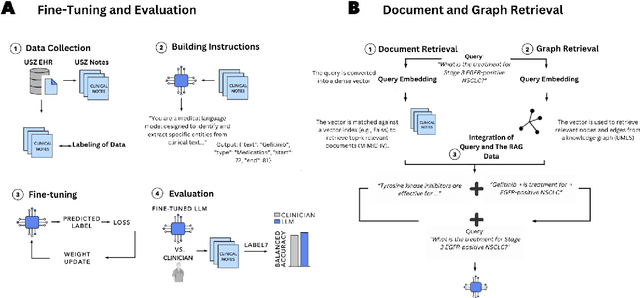
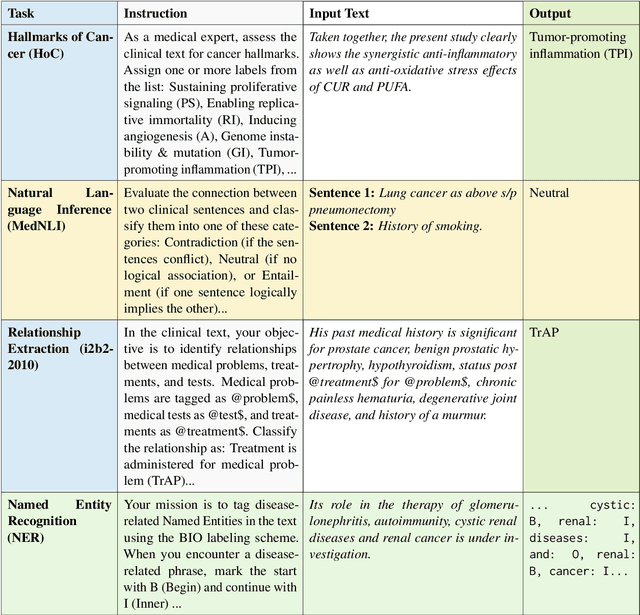
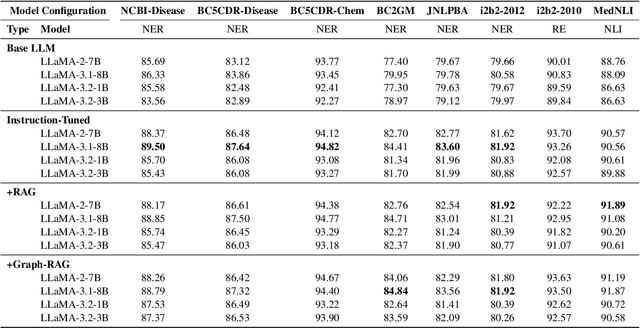
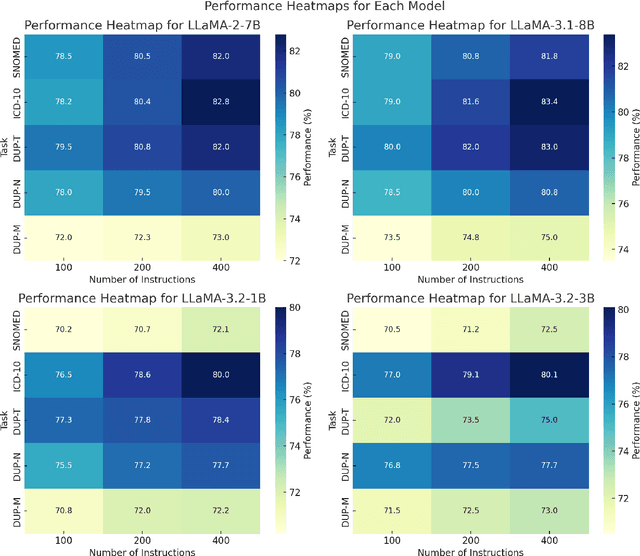
Clinical oncology generates vast, unstructured data that often contain inconsistencies, missing information, and ambiguities, making it difficult to extract reliable insights for data-driven decision-making. General-purpose large language models (LLMs) struggle with these challenges due to their lack of domain-specific reasoning, including specialized clinical terminology, context-dependent interpretations, and multi-modal data integration. We address these issues with an oncology-specialized, efficient, and adaptable NLP framework that combines instruction tuning, retrieval-augmented generation (RAG), and graph-based knowledge integration. Our lightweight models prove effective at oncology-specific tasks, such as named entity recognition (e.g., identifying cancer diagnoses), entity linking (e.g., linking entities to standardized ontologies), TNM staging, document classification (e.g., cancer subtype classification from pathology reports), and treatment response prediction. Our framework emphasizes adaptability and resource efficiency. We include minimal German instructions, collected at the University Hospital Zurich (USZ), to test whether small amounts of non-English language data can effectively transfer knowledge across languages. This approach mirrors our motivation for lightweight models, which balance strong performance with reduced computational costs, making them suitable for resource-limited healthcare settings. We validated our models on oncology datasets, demonstrating strong results in named entity recognition, relation extraction, and document classification.
SRFUND: A Multi-Granularity Hierarchical Structure Reconstruction Benchmark in Form Understanding
Jun 13, 2024Accurately identifying and organizing textual content is crucial for the automation of document processing in the field of form understanding. Existing datasets, such as FUNSD and XFUND, support entity classification and relationship prediction tasks but are typically limited to local and entity-level annotations. This limitation overlooks the hierarchically structured representation of documents, constraining comprehensive understanding of complex forms. To address this issue, we present the SRFUND, a hierarchically structured multi-task form understanding benchmark. SRFUND provides refined annotations on top of the original FUNSD and XFUND datasets, encompassing five tasks: (1) word to text-line merging, (2) text-line to entity merging, (3) entity category classification, (4) item table localization, and (5) entity-based full-document hierarchical structure recovery. We meticulously supplemented the original dataset with missing annotations at various levels of granularity and added detailed annotations for multi-item table regions within the forms. Additionally, we introduce global hierarchical structure dependencies for entity relation prediction tasks, surpassing traditional local key-value associations. The SRFUND dataset includes eight languages including English, Chinese, Japanese, German, French, Spanish, Italian, and Portuguese, making it a powerful tool for cross-lingual form understanding. Extensive experimental results demonstrate that the SRFUND dataset presents new challenges and significant opportunities in handling diverse layouts and global hierarchical structures of forms, thus providing deep insights into the field of form understanding. The original dataset and implementations of baseline methods are available at https://sprateam-ustc.github.io/SRFUND
What Drives Performance in Multilingual Language Models?
Apr 29, 2024This study investigates the factors influencing the performance of multilingual large language models (MLLMs) across diverse languages. We study 6 MLLMs, including masked language models, autoregressive models, and instruction-tuned LLMs, on the SIB-200 dataset, a topic classification dataset encompassing 204 languages. Our analysis considers three scenarios: ALL languages, SEEN languages (present in the model's pretraining data), and UNSEEN languages (not present or documented in the model's pretraining data in any meaningful way). We examine the impact of factors such as pretraining data size, general resource availability, language family, and script type on model performance. Decision tree analysis reveals that pretraining data size is the most influential factor for SEEN languages. However, interestingly, script type and language family are crucial for UNSEEN languages, highlighting the importance of cross-lingual transfer learning. Notably, model size and architecture do not significantly alter the most important features identified. Our findings provide valuable insights into the strengths and limitations of current MLLMs and hope to guide the development of more effective and equitable multilingual NLP systems.
A Multi-Modal Multilingual Benchmark for Document Image Classification
Oct 25, 2023
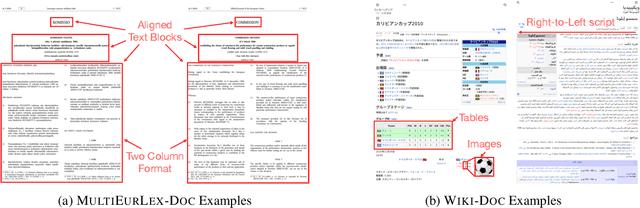
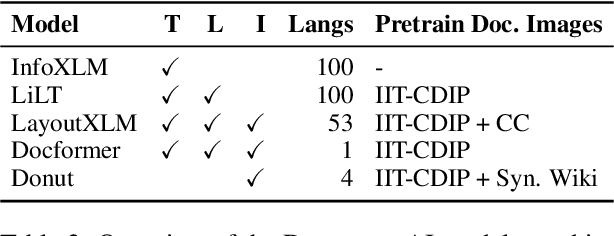
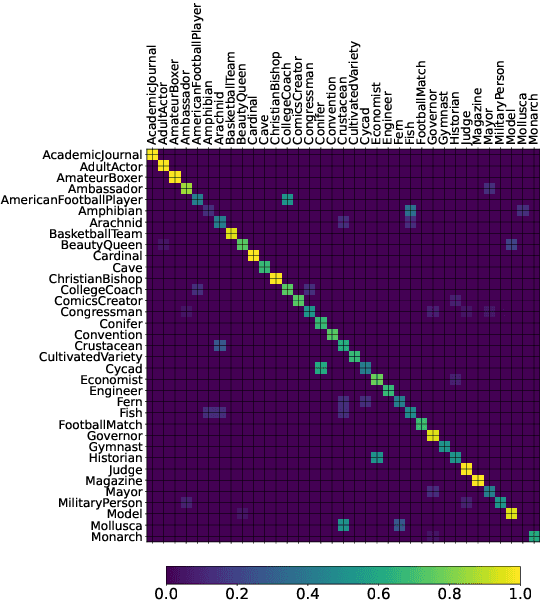
Document image classification is different from plain-text document classification and consists of classifying a document by understanding the content and structure of documents such as forms, emails, and other such documents. We show that the only existing dataset for this task (Lewis et al., 2006) has several limitations and we introduce two newly curated multilingual datasets WIKI-DOC and MULTIEURLEX-DOC that overcome these limitations. We further undertake a comprehensive study of popular visually-rich document understanding or Document AI models in previously untested setting in document image classification such as 1) multi-label classification, and 2) zero-shot cross-lingual transfer setup. Experimental results show limitations of multilingual Document AI models on cross-lingual transfer across typologically distant languages. Our datasets and findings open the door for future research into improving Document AI models.
AMuRD: Annotated Multilingual Receipts Dataset for Cross-lingual Key Information Extraction and Classification
Sep 18, 2023Key information extraction involves recognizing and extracting text from scanned receipts, enabling retrieval of essential content, and organizing it into structured documents. This paper presents a novel multilingual dataset for receipt extraction, addressing key challenges in information extraction and item classification. The dataset comprises $47,720$ samples, including annotations for item names, attributes like (price, brand, etc.), and classification into $44$ product categories. We introduce the InstructLLaMA approach, achieving an F1 score of $0.76$ and an accuracy of $0.68$ for key information extraction and item classification. We provide code, datasets, and checkpoints.\footnote{\url{https://github.com/Update-For-Integrated-Business-AI/AMuRD}}.
A General-Purpose Multilingual Document Encoder
May 11, 2023Massively multilingual pretrained transformers (MMTs) have tremendously pushed the state of the art on multilingual NLP and cross-lingual transfer of NLP models in particular. While a large body of work leveraged MMTs to mine parallel data and induce bilingual document embeddings, much less effort has been devoted to training general-purpose (massively) multilingual document encoder that can be used for both supervised and unsupervised document-level tasks. In this work, we pretrain a massively multilingual document encoder as a hierarchical transformer model (HMDE) in which a shallow document transformer contextualizes sentence representations produced by a state-of-the-art pretrained multilingual sentence encoder. We leverage Wikipedia as a readily available source of comparable documents for creating training data, and train HMDE by means of a cross-lingual contrastive objective, further exploiting the category hierarchy of Wikipedia for creation of difficult negatives. We evaluate the effectiveness of HMDE in two arguably most common and prominent cross-lingual document-level tasks: (1) cross-lingual transfer for topical document classification and (2) cross-lingual document retrieval. HMDE is significantly more effective than (i) aggregations of segment-based representations and (ii) multilingual Longformer. Crucially, owing to its massively multilingual lower transformer, HMDE successfully generalizes to languages unseen in document-level pretraining. We publicly release our code and models at https://github.com/ogaloglu/pre-training-multilingual-document-encoders .
L3Cube-IndicNews: News-based Short Text and Long Document Classification Datasets in Indic Languages
Jan 04, 2024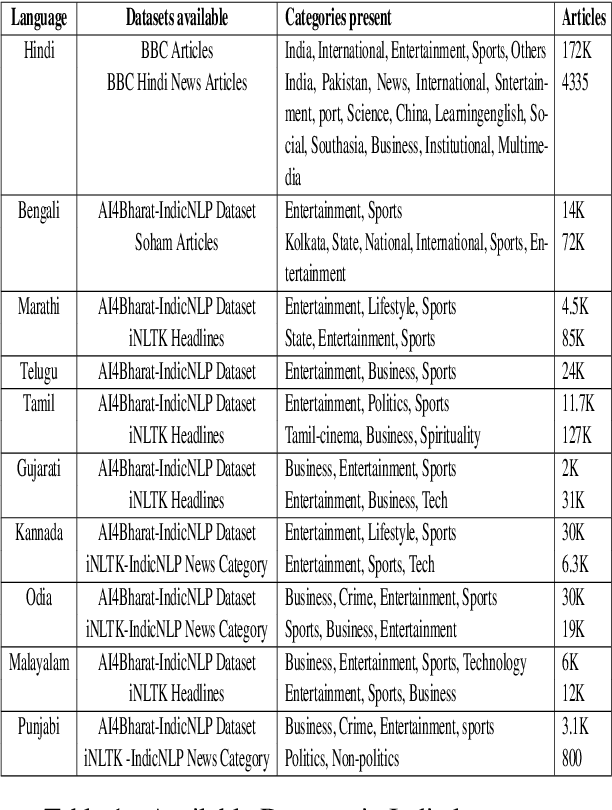
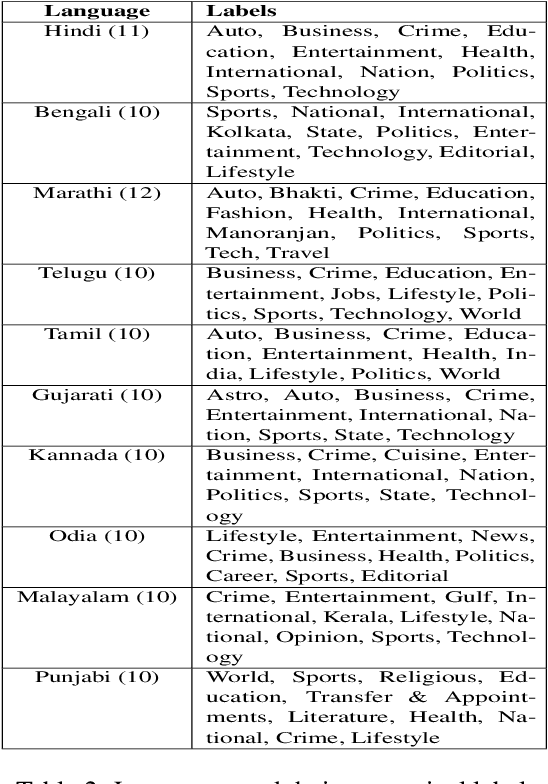
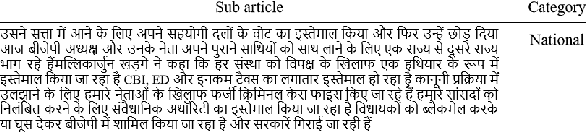
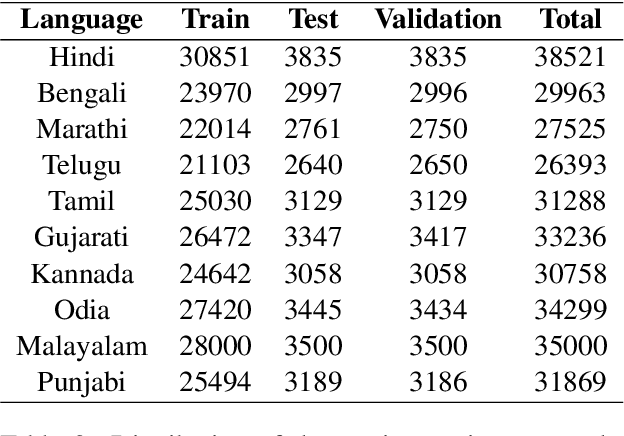
In this work, we introduce L3Cube-IndicNews, a multilingual text classification corpus aimed at curating a high-quality dataset for Indian regional languages, with a specific focus on news headlines and articles. We have centered our work on 10 prominent Indic languages, including Hindi, Bengali, Marathi, Telugu, Tamil, Gujarati, Kannada, Odia, Malayalam, and Punjabi. Each of these news datasets comprises 10 or more classes of news articles. L3Cube-IndicNews offers 3 distinct datasets tailored to handle different document lengths that are classified as: Short Headlines Classification (SHC) dataset containing the news headline and news category, Long Document Classification (LDC) dataset containing the whole news article and the news category, and Long Paragraph Classification (LPC) containing sub-articles of the news and the news category. We maintain consistent labeling across all 3 datasets for in-depth length-based analysis. We evaluate each of these Indic language datasets using 4 different models including monolingual BERT, multilingual Indic Sentence BERT (IndicSBERT), and IndicBERT. This research contributes significantly to expanding the pool of available text classification datasets and also makes it possible to develop topic classification models for Indian regional languages. This also serves as an excellent resource for cross-lingual analysis owing to the high overlap of labels among languages. The datasets and models are shared publicly at https://github.com/l3cube-pune/indic-nlp
Multimodal Document Analytics for Banking Process Automation
Jul 21, 2023In response to growing FinTech competition and the need for improved operational efficiency, this research focuses on understanding the potential of advanced document analytics, particularly using multimodal models, in banking processes. We perform a comprehensive analysis of the diverse banking document landscape, highlighting the opportunities for efficiency gains through automation and advanced analytics techniques in the customer business. Building on the rapidly evolving field of natural language processing (NLP), we illustrate the potential of models such as LayoutXLM, a cross-lingual, multimodal, pre-trained model, for analyzing diverse documents in the banking sector. This model performs a text token classification on German company register extracts with an overall F1 score performance of around 80\%. Our empirical evidence confirms the critical role of layout information in improving model performance and further underscores the benefits of integrating image information. Interestingly, our study shows that over 75% F1 score can be achieved with only 30% of the training data, demonstrating the efficiency of LayoutXLM. Through addressing state-of-the-art document analysis frameworks, our study aims to enhance process efficiency and demonstrate the real-world applicability and benefits of multimodal models within banking.