 Add to Chrome
 Add to Firefox
 Add to Edge
STEP3-VL-10B Technical Report
Jan 15, 2026
We present STEP3-VL-10B, a lightweight open-source foundation model designed to redefine the trade-off between compact efficiency and frontier-level multimodal intelligence. STEP3-VL-10B is realized through two strategic shifts: first, a unified, fully unfrozen pre-training strategy on 1.2T multimodal tokens that integrates a language-aligned Perception Encoder with a Qwen3-8B decoder to establish intrinsic vision-language synergy; and second, a scaled post-training pipeline featuring over 1k iterations of reinforcement learning. Crucially, we implement Parallel Coordinated Reasoning (PaCoRe) to scale test-time compute, allocating resources to scalable perceptual reasoning that explores and synthesizes diverse visual hypotheses. Consequently, despite its compact 10B footprint, STEP3-VL-10B rivals or surpasses models 10$\times$-20$\times$ larger (e.g., GLM-4.6V-106B, Qwen3-VL-235B) and top-tier proprietary flagships like Gemini 2.5 Pro and Seed-1.5-VL. Delivering best-in-class performance, it records 92.2% on MMBench and 80.11% on MMMU, while excelling in complex reasoning with 94.43% on AIME2025 and 75.95% on MathVision. We release the full model suite to provide the community with a powerful, efficient, and reproducible baseline.

PaCoRe: Learning to Scale Test-Time Compute with Parallel Coordinated Reasoning
Jan 09, 2026We introduce Parallel Coordinated Reasoning (PaCoRe), a training-and-inference framework designed to overcome a central limitation of contemporary language models: their inability to scale test-time compute (TTC) far beyond sequential reasoning under a fixed context window. PaCoRe departs from the traditional sequential paradigm by driving TTC through massive parallel exploration coordinated via a message-passing architecture in multiple rounds. Each round launches many parallel reasoning trajectories, compacts their findings into context-bounded messages, and synthesizes these messages to guide the next round and ultimately produce the final answer. Trained end-to-end with large-scale, outcome-based reinforcement learning, the model masters the synthesis abilities required by PaCoRe and scales to multi-million-token effective TTC without exceeding context limits. The approach yields strong improvements across diverse domains, and notably pushes reasoning beyond frontier systems in mathematics: an 8B model reaches 94.5% on HMMT 2025, surpassing GPT-5's 93.2% by scaling effective TTC to roughly two million tokens. We open-source model checkpoints, training data, and the full inference pipeline to accelerate follow-up work.
DRQA: Dynamic Reasoning Quota Allocation for Controlling Overthinking in Reasoning Large Language Models
Aug 25, 2025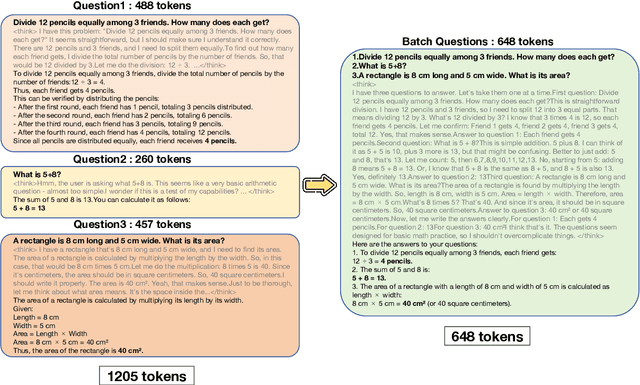
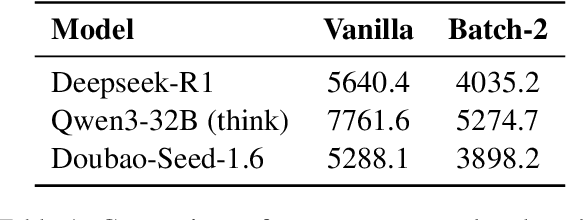
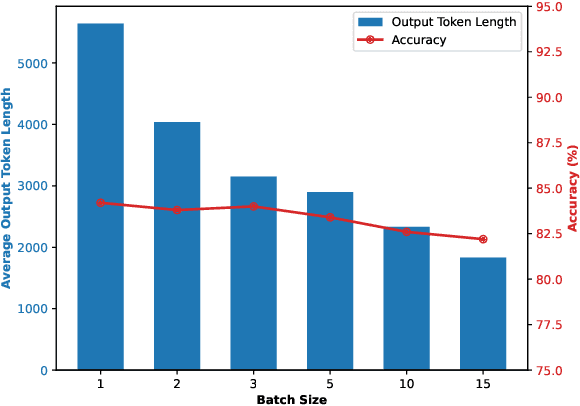

Reasoning large language models (RLLMs), such as OpenAI-O3 and DeepSeek-R1, have recently demonstrated remarkable capabilities by performing structured and multi-step reasoning. However, recent studies reveal that RLLMs often suffer from overthinking, i.e., producing unnecessarily lengthy reasoning chains even for simple questions, leading to excessive token consumption and computational inefficiency. Interestingly, we observe that when processing multiple questions in batch mode, RLLMs exhibit more resource-efficient behavior by dynamically compressing reasoning steps for easier problems, due to implicit resource competition. Inspired by this, we propose Dynamic Reasoning Quota Allocation (DRQA), a novel method that transfers the benefits of resource competition from batch processing to single-question inference. Specifically, DRQA leverages batch-generated preference data and reinforcement learning to train the model to allocate reasoning resources adaptively. By encouraging the model to internalize a preference for responses that are both accurate and concise, DRQA enables it to generate concise answers for simple questions while retaining sufficient reasoning depth for more challenging ones. Extensive experiments on a wide range of mathematical and scientific reasoning benchmarks demonstrate that DRQA significantly reduces token usage while maintaining, and in many cases improving, answer accuracy. By effectively mitigating the overthinking problem, DRQA offers a promising direction for more efficient and scalable deployment of RLLMs, and we hope it inspires further exploration into fine-grained control of reasoning behaviors.
U2-BENCH: Benchmarking Large Vision-Language Models on Ultrasound Understanding
May 23, 2025Ultrasound is a widely-used imaging modality critical to global healthcare, yet its interpretation remains challenging due to its varying image quality on operators, noises, and anatomical structures. Although large vision-language models (LVLMs) have demonstrated impressive multimodal capabilities across natural and medical domains, their performance on ultrasound remains largely unexplored. We introduce U2-BENCH, the first comprehensive benchmark to evaluate LVLMs on ultrasound understanding across classification, detection, regression, and text generation tasks. U2-BENCH aggregates 7,241 cases spanning 15 anatomical regions and defines 8 clinically inspired tasks, such as diagnosis, view recognition, lesion localization, clinical value estimation, and report generation, across 50 ultrasound application scenarios. We evaluate 20 state-of-the-art LVLMs, both open- and closed-source, general-purpose and medical-specific. Our results reveal strong performance on image-level classification, but persistent challenges in spatial reasoning and clinical language generation. U2-BENCH establishes a rigorous and unified testbed to assess and accelerate LVLM research in the uniquely multimodal domain of medical ultrasound imaging.
CodeIF: Benchmarking the Instruction-Following Capabilities of Large Language Models for Code Generation
Feb 26, 2025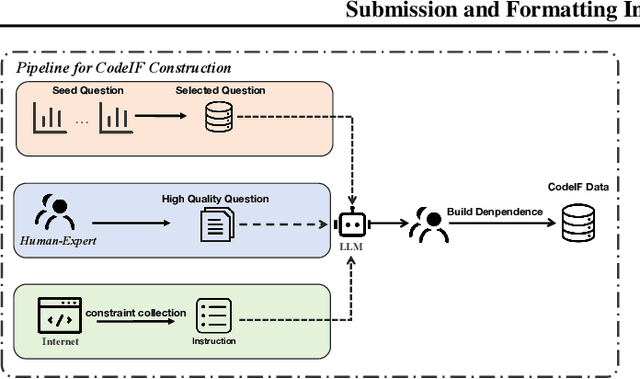
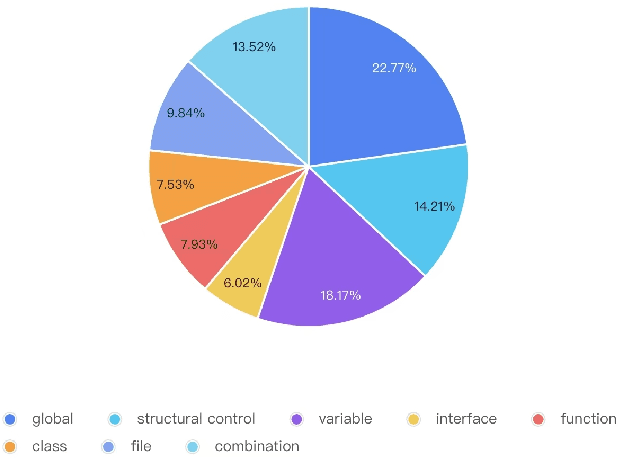
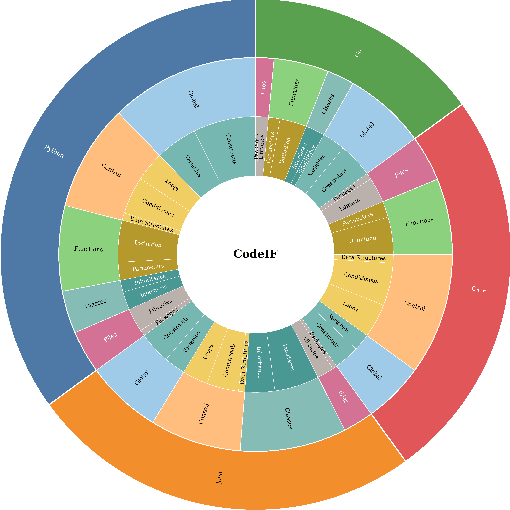

With the rapid advancement of Large Language Models (LLMs), the demand for robust instruction-following capabilities in code generation tasks has grown significantly. Code generation not only facilitates faster prototyping and automated testing, but also augments developer efficiency through improved maintainability and reusability of code. In this paper, we introduce CodeIF, the first benchmark specifically designed to assess the abilities of LLMs to adhere to task-oriented instructions within diverse code generation scenarios. CodeIF encompasses a broad range of tasks, including function synthesis, error debugging, algorithmic refactoring, and code explanation, thereby providing a comprehensive suite to evaluate model performance across varying complexity levels and programming domains. We conduct extensive experiments with LLMs, analyzing their strengths and limitations in meeting the demands of these tasks. The experimental results offer valuable insights into how well current models align with human instructions, as well as the extent to which they can generate consistent, maintainable, and contextually relevant code. Our findings not only underscore the critical role that instruction-following LLMs can play in modern software development, but also illuminate pathways for future research aimed at enhancing their adaptability, reliability, and overall effectiveness in automated code generation.