 Add to Chrome
 Add to Firefox
 Add to Edge
Dual Consensus: Escaping from Spurious Majority in Unsupervised RLVR via Two-Stage Vote Mechanism
Mar 17, 2026
Current label-free RLVR approaches for large language models (LLMs), such as TTRL and Self-reward, have demonstrated effectiveness in improving the performance of LLMs on complex reasoning tasks. However, these methods rely heavily on accurate pseudo-label estimation and converge on spurious yet popular answers, thereby trapping in a dominant mode and limiting further improvements. Building on this, we propose Dual Consensus Reinforcement Learning (DCRL), a novel self-supervised training method which is capable of generating more reliable learning signals through a two-stage consensus mechanism. The model initially acts as an anchor, producing dominant responses; then it serves as an explorer, generating diverse auxiliary signals via a temporary unlearning process. The final training target is derived from the harmonic mean of these two signal sets. Notably, the process operates entirely without external models or supervision. Across eight benchmarks and diverse domains, DCRL consistently improves Pass@1 over majority vote while yielding more stable training dynamics. These results demonstrate that DCRL establishes a scalable path toward stronger reasoning without labels.

LongCat-Flash-Thinking-2601 Technical Report
Jan 23, 2026We introduce LongCat-Flash-Thinking-2601, a 560-billion-parameter open-source Mixture-of-Experts (MoE) reasoning model with superior agentic reasoning capability. LongCat-Flash-Thinking-2601 achieves state-of-the-art performance among open-source models on a wide range of agentic benchmarks, including agentic search, agentic tool use, and tool-integrated reasoning. Beyond benchmark performance, the model demonstrates strong generalization to complex tool interactions and robust behavior under noisy real-world environments. Its advanced capability stems from a unified training framework that combines domain-parallel expert training with subsequent fusion, together with an end-to-end co-design of data construction, environments, algorithms, and infrastructure spanning from pre-training to post-training. In particular, the model's strong generalization capability in complex tool-use are driven by our in-depth exploration of environment scaling and principled task construction. To optimize long-tailed, skewed generation and multi-turn agentic interactions, and to enable stable training across over 10,000 environments spanning more than 20 domains, we systematically extend our asynchronous reinforcement learning framework, DORA, for stable and efficient large-scale multi-environment training. Furthermore, recognizing that real-world tasks are inherently noisy, we conduct a systematic analysis and decomposition of real-world noise patterns, and design targeted training procedures to explicitly incorporate such imperfections into the training process, resulting in improved robustness for real-world applications. To further enhance performance on complex reasoning tasks, we introduce a Heavy Thinking mode that enables effective test-time scaling by jointly expanding reasoning depth and width through intensive parallel thinking.
Efficient Context Scaling with LongCat ZigZag Attention
Dec 30, 2025We introduce LongCat ZigZag Attention (LoZA), which is a sparse attention scheme designed to transform any existing full-attention models into sparse versions with rather limited compute budget. In long-context scenarios, LoZA can achieve significant speed-ups both for prefill-intensive (e.g., retrieval-augmented generation) and decode-intensive (e.g., tool-integrated reasoning) cases. Specifically, by applying LoZA to LongCat-Flash during mid-training, we serve LongCat-Flash-Exp as a long-context foundation model that can swiftly process up to 1 million tokens, enabling efficient long-term reasoning and long-horizon agentic capabilities.
Autoformalizer with Tool Feedback
Oct 08, 2025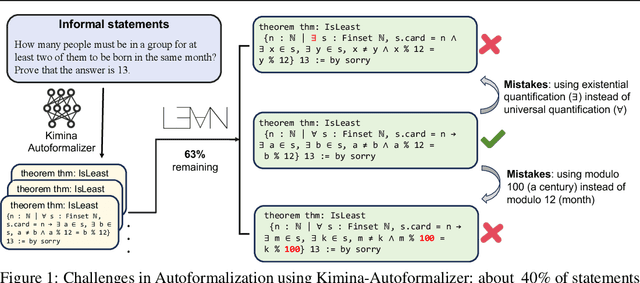
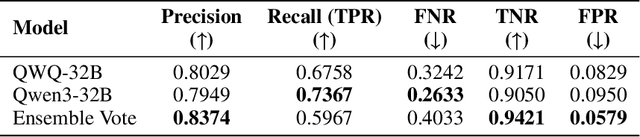
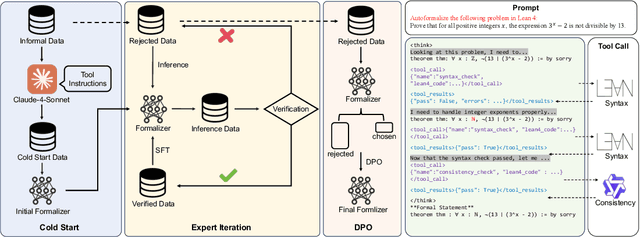
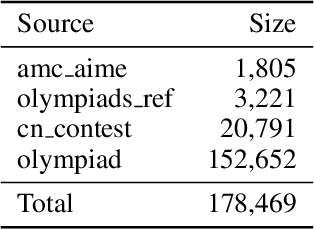
Autoformalization addresses the scarcity of data for Automated Theorem Proving (ATP) by translating mathematical problems from natural language into formal statements. Efforts in recent work shift from directly prompting large language models to training an end-to-end formalizer model from scratch, achieving remarkable advancements. However, existing formalizer still struggles to consistently generate valid statements that meet syntactic validity and semantic consistency. To address this issue, we propose the Autoformalizer with Tool Feedback (ATF), a novel approach that incorporates syntactic and consistency information as tools into the formalization process. By integrating Lean 4 compilers for syntax corrections and employing a multi-LLMs-as-judge approach for consistency validation, the model is able to adaptively refine generated statements according to the tool feedback, enhancing both syntactic validity and semantic consistency. The training of ATF involves a cold-start phase on synthetic tool-calling data, an expert iteration phase to improve formalization capabilities, and Direct Preference Optimization to alleviate ineffective revisions. Experimental results show that ATF markedly outperforms a range of baseline formalizer models, with its superior performance further validated by human evaluations. Subsequent analysis reveals that ATF demonstrates excellent inference scaling properties. Moreover, we open-source Numina-ATF, a dataset containing 750K synthetic formal statements to facilitate advancements in autoformalization and ATP research.
Intent-aware Recommendation via Disentangled Graph Contrastive Learning
Mar 06, 2024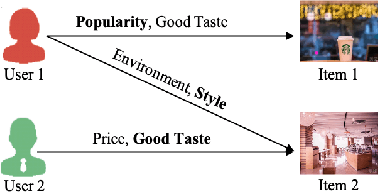
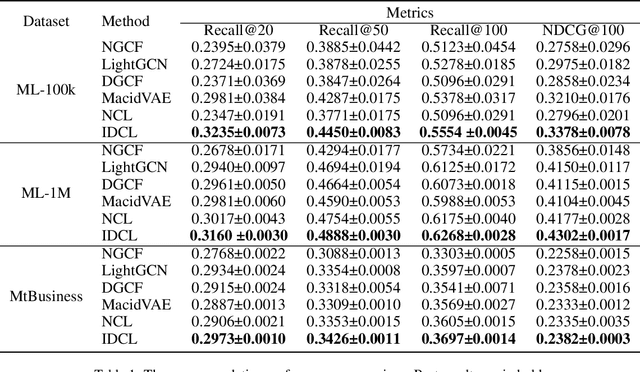
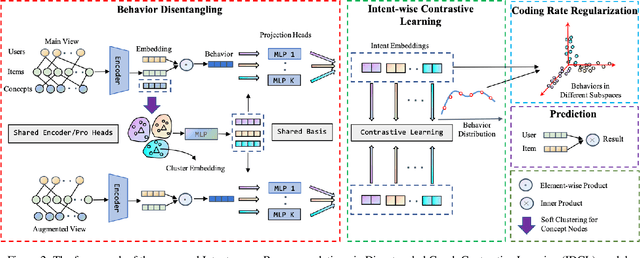
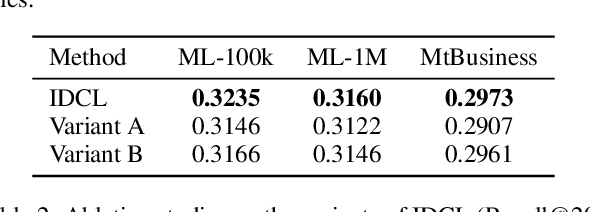
Graph neural network (GNN) based recommender systems have become one of the mainstream trends due to the powerful learning ability from user behavior data. Understanding the user intents from behavior data is the key to recommender systems, which poses two basic requirements for GNN-based recommender systems. One is how to learn complex and diverse intents especially when the user behavior is usually inadequate in reality. The other is different behaviors have different intent distributions, so how to establish their relations for a more explainable recommender system. In this paper, we present the Intent-aware Recommendation via Disentangled Graph Contrastive Learning (IDCL), which simultaneously learns interpretable intents and behavior distributions over those intents. Specifically, we first model the user behavior data as a user-item-concept graph, and design a GNN based behavior disentangling module to learn the different intents. Then we propose the intent-wise contrastive learning to enhance the intent disentangling and meanwhile infer the behavior distributions. Finally, the coding rate reduction regularization is introduced to make the behaviors of different intents orthogonal. Extensive experiments demonstrate the effectiveness of IDCL in terms of substantial improvement and the interpretability.
* Accepted by IJCAI 2023