 Add to Chrome
 Add to Firefox
 Add to Edge
GraphRAG-IRL: Personalized Recommendation with Graph-Grounded Inverse Reinforcement Learning and LLM Re-ranking
Apr 21, 2026
Personalized recommendation requires models that capture sequential user preferences while remaining robust to sparse feedback and semantic ambiguity. Recent work has explored large language models (LLMs) as recommenders and re-rankers, but pure prompt-based ranking often suffers from poor calibration, sensitivity to candidate ordering, and popularity bias. These limitations make LLMs useful semantic reasoners, but unreliable as standalone ranking engines. We present \textbf{GraphRAG-IRL}, a hybrid recommendation framework that combines graph-grounded feature construction, inverse reinforcement learning (IRL), and persona-guided LLM re-ranking. Our method constructs a heterogeneous knowledge graph over items, categories, and concepts, retrieves both individual and community preference context, and uses these signals to train a Maximum Entropy IRL model for calibrated pre-ranking. An LLM is then applied only to a short candidate list, where persona-guided prompts provide complementary semantic judgments that are fused with IRL rankings. Experiments show that GraphRAG-IRL is a strong standalone recommender: IRL-MLP with GraphRAG improves NDCG@10 by 15.7\% on MovieLens and 16.6\% on KuaiRand over supervised baselines. The results also show that IRL and GraphRAG are superadditive, with the combined gain exceeding the sum of their individual improvements. Persona-guided LLM fusion further improves ranking quality, yielding up to 16.8\% NDCG@10 improvement over the IRL-only baseline on MovieLens ml-1m, while score fusion on KuaiRand provides consistent gains of 4--6\% across LLM providers.

Jailbreak Distillation: Renewable Safety Benchmarking
May 28, 2025Large language models (LLMs) are rapidly deployed in critical applications, raising urgent needs for robust safety benchmarking. We propose Jailbreak Distillation (JBDistill), a novel benchmark construction framework that "distills" jailbreak attacks into high-quality and easily-updatable safety benchmarks. JBDistill utilizes a small set of development models and existing jailbreak attack algorithms to create a candidate prompt pool, then employs prompt selection algorithms to identify an effective subset of prompts as safety benchmarks. JBDistill addresses challenges in existing safety evaluation: the use of consistent evaluation prompts across models ensures fair comparisons and reproducibility. It requires minimal human effort to rerun the JBDistill pipeline and produce updated benchmarks, alleviating concerns on saturation and contamination. Extensive experiments demonstrate our benchmarks generalize robustly to 13 diverse evaluation models held out from benchmark construction, including proprietary, specialized, and newer-generation LLMs, significantly outperforming existing safety benchmarks in effectiveness while maintaining high separability and diversity. Our framework thus provides an effective, sustainable, and adaptable solution for streamlining safety evaluation.
DeCafNet: Delegate and Conquer for Efficient Temporal Grounding in Long Videos
May 22, 2025Long Video Temporal Grounding (LVTG) aims at identifying specific moments within lengthy videos based on user-provided text queries for effective content retrieval. The approach taken by existing methods of dividing video into clips and processing each clip via a full-scale expert encoder is challenging to scale due to prohibitive computational costs of processing a large number of clips in long videos. To address this issue, we introduce DeCafNet, an approach employing ``delegate-and-conquer'' strategy to achieve computation efficiency without sacrificing grounding performance. DeCafNet introduces a sidekick encoder that performs dense feature extraction over all video clips in a resource-efficient manner, while generating a saliency map to identify the most relevant clips for full processing by the expert encoder. To effectively leverage features from sidekick and expert encoders that exist at different temporal resolutions, we introduce DeCaf-Grounder, which unifies and refines them via query-aware temporal aggregation and multi-scale temporal refinement for accurate grounding. Experiments on two LTVG benchmark datasets demonstrate that DeCafNet reduces computation by up to 47\% while still outperforming existing methods, establishing a new state-of-the-art for LTVG in terms of both efficiency and performance. Our code is available at https://github.com/ZijiaLewisLu/CVPR2025-DeCafNet.
Improving Lung Cancer Diagnosis and Survival Prediction with Deep Learning and CT Imaging
Aug 18, 2024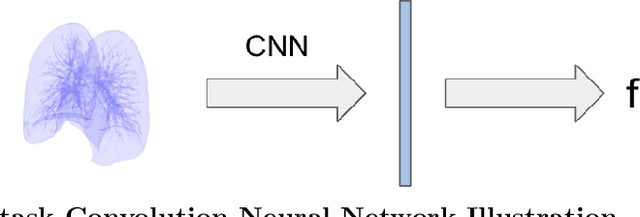
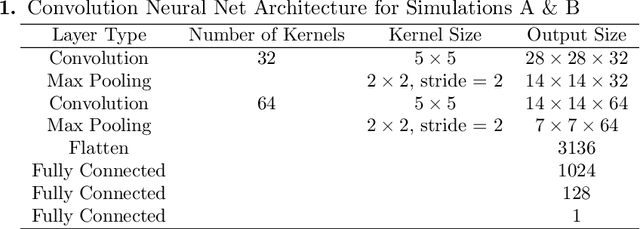
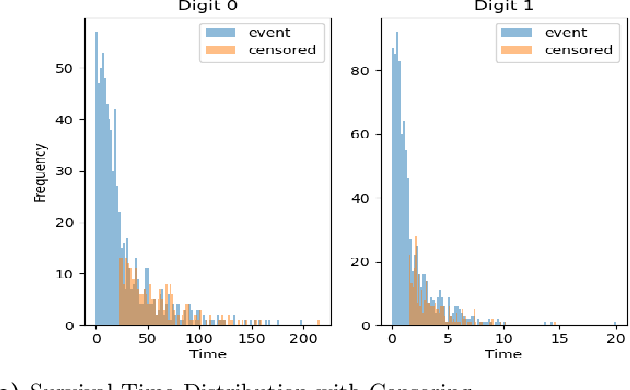
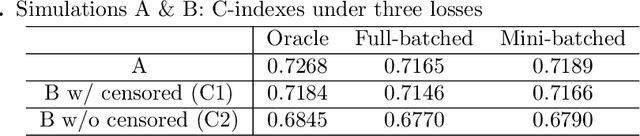
Lung cancer is a major cause of cancer-related deaths, and early diagnosis and treatment are crucial for improving patients' survival outcomes. In this paper, we propose to employ convolutional neural networks to model the non-linear relationship between the risk of lung cancer and the lungs' morphology revealed in the CT images. We apply a mini-batched loss that extends the Cox proportional hazards model to handle the non-convexity induced by neural networks, which also enables the training of large data sets. Additionally, we propose to combine mini-batched loss and binary cross-entropy to predict both lung cancer occurrence and the risk of mortality. Simulation results demonstrate the effectiveness of both the mini-batched loss with and without the censoring mechanism, as well as its combination with binary cross-entropy. We evaluate our approach on the National Lung Screening Trial data set with several 3D convolutional neural network architectures, achieving high AUC and C-index scores for lung cancer classification and survival prediction. These results, obtained from simulations and real data experiments, highlight the potential of our approach to improving the diagnosis and treatment of lung cancer.