 Add to Chrome
 Add to Firefox
 Add to Edge
ETac: A Lightweight and Efficient Tactile Simulation Framework for Learning Dexterous Manipulation
Apr 22, 2026
Tactile sensors are increasingly integrated into dexterous robotic manipulators to enhance contact perception. However, learning manipulation policies that rely on tactile sensing remains challenging, primarily due to the trade-off between fidelity and computational cost of soft-body simulations. To address this, we present ETac, a tactile simulation framework that models elastomeric soft-body interactions with both high fidelity and efficiency. ETac employs a lightweight data-driven deformation propagation model to capture soft-body contact dynamics, achieving high simulation quality and boosting efficiency that enables large-scale policy training. When serving as the simulation backend, ETac produces surface deformation estimates comparable to FEM and demonstrates applicability for modeling real tactile sensors. Then, we showcase its capability in training a blind grasping policy that leverages large-area tactile feedback to manipulate diverse objects. Running on a single RTX 4090 GPU, ETac supports reinforcement learning across 4,096 parallel environments, achieving a total throughput of 869 FPS. The resulting policy reaches an average success rate of 84.45% across four object types, underscoring ETac's potential to make tactile-based skill learning both efficient and scalable.

HalluAudio: A Comprehensive Benchmark for Hallucination Detection in Large Audio-Language Models
Apr 21, 2026Large Audio-Language Models (LALMs) have recently achieved strong performance across various audio-centric tasks. However, hallucination, where models generate responses that are semantically incorrect or acoustically unsupported, remains largely underexplored in the audio domain. Existing hallucination benchmarks mainly focus on text or vision, while the few audio-oriented studies are limited in scale, modality coverage, and diagnostic depth. We therefore introduce HalluAudio, the first large-scale benchmark for evaluating hallucinations across speech, environmental sound, and music. HalluAudio comprises over 5K human-verified QA pairs and spans diverse task types, including binary judgments, multi-choice reasoning, attribute verification, and open-ended QA. To systematically induce hallucinations, we design adversarial prompts and mixed-audio conditions. Beyond accuracy, our evaluation protocol measures hallucination rate, yes/no bias, error-type analysis, and refusal rate, enabling a fine-grained analysis of LALM failure modes. We benchmark a broad range of open-source and proprietary models, providing the first large-scale comparison across speech, sound, and music. Our results reveal significant deficiencies in acoustic grounding, temporal reasoning, and music attribute understanding, underscoring the need for reliable and robust LALMs.
PoiCGAN: A Targeted Poisoning Based on Feature-Label Joint Perturbation in Federated Learning
Mar 24, 2026Federated Learning (FL), as a popular distributed learning paradigm, has shown outstanding performance in improving computational efficiency and protecting data privacy, and is widely applied in industrial image classification. However, due to its distributed nature, FL is vulnerable to threats from malicious clients, with poisoning attacks being a common threat. A major limitation of existing poisoning attack methods is their difficulty in bypassing model performance tests and defense mechanisms based on model anomaly detection. This often results in the detection and removal of poisoned models, which undermines their practical utility. To ensure both the performance of industrial image classification and attacks, we propose a targeted poisoning attack, PoiCGAN, based on feature-label collaborative perturbation. Our method modifies the inputs of the discriminator and generator in the Conditional Generative Adversarial Network (CGAN) to influence the training process, generating an ideal poison generator. This generator not only produces specific poisoned samples but also automatically performs label flipping. Experiments across various datasets show that our method achieves an attack success rate 83.97% higher than baseline methods, with a less than 8.87% reduction in the main task's accuracy. Moreover, the poisoned samples and malicious models exhibit high stealthiness.
NLiPsCalib: An Efficient Calibration Framework for High-Fidelity 3D Reconstruction of Curved Visuotactile Sensors
Mar 10, 2026Recent advances in visuotactile sensors increasingly employ biomimetic curved surfaces to enhance sensorimotor capabilities. Although such curved visuotactile sensors enable more conformal object contact, their perceptual quality is often degraded by non-uniform illumination, which reduces reconstruction accuracy and typically necessitates calibration. Existing calibration methods commonly rely on customized indenters and specialized devices to collect large-scale photometric data, but these processes are expensive and labor-intensive. To overcome these calibration challenges, we present NLiPsCalib, a physics-consistent and efficient calibration framework for curved visuotactile sensors. NLiPsCalib integrates controllable near-field light sources and leverages Near-Light Photometric Stereo (NLiPs) to estimate contact geometry, simplifying calibration to just a few simple contacts with everyday objects. We further introduce NLiPsTac, a controllable-light-source tactile sensor developed to validate our framework. Experimental results demonstrate that our approach enables high-fidelity 3D reconstruction across diverse curved form factors with a simple calibration procedure. We emphasize that our approach lowers the barrier to developing customized visuotactile sensors of diverse geometries, thereby making visuotactile sensing more accessible to the broader community.
SegRNN: Segment Recurrent Neural Network for Long-Term Time Series Forecasting
Aug 22, 2023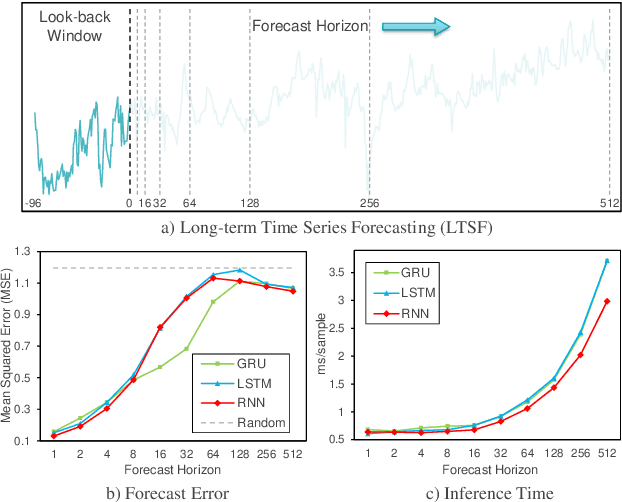
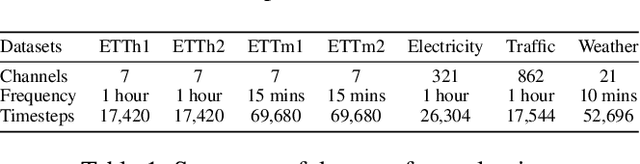
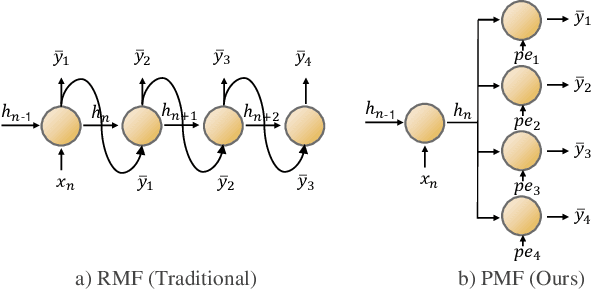
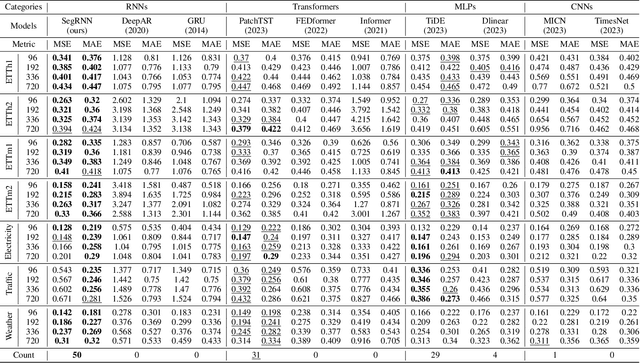
RNN-based methods have faced challenges in the Long-term Time Series Forecasting (LTSF) domain when dealing with excessively long look-back windows and forecast horizons. Consequently, the dominance in this domain has shifted towards Transformer, MLP, and CNN approaches. The substantial number of recurrent iterations are the fundamental reasons behind the limitations of RNNs in LTSF. To address these issues, we propose two novel strategies to reduce the number of iterations in RNNs for LTSF tasks: Segment-wise Iterations and Parallel Multi-step Forecasting (PMF). RNNs that combine these strategies, namely SegRNN, significantly reduce the required recurrent iterations for LTSF, resulting in notable improvements in forecast accuracy and inference speed. Extensive experiments demonstrate that SegRNN not only outperforms SOTA Transformer-based models but also reduces runtime and memory usage by more than 78%. These achievements provide strong evidence that RNNs continue to excel in LTSF tasks and encourage further exploration of this domain with more RNN-based approaches. The source code is coming soon.