 Add to Chrome
 Add to Firefox
 Add to Edge
S^2tory: Story Spine Distillation for Movie Script Summarization
May 05, 2026
Movie scripts pose a fundamental challenge for automatic summarization due to their non-linear, cross-cut narrative structure, which makes surface-level saliency methods ineffective at preserving core story progression. To address this, we introduce S^2tory (Story Spine Distillation), a narratology-grounded framework that leverages character development trajectories to identify plot nuclei, the essential events that drive the narrative forward, while filtering out peripheral satellite events that merely enrich atmosphere or emotion. Our Narrative Expert Agent (NEAgent) performs theory-constrained reasoning, whose distilled knowledge conditions a small model to identify plot nuclei. Another model then uses these plot nuclei to generate the summary. Experiments on the MovieSum dataset demonstrate state-of-the-art semantic fidelity at approximately 3.5x compression, and zero-shot evaluation on BookSum confirms strong out-of-domain generalization. Human evaluation further validates that narratological theory provides an indispensable foundation for modeling complex, non-linear narratives.

Structure-Grounded Knowledge Retrieval via Code Dependencies for Multi-Step Data Reasoning
Apr 12, 2026Selecting the right knowledge is critical when using large language models (LLMs) to solve domain-specific data analysis tasks. However, most retrieval-augmented approaches rely primarily on lexical or embedding similarity, which is often a weak proxy for the task-critical knowledge needed for multi-step reasoning. In many such tasks, the relevant knowledge is not merely textually related to the query, but is instead grounded in executable code and the dependency structure through which computations are carried out. To address this mismatch, we propose SGKR (Structure-Grounded Knowledge Retrieval), a retrieval framework that organizes domain knowledge with a graph induced by function-call dependencies. Given a question, SGKR extracts semantic input and output tags, identifies dependency paths connecting them, and constructs a task-relevant subgraph. The associated knowledge and corresponding function implementations are then assembled as a structured context for LLM-based code generation. Experiments on multi-step data analysis benchmarks show that SGKR consistently improves solution correctness over no-retrieval and similarity-based retrieval baselines for both vanilla LLMs and coding agents.
Beyond Accuracy: A Cognitive Load Framework for Mapping the Capability Boundaries of Tool-use Agents
Jan 28, 2026The ability of Large Language Models (LLMs) to use external tools unlocks powerful real-world interactions, making rigorous evaluation essential. However, current benchmarks primarily report final accuracy, revealing what models can do but obscuring the cognitive bottlenecks that define their true capability boundaries. To move from simple performance scoring to a diagnostic tool, we introduce a framework grounded in Cognitive Load Theory. Our framework deconstructs task complexity into two quantifiable components: Intrinsic Load, the inherent structural complexity of the solution path, formalized with a novel Tool Interaction Graph; and Extraneous Load, the difficulty arising from ambiguous task presentation. To enable controlled experiments, we construct ToolLoad-Bench, the first benchmark with parametrically adjustable cognitive load. Our evaluation reveals distinct performance cliffs as cognitive load increases, allowing us to precisely map each model's capability boundary. We validate that our framework's predictions are highly calibrated with empirical results, establishing a principled methodology for understanding an agent's limits and a practical foundation for building more efficient systems.
PEARL: Plan Exploration and Adaptive Reinforcement Learning for Multihop Tool Use
Jan 28, 2026Large Language Models show great potential with external tools, but face significant challenges in complex, multi-turn tool invocation. They often exhibit weak planning, tool hallucination, erroneous parameter generation, and struggle with robust interaction. To tackle these issues, we present PEARL, a novel framework to enhance LLM planning and execution for sophisticated tool use. PEARL adopts a two-stage approach: an offline phase where the agent explores tools to learn valid usage patterns and failure conditions, and an online reinforcement learning phase. In the online phase, a dedicated Planner is trained via group Relative Policy Optimization (GRPO) with a carefully designed reward function that provides distinct signals for planning quality. Experiments on the ToolHop and T-Eval benchmarks show PEARL significantly outperforms existing methods, achieving a new state-of-the-art success rate of \textbf{56.5\%} on ToolHop while maintaining a low invocation error rate. Our work marks a key advance in addressing the complex planning challenges of tool use, contributing to the development of more robust and reliable LLM-based agents.
LitVISTA: A Benchmark for Narrative Orchestration in Literary Text
Jan 10, 2026Computational narrative analysis aims to capture rhythm, tension, and emotional dynamics in literary texts. Existing large language models can generate long stories but overly focus on causal coherence, neglecting the complex story arcs and orchestration inherent in human narratives. This creates a structural misalignment between model- and human-generated narratives. We propose VISTA Space, a high-dimensional representational framework for narrative orchestration that unifies human and model narrative perspectives. We further introduce LitVISTA, a structurally annotated benchmark grounded in literary texts, enabling systematic evaluation of models' narrative orchestration capabilities. We conduct oracle evaluations on a diverse selection of frontier LLMs, including GPT, Claude, Grok, and Gemini. Results reveal systematic deficiencies: existing models fail to construct a unified global narrative view, struggling to jointly capture narrative function and structure. Furthermore, even advanced thinking modes yield only limited gains for such literary narrative understanding.
Finch: Benchmarking Finance & Accounting across Spreadsheet-Centric Enterprise Workflows
Dec 19, 2025We introduce a finance & accounting benchmark (Finch) for evaluating AI agents on real-world, enterprise-grade professional workflows -- interleaving data entry, structuring, formatting, web search, cross-file retrieval, calculation, modeling, validation, translation, visualization, and reporting. Finch is sourced from authentic enterprise workspaces at Enron (15,000 spreadsheets and 500,000 emails from 150 employees) and other financial institutions, preserving in-the-wild messiness across multimodal artifacts (text, tables, formulas, charts, code, and images) and spanning diverse domains such as budgeting, trading, and asset management. We propose a workflow construction process that combines LLM-assisted discovery with expert annotation: (1) LLM-assisted, expert-verified derivation of workflows from real-world email threads and version histories of spreadsheet files, and (2) meticulous expert annotation for workflows, requiring over 700 hours of domain-expert effort. This yields 172 composite workflows with 384 tasks, involving 1,710 spreadsheets with 27 million cells, along with PDFs and other artifacts, capturing the intrinsically messy, long-horizon, knowledge-intensive, and collaborative nature of real-world enterprise work. We conduct both human and automated evaluations of frontier AI systems including GPT 5.1, Claude Sonnet 4.5, Gemini 3 Pro, Grok 4, and Qwen 3 Max, and GPT 5.1 Pro spends 48 hours in total yet passes only 38.4% of workflows, while Claude Sonnet 4.5 passes just 25.0%. Comprehensive case studies further surface the challenges that real-world enterprise workflows pose for AI agents.
Pixel-wise Graph Attention Networks for Person Re-identification
Jul 18, 2023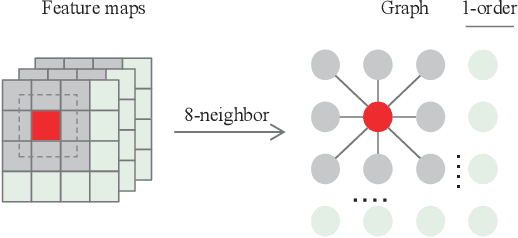
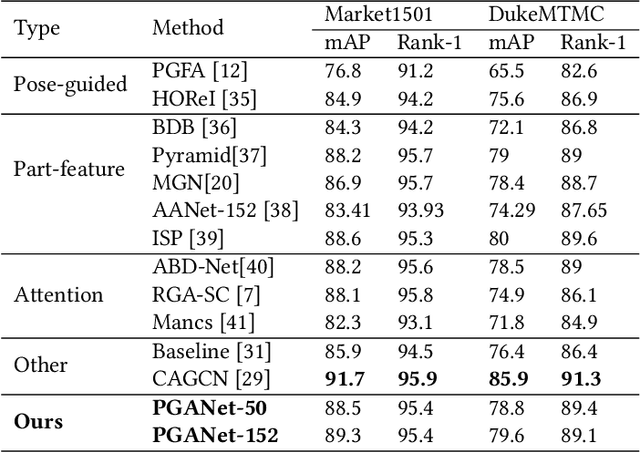
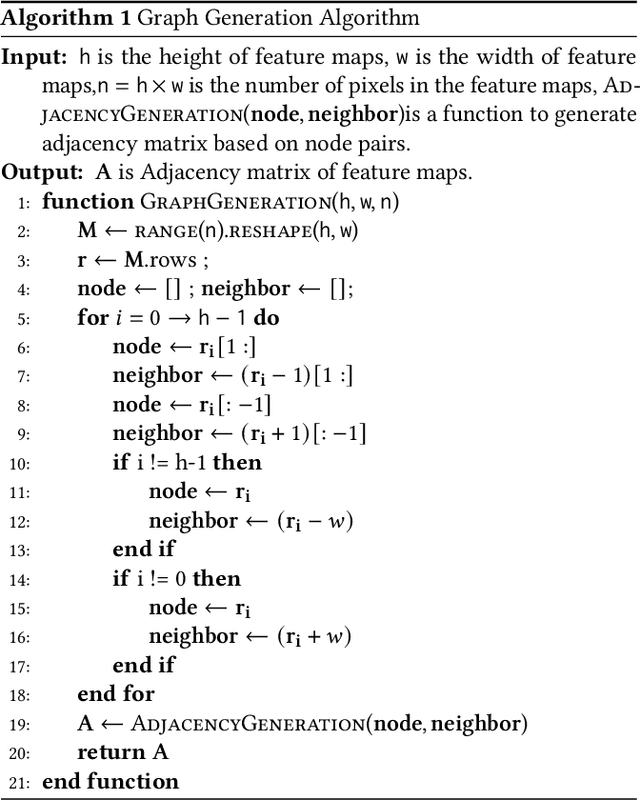
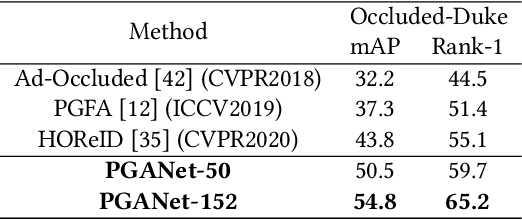
Graph convolutional networks (GCN) is widely used to handle irregular data since it updates node features by using the structure information of graph. With the help of iterated GCN, high-order information can be obtained to further enhance the representation of nodes. However, how to apply GCN to structured data (such as pictures) has not been deeply studied. In this paper, we explore the application of graph attention networks (GAT) in image feature extraction. First of all, we propose a novel graph generation algorithm to convert images into graphs through matrix transformation. It is one magnitude faster than the algorithm based on K Nearest Neighbors (KNN). Then, GAT is used on the generated graph to update the node features. Thus, a more robust representation is obtained. These two steps are combined into a module called pixel-wise graph attention module (PGA). Since the graph obtained by our graph generation algorithm can still be transformed into a picture after processing, PGA can be well combined with CNN. Based on these two modules, we consulted the ResNet and design a pixel-wise graph attention network (PGANet). The PGANet is applied to the task of person re-identification in the datasets Market1501, DukeMTMC-reID and Occluded-DukeMTMC (outperforms state-of-the-art by 0.8\%, 1.1\% and 11\% respectively, in mAP scores). Experiment results show that it achieves the state-of-the-art performance. \href{https://github.com/wenyu1009/PGANet}{The code is available here}.