 Add to Chrome
 Add to Firefox
 Add to Edge
From Classification to Generation: An Open-Ended Paradigm for Adverse Drug Reaction Prediction Based on Graph-Motif Feature Fusion
Jan 04, 2026
Computational biology offers immense potential for reducing the high costs and protracted cycles of new drug development through adverse drug reaction (ADR) prediction. However, current methods remain impeded by drug data scarcity-induced cold-start challenge, closed label sets, and inadequate modeling of label dependencies. Here we propose an open-ended ADR prediction paradigm based on Graph-Motif feature fusion and Multi-Label Generation (GM-MLG). Leveraging molecular structure as an intrinsic and inherent feature, GM-MLG constructs a dual-graph representation architecture spanning the atomic level, the local molecular level (utilizing fine-grained motifs dynamically extracted via the BRICS algorithm combined with additional fragmentation rules), and the global molecular level. Uniquely, GM-MLG pioneers transforming ADR prediction from multi-label classification into Transformer Decoder-based multi-label generation. By treating ADR labels as discrete token sequences, it employs positional embeddings to explicitly capture dependencies and co-occurrence relationships within large-scale label spaces, generating predictions via autoregressive decoding to dynamically expand the prediction space. Experiments demonstrate GM-MLG achieves up to 38% improvement and an average gain of 20%, expanding the prediction space from 200 to over 10,000 types. Furthermore, it elucidates non-linear structure-activity relationships between ADRs and motifs via retrosynthetic motif analysis, providing interpretable and innovative support for systematic risk reduction in drug safety.

Large Model Enabled Embodied Intelligence for 6G Integrated Perception, Communication, and Computation Network
Dec 22, 2025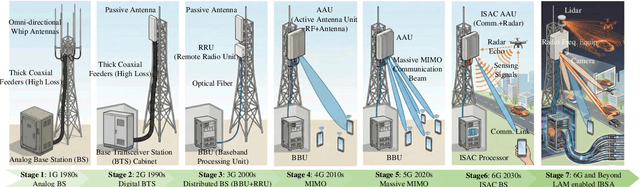
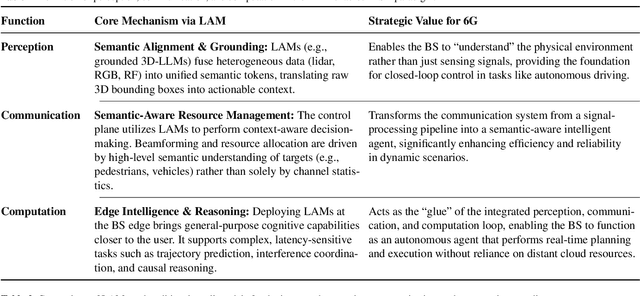
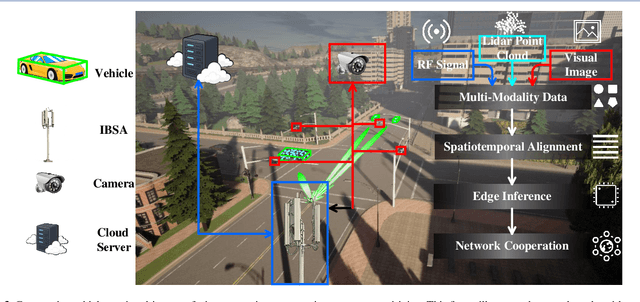
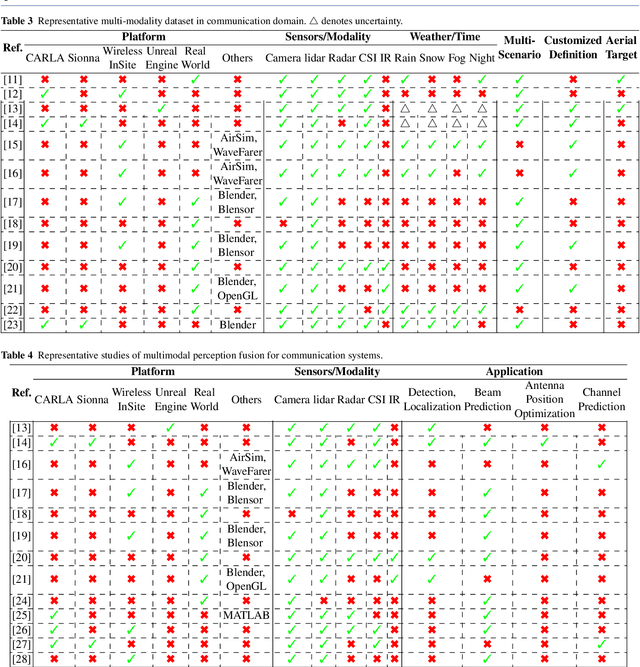
The advent of sixth-generation (6G) places intelligence at the core of wireless architecture, fusing perception, communication, and computation into a single closed-loop. This paper argues that large artificial intelligence models (LAMs) can endow base stations with perception, reasoning, and acting capabilities, thus transforming them into intelligent base station agents (IBSAs). We first review the historical evolution of BSs from single-functional analog infrastructure to distributed, software-defined, and finally LAM-empowered IBSA, highlighting the accompanying changes in architecture, hardware platforms, and deployment. We then present an IBSA architecture that couples a perception-cognition-execution pipeline with cloud-edge-end collaboration and parameter-efficient adaptation. Subsequently,we study two representative scenarios: (i) cooperative vehicle-road perception for autonomous driving, and (ii) ubiquitous base station support for low-altitude uncrewed aerial vehicle safety monitoring and response against unauthorized drones. On this basis, we analyze key enabling technologies spanning LAM design and training, efficient edge-cloud inference, multi-modal perception and actuation, as well as trustworthy security and governance. We further propose a holistic evaluation framework and benchmark considerations that jointly cover communication performance, perception accuracy, decision-making reliability, safety, and energy efficiency. Finally, we distill open challenges on benchmarks, continual adaptation, trustworthy decision-making, and standardization. Together, this work positions LAM-enabled IBSAs as a practical path toward integrated perception, communication, and computation native, safety-critical 6G systems.
Toward Near-Space Communication Network in the 6G and Beyond Era
May 18, 2025Near-space communication network (NS-ComNet), as an indispensable component of sixth-generation (6G) and beyond mobile communication systems and the space-air-ground-sea integrated network (SAGSIN), demonstrates unique advantages in wide-area coverage, long-endurance high-altitude operation, and highly flexible deployment. This paper presents a comprehensive review of NS-ComNet for 6G and beyond era. Specifically, by contrasting satellite, low-altitude unmanned-aerial-vehicle (UAV), and terrestrial communications, we first elucidate the background and motivation for integrating NS-ComNet into 6G network architectures. Subsequently, we review the developmental status of near-space platforms, including high-altitude balloons, solar-powered UAVs, and stratospheric airships, and analyze critical challenges faced by NS-ComNet. To address these challenges, the research focuses on key enabling technologies such as topology design, resource and handover management, multi-objective joint optimization, etc., with particular emphasis on artificial intelligence techniques for NS-ComNet. Finally, envisioning future intelligent collaborative networks that integrate NS-ComNet with satellite-UAV-terrestrial systems, we explore promising directions. This paper aims to provide technical insights and research foundations for the systematic construction of NS-ComNet and its deep deployment in the 6G and beyond era.
A Nonlinear African Vulture Optimization Algorithm Combining Henon Chaotic Mapping Theory and Reverse Learning Competition Strategy
Mar 26, 2024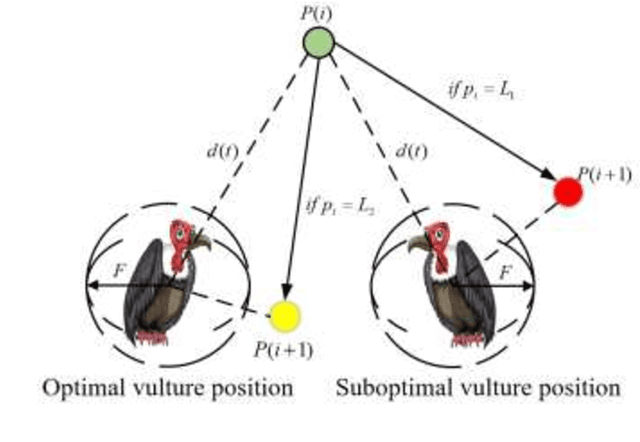
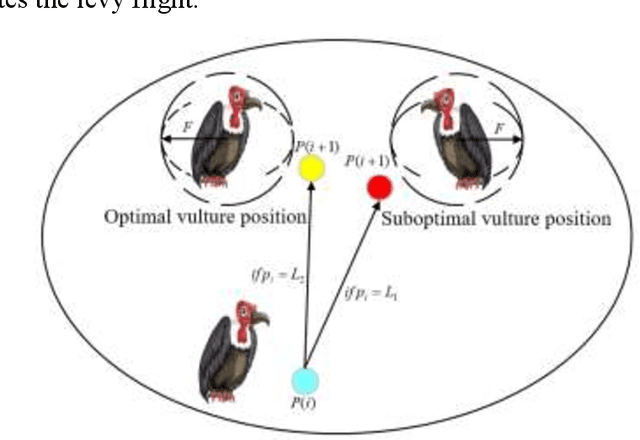
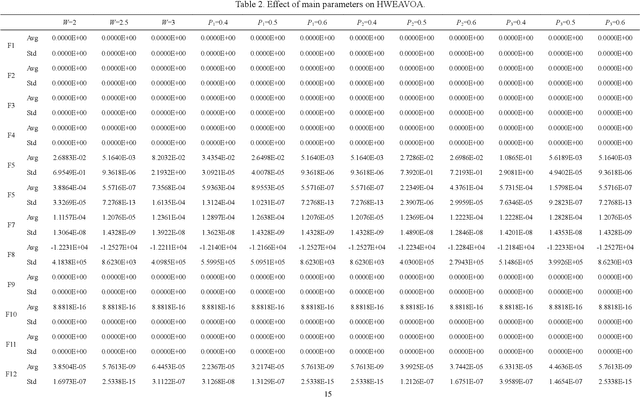
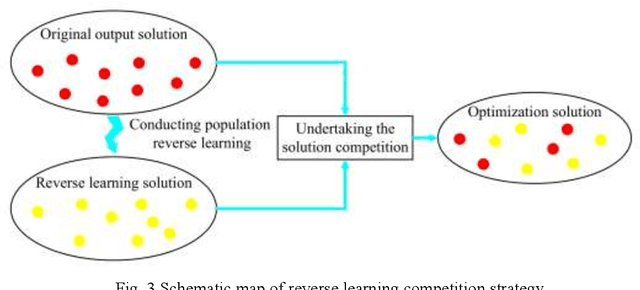
In order to alleviate the main shortcomings of the AVOA, a nonlinear African vulture optimization algorithm combining Henon chaotic mapping theory and reverse learning competition strategy (HWEAVOA) is proposed. Firstly, the Henon chaotic mapping theory and elite population strategy are proposed to improve the randomness and diversity of the vulture's initial population; Furthermore, the nonlinear adaptive incremental inertial weight factor is introduced in the location update phase to rationally balance the exploration and exploitation abilities, and avoid individual falling into a local optimum; The reverse learning competition strategy is designed to expand the discovery fields for the optimal solution and strengthen the ability to jump out of the local optimal solution. HWEAVOA and other advanced comparison algorithms are used to solve classical and CEC2022 test functions. Compared with other algorithms, the convergence curves of the HWEAVOA drop faster and the line bodies are smoother. These experimental results show the proposed HWEAVOA is ranked first in all test functions, which is superior to the comparison algorithms in convergence speed, optimization ability, and solution stability. Meanwhile, HWEAVOA has reached the general level in the algorithm complexity, and its overall performance is competitive in the swarm intelligence algorithms.