 Add to Chrome
 Add to Firefox
 Add to Edge
Human-LLM Collaborative Feature Engineering for Tabular Data
Jan 28, 2026
Large language models (LLMs) are increasingly used to automate feature engineering in tabular learning. Given task-specific information, LLMs can propose diverse feature transformation operations to enhance downstream model performance. However, current approaches typically assign the LLM as a black-box optimizer, responsible for both proposing and selecting operations based solely on its internal heuristics, which often lack calibrated estimations of operation utility and consequently lead to repeated exploration of low-yield operations without a principled strategy for prioritizing promising directions. In this paper, we propose a human-LLM collaborative feature engineering framework for tabular learning. We begin by decoupling the transformation operation proposal and selection processes, where LLMs are used solely to generate operation candidates, while the selection is guided by explicitly modeling the utility and uncertainty of each proposed operation. Since accurate utility estimation can be difficult especially in the early rounds of feature engineering, we design a mechanism within the framework that selectively elicits and incorporates human expert preference feedback, comparing which operations are more promising, into the selection process to help identify more effective operations. Our evaluations on both the synthetic study and the real user study demonstrate that the proposed framework improves feature engineering performance across a variety of tabular datasets and reduces users' cognitive load during the feature engineering process.

Using LSTM for the Prediction of Disruption in ADITYA Tokamak
Jul 13, 2020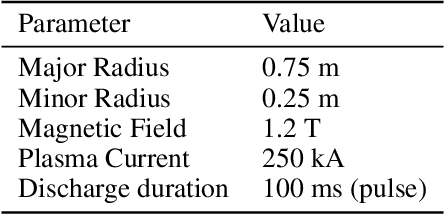
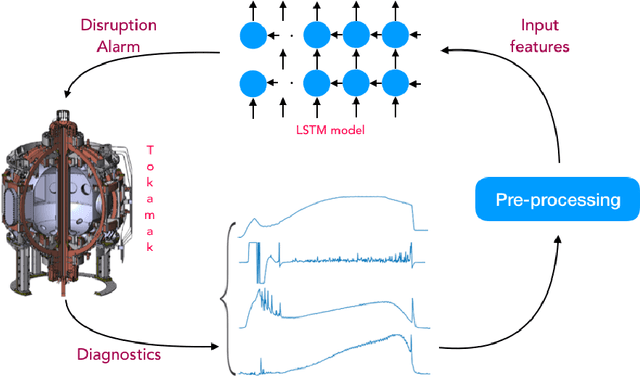
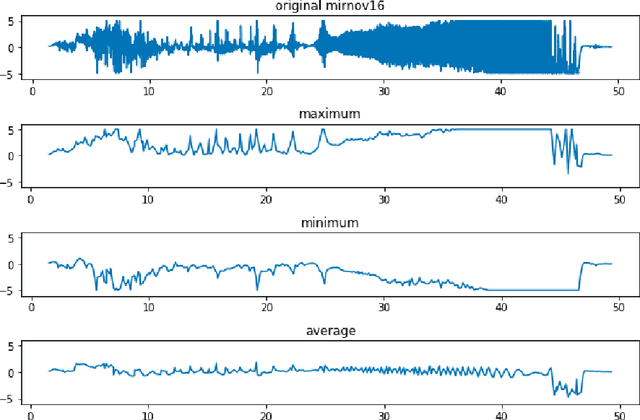
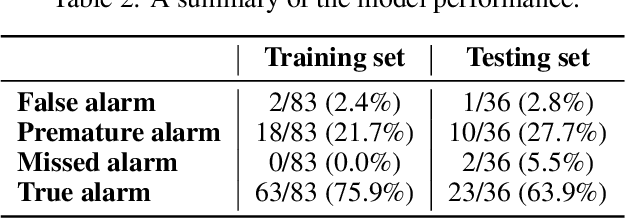
Major disruptions in tokamak pose a serious threat to the vessel and its surrounding pieces of equipment. The ability of the systems to detect any behavior that can lead to disruption can help in alerting the system beforehand and prevent its harmful effects. Many machine learning techniques have already been in use at large tokamaks like JET and ASDEX, but are not suitable for ADITYA, which is comparatively small. Through this work, we discuss a new real-time approach to predict the time of disruption in ADITYA tokamak and validate the results on an experimental dataset. The system uses selected diagnostics from the tokamak and after some pre-processing steps, sends them to a time-sequence Long Short-Term Memory (LSTM) network. The model can make the predictions 12 ms in advance at less computation cost that is quick enough to be deployed in real-time applications.