 Add to Chrome
 Add to Firefox
 Add to Edge
CommonLID: Re-evaluating State-of-the-Art Language Identification Performance on Web Data
Jan 25, 2026
Language identification (LID) is a fundamental step in curating multilingual corpora. However, LID models still perform poorly for many languages, especially on the noisy and heterogeneous web data often used to train multilingual language models. In this paper, we introduce CommonLID, a community-driven, human-annotated LID benchmark for the web domain, covering 109 languages. Many of the included languages have been previously under-served, making CommonLID a key resource for developing more representative high-quality text corpora. We show CommonLID's value by using it, alongside five other common evaluation sets, to test eight popular LID models. We analyse our results to situate our contribution and to provide an overview of the state of the art. In particular, we highlight that existing evaluations overestimate LID accuracy for many languages in the web domain. We make CommonLID and the code used to create it available under an open, permissive license.

Gymnasium: A Standard Interface for Reinforcement Learning Environments
Jul 24, 2024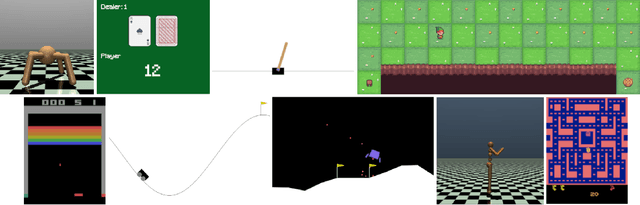
Gymnasium is an open-source library providing an API for reinforcement learning environments. Its main contribution is a central abstraction for wide interoperability between benchmark environments and training algorithms. Gymnasium comes with various built-in environments and utilities to simplify researchers' work along with being supported by most training libraries. This paper outlines the main design decisions for Gymnasium, its key features, and the differences to alternative APIs.
Pretraining the Vision Transformer using self-supervised methods for vision based Deep Reinforcement Learning
Sep 22, 2022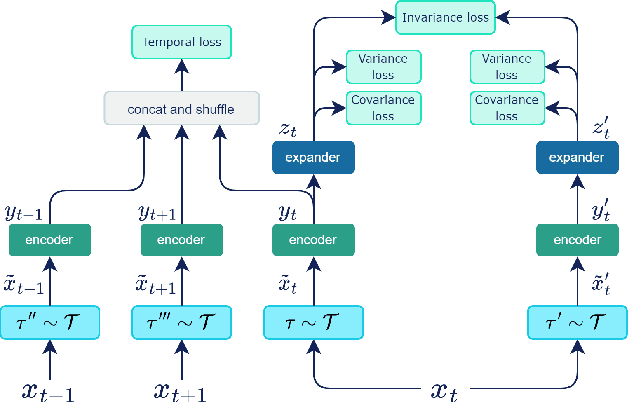

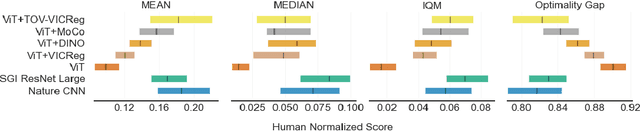
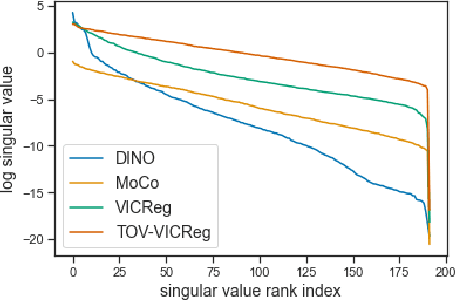
The Vision Transformer architecture has shown to be competitive in the computer vision (CV) space where it has dethroned convolution-based networks in several benchmarks. Nevertheless, Convolutional Neural Networks (CNN) remain the preferential architecture for the representation module in Reinforcement Learning. In this work, we study pretraining a Vision Transformer using several state-of-the-art self-supervised methods and assess data-efficiency gains from this training framework. We propose a new self-supervised learning method called TOV-VICReg that extends VICReg to better capture temporal relations between observations by adding a temporal order verification task. Furthermore, we evaluate the resultant encoders with Atari games in a sample-efficiency regime. Our results show that the vision transformer, when pretrained with TOV-VICReg, outperforms the other self-supervised methods but still struggles to overcome a CNN. Nevertheless, we were able to outperform a CNN in two of the ten games where we perform a 100k steps evaluation. Ultimately, we believe that such approaches in Deep Reinforcement Learning (DRL) might be the key to achieving new levels of performance as seen in natural language processing and computer vision. Source code will be available at: https://github.com/mgoulao/TOV-VICReg