 Add to Chrome
 Add to Firefox
 Add to Edge
SayNext-Bench: Why Do LLMs Struggle with Next-Utterance Prediction?
Jan 30, 2026
We explore the use of large language models (LLMs) for next-utterance prediction in human dialogue. Despite recent advances in LLMs demonstrating their ability to engage in natural conversations with users, we show that even leading models surprisingly struggle to predict a human speaker's next utterance. Instead, humans can readily anticipate forthcoming utterances based on multimodal cues, such as gestures, gaze, and emotional tone, from the context. To systematically examine whether LLMs can reproduce this ability, we propose SayNext-Bench, a benchmark that evaluates LLMs and Multimodal LLMs (MLLMs) on anticipating context-conditioned responses from multimodal cues spanning a variety of real-world scenarios. To support this benchmark, we build SayNext-PC, a novel large-scale dataset containing dialogues with rich multimodal cues. Building on this, we further develop a dual-route prediction MLLM, SayNext-Chat, that incorporates cognitively inspired design to emulate predictive processing in conversation. Experimental results demonstrate that our model outperforms state-of-the-art MLLMs in terms of lexical overlap, semantic similarity, and emotion consistency. Our results prove the feasibility of next-utterance prediction with LLMs from multimodal cues and emphasize the (i) indispensable role of multimodal cues and (ii) actively predictive processing as the foundation of natural human interaction, which is missing in current MLLMs. We hope that this exploration offers a new research entry toward more human-like, context-sensitive AI interaction for human-centered AI. Our benchmark and model can be accessed at https://saynext.github.io/.

PSELDNets: Pre-trained Neural Networks on Large-scale Synthetic Datasets for Sound Event Localization and Detection
Nov 10, 2024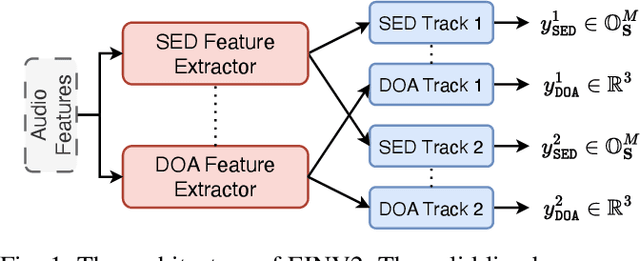
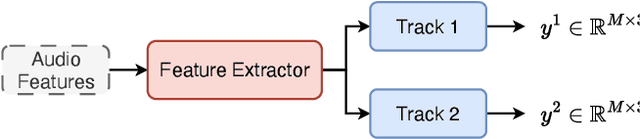
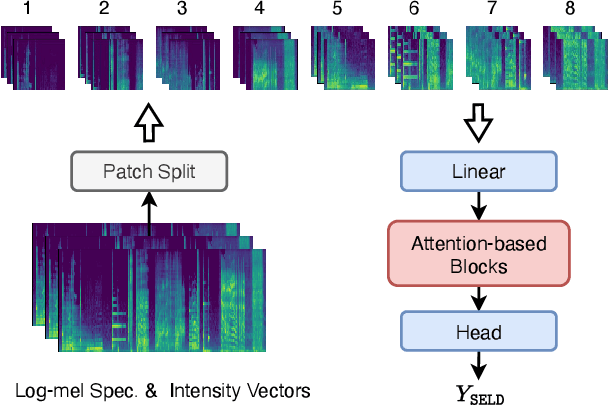
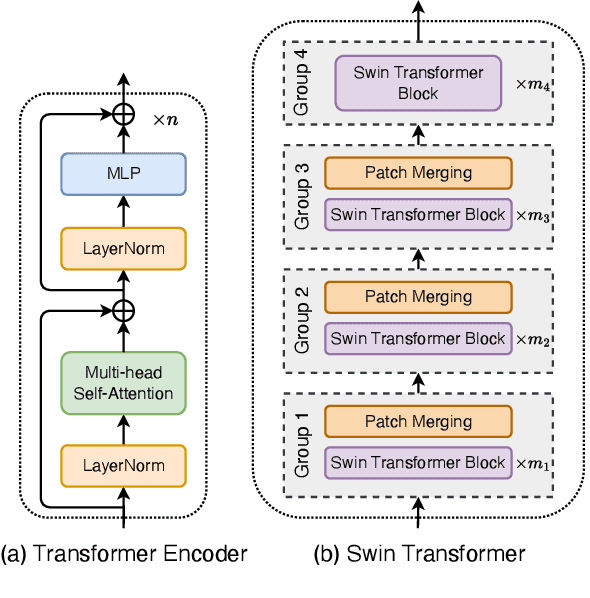
Sound event localization and detection (SELD) has seen substantial advancements through learning-based methods. These systems, typically trained from scratch on specific datasets, have shown considerable generalization capabilities. Recently, deep neural networks trained on large-scale datasets have achieved remarkable success in the sound event classification (SEC) field, prompting an open question of whether these advancements can be extended to develop general-purpose SELD models. In this paper, leveraging the power of pre-trained SEC models, we propose pre-trained SELD networks (PSELDNets) on large-scale synthetic datasets. These synthetic datasets, generated by convolving sound events with simulated spatial room impulse responses (SRIRs), contain 1,167 hours of audio clips with an ontology of 170 sound classes. These PSELDNets are transferred to downstream SELD tasks. When we adapt PSELDNets to specific scenarios, particularly in low-resource data cases, we introduce a data-efficient fine-tuning method, AdapterBit. PSELDNets are evaluated on a synthetic-test-set using collected SRIRs from TAU Spatial Room Impulse Response Database (TAU-SRIR DB) and achieve satisfactory performance. We also conduct our experiments to validate the transferability of PSELDNets to three publicly available datasets and our own collected audio recordings. Results demonstrate that PSELDNets surpass state-of-the-art systems across all publicly available datasets. Given the need for direction-of-arrival estimation, SELD generally relies on sufficient multi-channel audio clips. However, incorporating the AdapterBit, PSELDNets show more efficient adaptability to various tasks using minimal multi-channel or even just monophonic audio clips, outperforming the traditional fine-tuning approaches.