 Add to Chrome
 Add to Firefox
 Add to Edge
Woa
Papers and Code
Advanced DOA Regulation with a Whale-Optimized Fractional Order Fuzzy PID Framework
Aug 17, 2025
This study introduces a Fractional Order Fuzzy PID (FOFPID) controller that uses the Whale Optimization Algorithm (WOA) to manage the Bispectral Index (BIS), keeping it within the ideal range of forty to sixty. The FOFPID controller combines fuzzy logic for adapting to changes and fractional order dynamics for fine tuning. This allows it to adjust its control gains to handle a person's unique physiology. The WOA helps fine tune the controller's parameters, including the fractional orders and the fuzzy membership functions, which boosts its performance. Tested on models of eight different patient profiles, the FOFPID controller performed better than a standard Fractional Order PID (FOPID) controller. It achieved faster settling times, at two and a half minutes versus three point two minutes, and had a lower steady state error, at zero point five versus one point two. These outcomes show the FOFPID's excellent strength and accuracy. It offers a scalable, artificial intelligence driven solution for automated anesthesia delivery that could enhance clinical practice and improve patient results.

Hybrid Wave-wind System Power Optimisation Using Effective Ensemble Covariance Matrix Adaptation Evolutionary Algorithm
May 28, 2025Floating hybrid wind-wave systems combine offshore wind platforms with wave energy converters (WECs) to create cost-effective and reliable energy solutions. Adequately designed and tuned WECs are essential to avoid unwanted loads disrupting turbine motion while efficiently harvesting wave energy. These systems diversify energy sources, enhancing energy security and reducing supply risks while providing a more consistent power output by smoothing energy production variability. However, optimising such systems is complex due to the physical and hydrodynamic interactions between components, resulting in a challenging optimisation space. This study uses a 5-MW OC4-DeepCwind semi-submersible platform with three spherical WECs to explore these synergies. To address these challenges, we propose an effective ensemble optimisation (EEA) technique that combines covariance matrix adaptation, novelty search, and discretisation techniques. To evaluate the EEA performance, we used four sea sites located along Australia's southern coast. In this framework, geometry and power take-off parameters are simultaneously optimised to maximise the average power output of the hybrid wind-wave system. Ensemble optimisation methods enhance performance, flexibility, and robustness by identifying the best algorithm or combination of algorithms for a given problem, addressing issues like premature convergence, stagnation, and poor search space exploration. The EEA was benchmarked against 14 advanced optimisation methods, demonstrating superior solution quality and convergence rates. EEA improved total power output by 111%, 95%, and 52% compared to WOA, EO, and AHA, respectively. Additionally, in comparisons with advanced methods, LSHADE, SaNSDE, and SLPSO, EEA achieved absorbed power enhancements of 498%, 638%, and 349% at the Sydney sea site, showcasing its effectiveness in optimising hybrid energy systems.
Epidemic Forecasting with a Hybrid Deep Learning Method Using CNN LSTM With WOA GWO Optimization: Global COVID-19 Case Study
Mar 17, 2025Effective epidemic modeling is essential for managing public health crises, requiring robust methods to predict disease spread and optimize resource allocation. This study introduces a novel deep learning framework that advances time series forecasting for infectious diseases, with its application to COVID 19 data as a critical case study. Our hybrid approach integrates Convolutional Neural Networks (CNNs) and Long Short Term Memory (LSTM) models to capture spatial and temporal dynamics of disease transmission across diverse regions. The CNN extracts spatial features from raw epidemiological data, while the LSTM models temporal patterns, yielding precise and adaptable predictions. To maximize performance, we employ a hybrid optimization strategy combining the Whale Optimization Algorithm (WOA) and Gray Wolf Optimization (GWO) to fine tune hyperparameters, such as learning rates, batch sizes, and training epochs enhancing model efficiency and accuracy. Applied to COVID 19 case data from 24 countries across six continents, our method outperforms established benchmarks, including ARIMA and standalone LSTM models, with statistically significant gains in predictive accuracy (e.g., reduced RMSE). This framework demonstrates its potential as a versatile method for forecasting epidemic trends, offering insights for resource planning and decision making in both historical contexts, like the COVID 19 pandemic, and future outbreaks.
Goat Optimization Algorithm: A Novel Bio-Inspired Metaheuristic for Global Optimization
Mar 04, 2025This paper presents the Goat Optimization Algorithm (GOA), a novel bio-inspired metaheuristic optimization technique inspired by goats' adaptive foraging, strategic movement, and parasite avoidance behaviors.GOA is designed to balance exploration and exploitation effectively by incorporating three key mechanisms, adaptive foraging for global search, movement toward the best solution for local refinement, and a jump strategy to escape local optima.A solution filtering mechanism is introduced to enhance robustness and maintain population diversity. The algorithm's performance is evaluated on standard unimodal and multimodal benchmark functions, demonstrating significant improvements over existing metaheuristics, including Particle Swarm Optimization (PSO), Grey Wolf Optimizer (GWO), Genetic Algorithm (GA), Whale Optimization Algorithm (WOA), and Artificial Bee Colony (ABC). Comparative analysis highlights GOA's superior convergence rate, enhanced global search capability, and higher solution accuracy.A Wilcoxon rank-sum test confirms the statistical significance of GOA's exceptional performance. Despite its efficiency, computational complexity and parameter sensitivity remain areas for further optimization. Future research will focus on adaptive parameter tuning, hybridization with other metaheuristics, and real-world applications in supply chain management, bioinformatics, and energy optimization. The findings suggest that GOA is a promising advancement in bio-inspired optimization techniques.
Enhancing Spectrum Efficiency in 6G Satellite Networks: A GAIL-Powered Policy Learning via Asynchronous Federated Inverse Reinforcement Learning
Sep 27, 2024In this paper, a novel generative adversarial imitation learning (GAIL)-powered policy learning approach is proposed for optimizing beamforming, spectrum allocation, and remote user equipment (RUE) association in NTNs. Traditional reinforcement learning (RL) methods for wireless network optimization often rely on manually designed reward functions, which can require extensive parameter tuning. To overcome these limitations, we employ inverse RL (IRL), specifically leveraging the GAIL framework, to automatically learn reward functions without manual design. We augment this framework with an asynchronous federated learning approach, enabling decentralized multi-satellite systems to collaboratively derive optimal policies. The proposed method aims to maximize spectrum efficiency (SE) while meeting minimum information rate requirements for RUEs. To address the non-convex, NP-hard nature of this problem, we combine the many-to-one matching theory with a multi-agent asynchronous federated IRL (MA-AFIRL) framework. This allows agents to learn through asynchronous environmental interactions, improving training efficiency and scalability. The expert policy is generated using the Whale optimization algorithm (WOA), providing data to train the automatic reward function within GAIL. Simulation results show that the proposed MA-AFIRL method outperforms traditional RL approaches, achieving a $14.6\%$ improvement in convergence and reward value. The novel GAIL-driven policy learning establishes a novel benchmark for 6G NTN optimization.
Inverting the sound speed profile from multi-beam echo sounder data and historical measurements -- a simulation study
Sep 03, 2024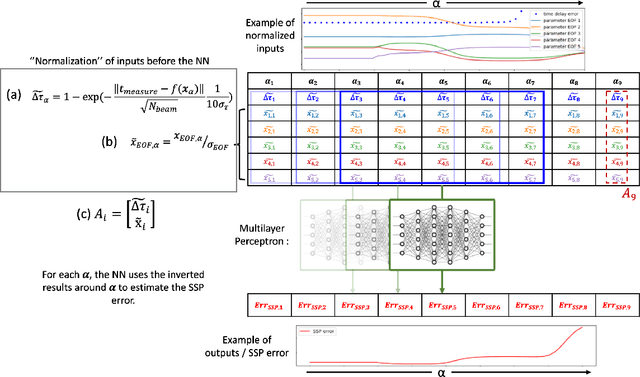
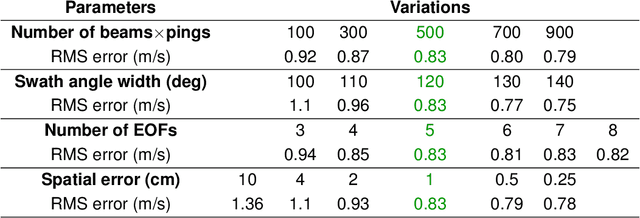
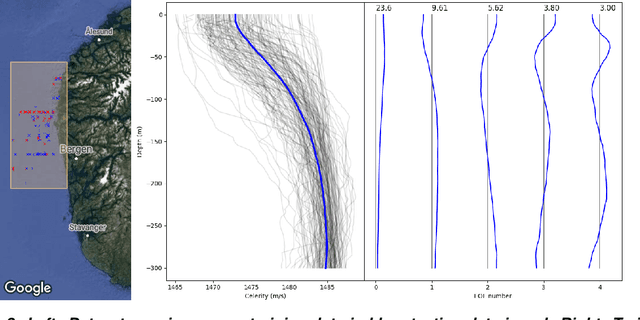
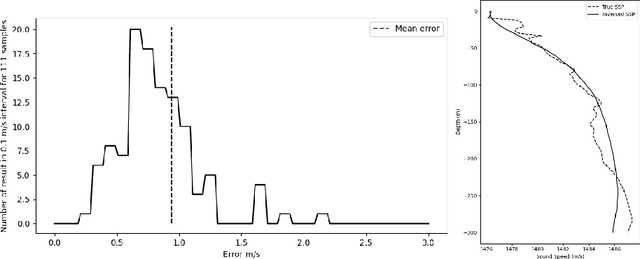
The ocean's opacity poses challenges for security, as new technology, e.g. underwater drones, offers new opportunities for illegal activities, such as smuggling and terrorism. A network of unmanned surface vehicles (USV) and autonomous underwater vehicles (AUV) offers a potential underwater surveillance solution, but demands high autonomy and compact hardware. For improved situational awareness and efficient operation, sonar performance models may provide the network with sensor coverage maps, but this requires constantly updated environmental information, in particular the present sound speed profile (SSP). We propose the inversion of SSPs from multibeam echo sounder (MBES) data in an environment with known topography. The method exploits the two-way travel time from the MBES to the bottom, comparing the measurements to modelled travel time for a proposed SSP model. An acoustic raytracer models the travel time for the SSP model. The inversion problem is shown to be non-unique when basing the cost function on the two-way travel time alone. This is resolved by incorporating a Tikhonov-type regularization term for inclusion of a priori knowledge on the SSPs in addition to the travel time in the final cost function. Empirical orthogonal functions (EOFs) are derived from a historical SSP data set, and variance for the EOF coefficients are determined from the same data set. The EOF coefficient distributions are assumed Gaussian and used in the regularization term to limit the search space of the inversion algorithm to physically feasible SSPs. A neural network determines the regularization parameters. The method's validity and sensitivity to errors is assessed using synthetic sonar data for the Norwegian Trench. The method accurately recovers SSPs with average root mean square errors of 0.83 m/s. For comparison, the error obtained using state-of-the-art climatology (WOA) is 2.6 m/s.
* 8 pages, 3 figures
A Scalable k-Medoids Clustering via Whale Optimization Algorithm
Aug 30, 2024Unsupervised clustering has emerged as a critical tool for uncovering hidden patterns and insights from vast, unlabeled datasets. However, traditional methods like Partitioning Around Medoids (PAM) struggle with scalability due to their quadratic computational complexity. To address this limitation, we introduce WOA-kMedoids, a novel unsupervised clustering method that incorporates the Whale Optimization Algorithm (WOA), a nature-inspired metaheuristic inspired by the hunting strategies of humpback whales. By optimizing centroid selection, WOA-kMedoids reduces computational complexity of the k-medoids algorithm from quadratic to near-linear with respect to the number of observations. This improvement in efficiency enables WOA-kMedoids to be scalable to large datasets while maintaining high clustering accuracy. We evaluated the performance of WOA-kMedoids on 25 diverse time series datasets from the UCR archive. Our empirical results demonstrate that WOA-kMedoids maintains clustering accuracy similar to PAM. While WOA-kMedoids exhibited slightly higher runtime than PAM on small datasets (less than 300 observations), it outperformed PAM in computational efficiency on larger datasets. The scalability of WOA-kMedoids, combined with its consistently high accuracy, positions it as a promising and practical choice for unsupervised clustering in big data applications. WOA-kMedoids has implications for efficient knowledge discovery in massive, unlabeled datasets across various domains.
The Firefighter Algorithm: A Hybrid Metaheuristic for Optimization Problems
Jun 01, 2024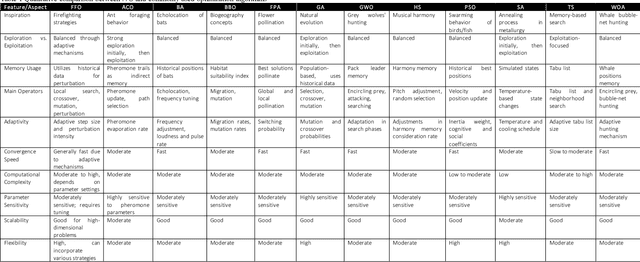
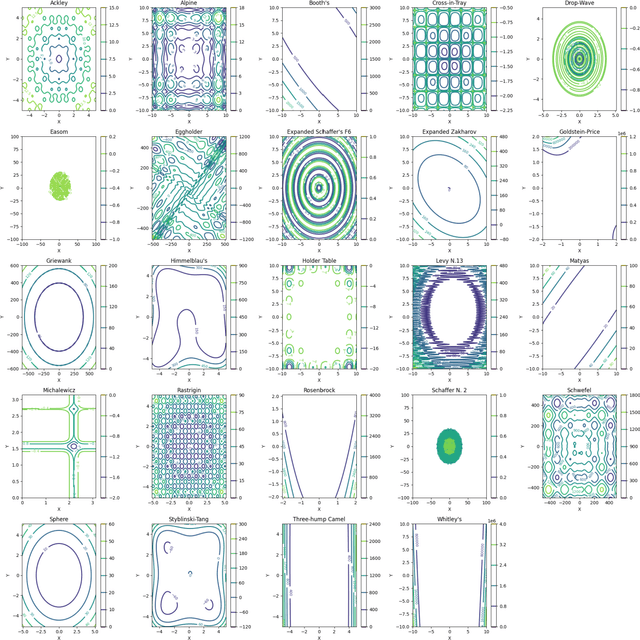
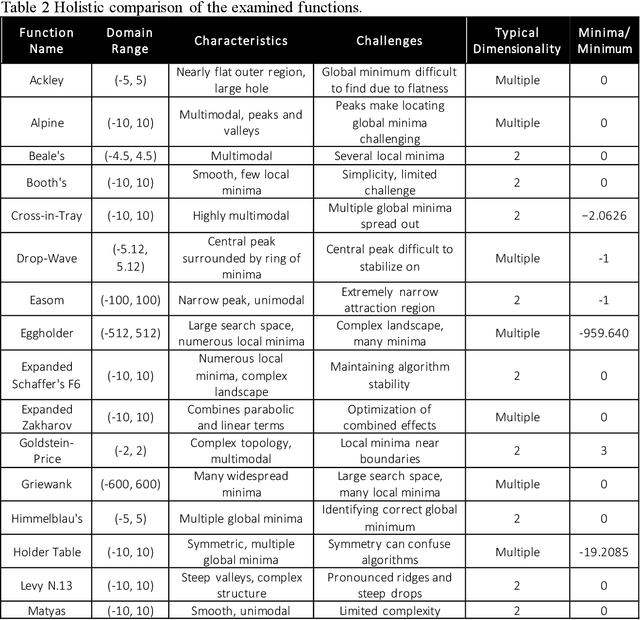
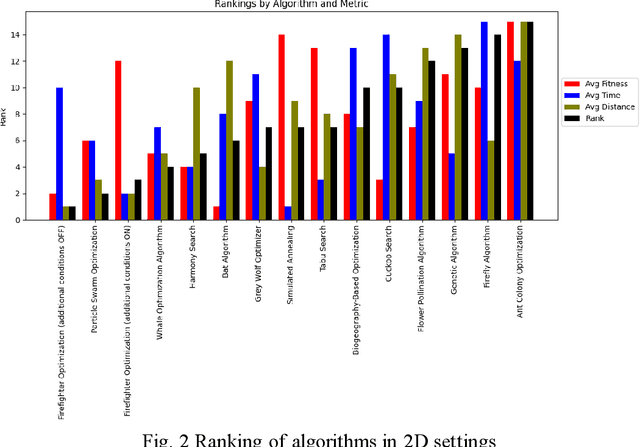
This paper presents the Firefighter Optimization (FFO) algorithm as a new hybrid metaheuristic for optimization problems. This algorithm stems inspiration from the collaborative strategies often deployed by firefighters in firefighting activities. To evaluate the performance of FFO, extensive experiments were conducted, wherein the FFO was examined against 13 commonly used optimization algorithms, namely, the Ant Colony Optimization (ACO), Bat Algorithm (BA), Biogeography-Based Optimization (BBO), Flower Pollination Algorithm (FPA), Genetic Algorithm (GA), Grey Wolf Optimizer (GWO), Harmony Search (HS), Particle Swarm Optimization (PSO), Simulated Annealing (SA), Tabu Search (TS), and Whale Optimization Algorithm (WOA), and across 24 benchmark functions of various dimensions and complexities. The results demonstrate that FFO achieves comparative performance and, in some scenarios, outperforms commonly adopted optimization algorithms in terms of the obtained fitness, time taken for exaction, and research space covered per unit of time.
Maximizing UAV Fog Deployment Efficiency for Critical Rescue Operations
Feb 25, 2024


In disaster scenarios and high-stakes rescue operations, integrating Unmanned Aerial Vehicles (UAVs) as fog nodes has become crucial. This integration ensures a smooth connection between affected populations and essential health monitoring devices, supported by the Internet of Things (IoT). Integrating UAVs in such environments is inherently challenging, where the primary objectives involve maximizing network connectivity and coverage while extending the network's lifetime through energy-efficient strategies to serve the maximum number of affected individuals. In this paper, We propose a novel model centred around dynamic UAV-based fog deployment that optimizes the system's adaptability and operational efficacy within the afflicted areas. First, we decomposed the problem into two subproblems. Connectivity and coverage subproblem, and network lifespan optimization subproblem. We shape our UAV fog deployment problem as a uni-objective optimization and introduce a specialized UAV fog deployment algorithm tailored specifically for UAV fog nodes deployed in rescue missions. While the network lifespan optimization subproblem is efficiently solved via a one-dimensional swapping method. Following that, We introduce a novel optimization strategy for UAV fog node placement in dynamic networks during evacuation scenarios, with a primary focus on ensuring robust connectivity and maximal coverage for mobile users, while extending the network's lifespan. Finally, we introduce Adaptive Whale Optimization Algorithm (WOA) for fog node deployment in a dynamic network. Its agility, rapid convergence, and low computational demands make it an ideal fit for high-pressure environments.
Pre-insertion resistors temperature prediction based on improved WOA-SVR
Jan 07, 2024The pre-insertion resistors (PIR) within high-voltage circuit breakers are critical components and warm up by generating Joule heat when an electric current flows through them. Elevated temperature can lead to temporary closure failure and, in severe cases, the rupture of PIR. To accurately predict the temperature of PIR, this study combines finite element simulation techniques with Support Vector Regression (SVR) optimized by an Improved Whale Optimization Algorithm (IWOA) approach. The IWOA includes Tent mapping, a convergence factor based on the sigmoid function, and the Ornstein-Uhlenbeck variation strategy. The IWOA-SVR model is compared with the SSA-SVR and WOA-SVR. The results reveal that the prediction accuracies of the IWOA-SVR model were 90.2% and 81.5% (above 100$^\circ$C) in the 3$^\circ$C temperature deviation range and 96.3% and 93.4% (above 100$^\circ$C) in the 4$^\circ$C temperature deviation range, surpassing the performance of the comparative models. This research demonstrates the method proposed can realize the online monitoring of the temperature of the PIR, which can effectively prevent thermal faults PIR and provide a basis for the opening and closing of the circuit breaker within a short period.