 Add to Chrome
 Add to Firefox
 Add to Edge
CASTLE: A Comprehensive Benchmark for Evaluating Student-Tailored Personalized Safety in Large Language Models
Feb 05, 2026
Large language models (LLMs) have advanced the development of personalized learning in education. However, their inherent generation mechanisms often produce homogeneous responses to identical prompts. This one-size-fits-all mechanism overlooks the substantial heterogeneity in students cognitive and psychological, thereby posing potential safety risks to vulnerable groups. Existing safety evaluations primarily rely on context-independent metrics such as factual accuracy, bias, or toxicity, which fail to capture the divergent harms that the same response might cause across different student attributes. To address this gap, we propose the concept of Student-Tailored Personalized Safety and construct CASTLE based on educational theories. This benchmark covers 15 educational safety risks and 14 student attributes, comprising 92,908 bilingual scenarios. We further design three evaluation metrics: Risk Sensitivity, measuring the model ability to detect risks; Emotional Empathy, evaluating the model capacity to recognize student states; and Student Alignment, assessing the match between model responses and student attributes. Experiments on 18 SOTA LLMs demonstrate that CASTLE poses a significant challenge: all models scored below an average safety rating of 2.3 out of 5, indicating substantial deficiencies in personalized safety assurance.

Logic-Oriented Retriever Enhancement via Contrastive Learning
Feb 01, 2026Large language models (LLMs) struggle in knowledge-intensive tasks, as retrievers often overfit to surface similarity and fail on queries involving complex logical relations. The capacity for logical analysis is inherent in model representations but remains underutilized in standard training. LORE (Logic ORiented Retriever Enhancement) introduces fine-grained contrastive learning to activate this latent capacity, guiding embeddings toward evidence aligned with logical structure rather than shallow similarity. LORE requires no external upervision, resources, or pre-retrieval analysis, remains index-compatible, and consistently improves retrieval utility and downstream generation while maintaining efficiency. The datasets and code are publicly available at https://github.com/mazehart/Lore-RAG.
EduAgentQG: A Multi-Agent Workflow Framework for Personalized Question Generation
Nov 08, 2025High-quality personalized question banks are crucial for supporting adaptive learning and individualized assessment. Manually designing questions is time-consuming and often fails to meet diverse learning needs, making automated question generation a crucial approach to reduce teachers' workload and improve the scalability of educational resources. However, most existing question generation methods rely on single-agent or rule-based pipelines, which still produce questions with unstable quality, limited diversity, and insufficient alignment with educational goals. To address these challenges, we propose EduAgentQG, a multi-agent collaborative framework for generating high-quality and diverse personalized questions. The framework consists of five specialized agents and operates through an iterative feedback loop: the Planner generates structured design plans and multiple question directions to enhance diversity; the Writer produces candidate questions based on the plan and optimizes their quality and diversity using feedback from the Solver and Educator; the Solver and Educator perform binary scoring across multiple evaluation dimensions and feed the evaluation results back to the Writer; the Checker conducts final verification, including answer correctness and clarity, ensuring alignment with educational goals. Through this multi-agent collaboration and iterative feedback loop, EduAgentQG generates questions that are both high-quality and diverse, while maintaining consistency with educational objectives. Experiments on two mathematics question datasets demonstrate that EduAgentQG outperforms existing single-agent and multi-agent methods in terms of question diversity, goal consistency, and overall quality.
The Advancement of Personalized Learning Potentially Accelerated by Generative AI
Dec 01, 2024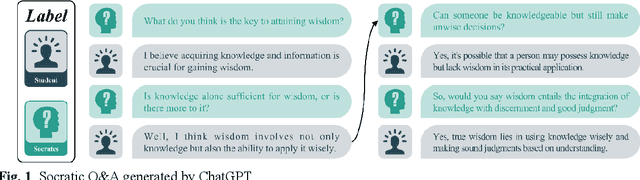
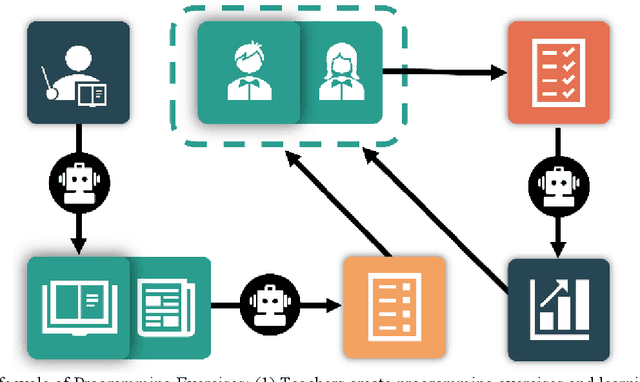
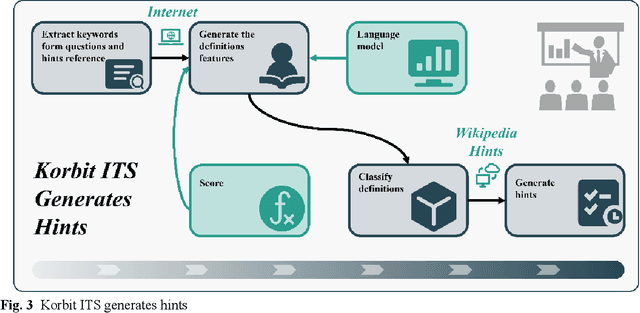
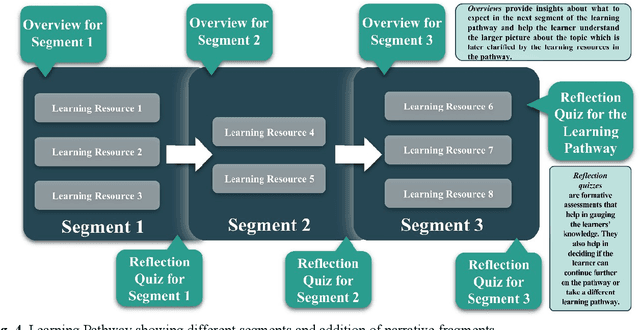
The rapid development of Generative AI (GAI) has sparked revolutionary changes across various aspects of education. Personalized learning, a focal point and challenge in educational research, has also been influenced by the development of GAI. To explore GAI's extensive impact on personalized learning, this study investigates its potential to enhance various facets of personalized learning through a thorough analysis of existing research. The research comprehensively examines GAI's influence on personalized learning by analyzing its application across different methodologies and contexts, including learning strategies, paths, materials, environments, and specific analyses within the teaching and learning processes. Through this in-depth investigation, we find that GAI demonstrates exceptional capabilities in providing adaptive learning experiences tailored to individual preferences and needs. Utilizing different forms of GAI across various subjects yields superior learning outcomes. The article concludes by summarizing scenarios where GAI is applicable in educational processes and discussing strategies for leveraging GAI to enhance personalized learning, aiming to guide educators and learners in effectively utilizing GAI to achieve superior learning objectives.