 Add to Chrome
 Add to Firefox
 Add to Edge
Logic-Oriented Retriever Enhancement via Contrastive Learning
Feb 01, 2026
Large language models (LLMs) struggle in knowledge-intensive tasks, as retrievers often overfit to surface similarity and fail on queries involving complex logical relations. The capacity for logical analysis is inherent in model representations but remains underutilized in standard training. LORE (Logic ORiented Retriever Enhancement) introduces fine-grained contrastive learning to activate this latent capacity, guiding embeddings toward evidence aligned with logical structure rather than shallow similarity. LORE requires no external upervision, resources, or pre-retrieval analysis, remains index-compatible, and consistently improves retrieval utility and downstream generation while maintaining efficiency. The datasets and code are publicly available at https://github.com/mazehart/Lore-RAG.

Multi-Agent Learning Path Planning via LLMs
Jan 24, 2026The integration of large language models (LLMs) into intelligent tutoring systems offers transformative potential for personalized learning in higher education. However, most existing learning path planning approaches lack transparency, adaptability, and learner-centered explainability. To address these challenges, this study proposes a novel Multi-Agent Learning Path Planning (MALPP) framework that leverages a role- and rule-based collaboration mechanism among intelligent agents, each powered by LLMs. The framework includes three task-specific agents: a learner analytics agent, a path planning agent, and a reflection agent. These agents collaborate via structured prompts and predefined rules to analyze learning profiles, generate tailored learning paths, and iteratively refine them with interpretable feedback. Grounded in Cognitive Load Theory and Zone of Proximal Development, the system ensures that recommended paths are cognitively aligned and pedagogically meaningful. Experiments conducted on the MOOCCubeX dataset using seven LLMs show that MALPP significantly outperforms baseline models in path quality, knowledge sequence consistency, and cognitive load alignment. Ablation studies further validate the effectiveness of the collaborative mechanism and theoretical constraints. This research contributes to the development of trustworthy, explainable AI in education and demonstrates a scalable approach to learner-centered adaptive instruction powered by LLMs.
AI Agent for Education: von Neumann Multi-Agent System Framework
Dec 30, 2024The development of large language models has ushered in new paradigms for education. This paper centers on the multi-Agent system in education and proposes the von Neumann multi-Agent system framework. It breaks down each AI Agent into four modules: control unit, logic unit, storage unit, and input-output devices, defining four types of operations: task deconstruction, self-reflection, memory processing, and tool invocation. Furthermore, it introduces related technologies such as Chain-of-Thought, Reson+Act, and Multi-Agent Debate associated with these four types of operations. The paper also discusses the ability enhancement cycle of a multi-Agent system for education, including the outer circulation for human learners to promote knowledge construction and the inner circulation for LLM-based-Agents to enhance swarm intelligence. Through collaboration and reflection, the multi-Agent system can better facilitate human learners' learning and enhance their teaching abilities in this process.
The Advancement of Personalized Learning Potentially Accelerated by Generative AI
Dec 01, 2024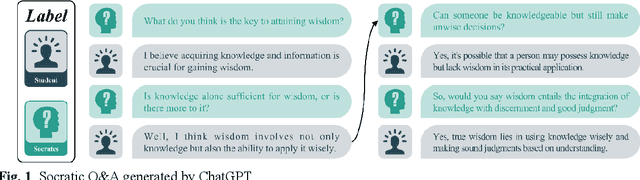
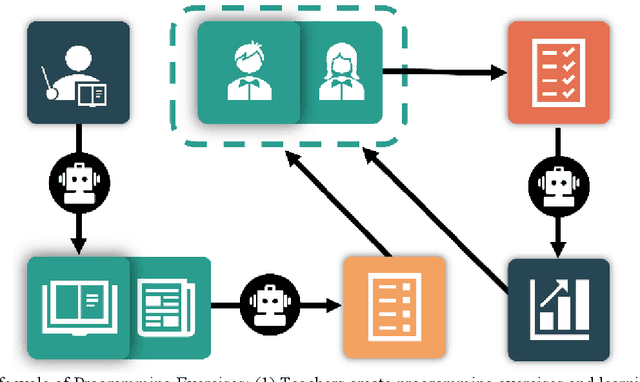
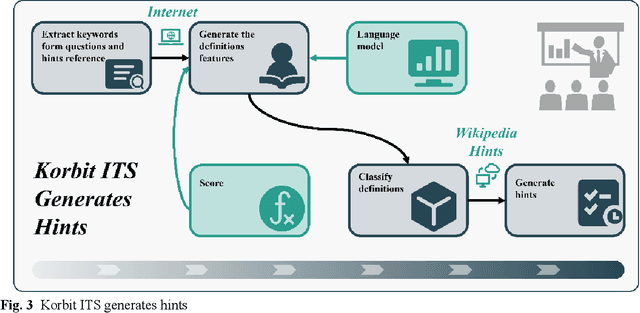
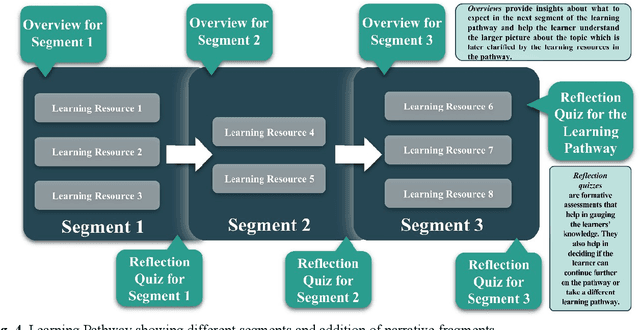
The rapid development of Generative AI (GAI) has sparked revolutionary changes across various aspects of education. Personalized learning, a focal point and challenge in educational research, has also been influenced by the development of GAI. To explore GAI's extensive impact on personalized learning, this study investigates its potential to enhance various facets of personalized learning through a thorough analysis of existing research. The research comprehensively examines GAI's influence on personalized learning by analyzing its application across different methodologies and contexts, including learning strategies, paths, materials, environments, and specific analyses within the teaching and learning processes. Through this in-depth investigation, we find that GAI demonstrates exceptional capabilities in providing adaptive learning experiences tailored to individual preferences and needs. Utilizing different forms of GAI across various subjects yields superior learning outcomes. The article concludes by summarizing scenarios where GAI is applicable in educational processes and discussing strategies for leveraging GAI to enhance personalized learning, aiming to guide educators and learners in effectively utilizing GAI to achieve superior learning objectives.