 Add to Chrome
 Add to Firefox
 Add to Edge
Formula-One Prompting: Adaptive Reasoning Through Equations For Applied Mathematics
Jan 27, 2026
Prompting techniques such as Chain-of-Thought (CoT) and Program-of-Thought (PoT) improve LLM mathematical reasoning by structuring intermediate steps in natural language or code. However, applied mathematics problems in domains like finance, physics, and cryptography often require recalling or deriving governing equations, a step that current approaches do not explicitly leverage. We propose Formula-One Prompting (F-1), a two-phase approach that uses mathematical equations as an intermediate representation before adaptive solving. F-1 first formulates governing equations from problem descriptions, then selects a solving strategy among CoT, PoT, or direct computation based on the generated equations, all within a single LLM call. Results across five models and four benchmarks show F-1 outperforms CoT by +5.76% and PoT by +8.42% on average. Crucially, gains are largest in applied domains: +13.30% on FinanceMath over CoT, and within OlympiadBench, larger gains on physics (+2.55%) than pure math (+0.44%). This demonstrates that F-1 is more effective than CoT in applied mathematics problems.

Typhoon-S: Minimal Open Post-Training for Sovereign Large Language Models
Jan 26, 2026Large language models (LLMs) have progressed rapidly; however, most state-of-the-art models are trained and evaluated primarily in high-resource languages such as English and Chinese, and are often developed by a small number of organizations with access to large-scale compute and data. This gatekeeping creates a practical barrier for sovereign settings in which a regional- or national-scale institution or domain owner must retain control and understanding of model weights, training data, and deployment while operating under limited resources and strict transparency constraints. To this end, we identify two core requirements: (1) adoptability, the ability to transform a base model into a general-purpose assistant, and (2) sovereign capability, the ability to perform high-stakes, region-specific tasks (e.g., legal reasoning in local languages and cultural knowledge). We investigate whether these requirements can be achieved without scaling massive instruction corpora or relying on complex preference tuning pipelines and large-scale reinforcement fine-tuning (RFT). We present Typhoon S, a minimal and open post-training recipe that combines supervised fine-tuning, on-policy distillation, and small-scale RFT. Using Thai as a representative case study, we demonstrate that our approach transforms both sovereign-adapted and general-purpose base models into instruction-tuned models with strong general performance. We further show that small-scale RFT with InK-GRPO -- an extension of GRPO that augments the GRPO loss with a next-word prediction loss -- improves Thai legal reasoning and Thai-specific knowledge while preserving general capabilities. Our results suggest that a carefully designed post-training strategy can reduce the required scale of instruction data and computation, providing a practical path toward high-quality sovereign LLMs under academic-scale resources.
Typhoon OCR: Open Vision-Language Model For Thai Document Extraction
Jan 21, 2026Document extraction is a core component of digital workflows, yet existing vision-language models (VLMs) predominantly favor high-resource languages. Thai presents additional challenges due to script complexity from non-latin letters, the absence of explicit word boundaries, and the prevalence of highly unstructured real-world documents, limiting the effectiveness of current open-source models. This paper presents Typhoon OCR, an open VLM for document extraction tailored for Thai and English. The model is fine-tuned from vision-language backbones using a Thai-focused training dataset. The dataset is developed using a multi-stage data construction pipeline that combines traditional OCR, VLM-based restructuring, and curated synthetic data. Typhoon OCR is a unified framework capable of text transcription, layout reconstruction, and document-level structural consistency. The latest iteration of our model, Typhoon OCR V1.5, is a compact and inference-efficient model designed to reduce reliance on metadata and simplify deployment. Comprehensive evaluations across diverse Thai document categories, including financial reports, government forms, books, infographics, and handwritten documents, show that Typhoon OCR achieves performance comparable to or exceeding larger frontier proprietary models, despite substantially lower computational cost. The results demonstrate that open vision-language OCR models can achieve accurate text extraction and layout reconstruction for Thai documents, reaching performance comparable to proprietary systems while remaining lightweight and deployable.
Typhoon ASR Real-time: FastConformer-Transducer for Thai Automatic Speech Recognition
Jan 19, 2026Large encoder-decoder models like Whisper achieve strong offline transcription but remain impractical for streaming applications due to high latency. However, due to the accessibility of pre-trained checkpoints, the open Thai ASR landscape remains dominated by these offline architectures, leaving a critical gap in efficient streaming solutions. We present Typhoon ASR Real-time, a 115M-parameter FastConformer-Transducer model for low-latency Thai speech recognition. We demonstrate that rigorous text normalization can match the impact of model scaling: our compact model achieves a 45x reduction in computational cost compared to Whisper Large-v3 while delivering comparable accuracy. Our normalization pipeline resolves systemic ambiguities in Thai transcription --including context-dependent number verbalization and repetition markers (mai yamok) --creating consistent training targets. We further introduce a two-stage curriculum learning approach for Isan (north-eastern) dialect adaptation that preserves Central Thai performance. To address reproducibility challenges in Thai ASR, we release the Typhoon ASR Benchmark, a gold-standard human-labeled datasets with transcriptions following established Thai linguistic conventions, providing standardized evaluation protocols for the research community.
Prior Prompt Engineering for Reinforcement Fine-Tuning
May 20, 2025This paper investigates prior prompt engineering (pPE) in the context of reinforcement fine-tuning (RFT), where language models (LMs) are incentivized to exhibit behaviors that maximize performance through reward signals. While existing RFT research has primarily focused on algorithms, reward shaping, and data curation, the design of the prior prompt--the instructions prepended to queries during training to elicit behaviors such as step-by-step reasoning--remains underexplored. We investigate whether different pPE approaches can guide LMs to internalize distinct behaviors after RFT. Inspired by inference-time prompt engineering (iPE), we translate five representative iPE strategies--reasoning, planning, code-based reasoning, knowledge recall, and null-example utilization--into corresponding pPE approaches. We experiment with Qwen2.5-7B using each of the pPE approaches, then evaluate performance on in-domain and out-of-domain benchmarks (e.g., AIME2024, HumanEval+, and GPQA-Diamond). Our results show that all pPE-trained models surpass their iPE-prompted counterparts, with the null-example pPE approach achieving the largest average performance gain and the highest improvement on AIME2024 and GPQA-Diamond, surpassing the commonly used reasoning approach. Furthermore, by adapting a behavior-classification framework, we demonstrate that different pPE strategies instill distinct behavioral styles in the resulting models. These findings position pPE as a powerful yet understudied axis for RFT.
Typhoon T1: An Open Thai Reasoning Model
Feb 13, 2025This paper introduces Typhoon T1, an open effort to develop an open Thai reasoning model. A reasoning model is a relatively new type of generative model built on top of large language models (LLMs). A reasoning model generates a long chain of thought before arriving at a final answer, an approach found to improve performance on complex tasks. However, details on developing such a model are limited, especially for reasoning models that can generate traces in a low-resource language. Typhoon T1 presents an open effort that dives into the details of developing a reasoning model in a more cost-effective way by leveraging supervised fine-tuning using open datasets, instead of reinforcement learning. This paper shares the details about synthetic data generation and training, as well as our dataset and model weights. Additionally, we provide insights gained from developing a reasoning model that generalizes across domains and is capable of generating reasoning traces in a low-resource language, using Thai as an example. We hope this open effort provides a foundation for further research in this field.
An Open Recipe: Adapting Language-Specific LLMs to a Reasoning Model in One Day via Model Merging
Feb 13, 2025This paper investigates data selection and model merging methodologies aimed at incorporating advanced reasoning capabilities such as those of DeepSeek R1 into language-specific large language models (LLMs), with a particular focus on the Thai LLM. Our goal is to enhance the reasoning capabilities of language-specific LLMs while maintaining their target language abilities. DeepSeek R1 excels in reasoning but primarily benefits high-resource languages such as English and Chinese. However, low-resource languages remain underserved due to the dominance of English-centric training data and model optimizations, which limit performance in these languages. This limitation results in unreliable code-switching and diminished effectiveness on tasks in low-resource languages. Meanwhile, local and regional LLM initiatives have attempted to bridge this gap by developing language-specific LLMs that focus on improving local linguistic fidelity. We demonstrate that, with only publicly available datasets and a computational budget of $120, it is possible to enhance the reasoning capabilities of language-specific LLMs to match the level of DeepSeek R1, without compromising their performance on target language tasks.
Typhoon 2: A Family of Open Text and Multimodal Thai Large Language Models
Dec 19, 2024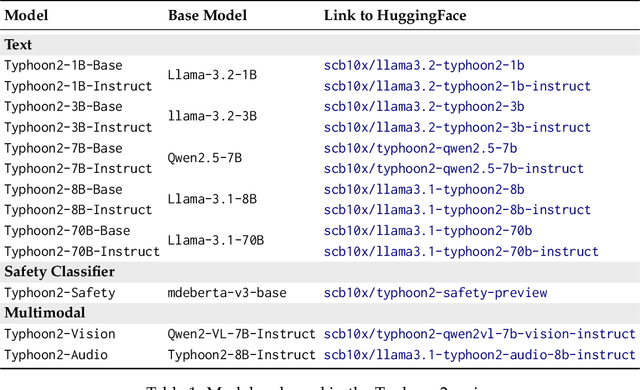
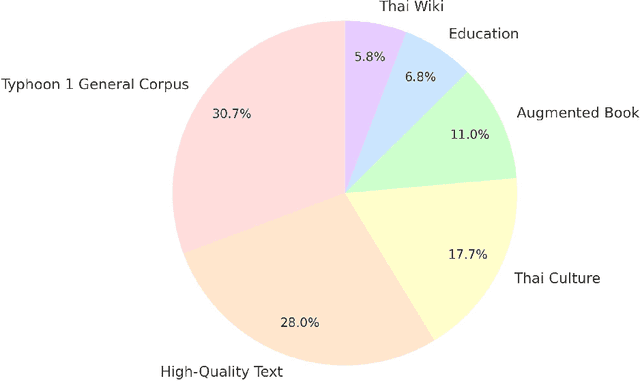
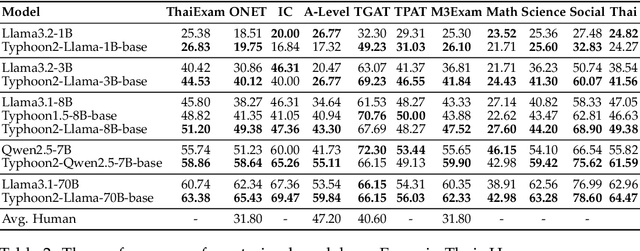
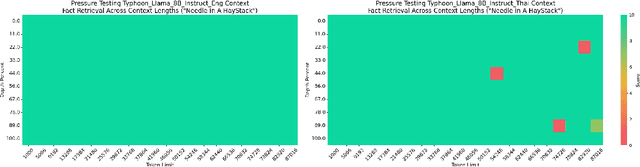
This paper introduces Typhoon 2, a series of text and multimodal large language models optimized for the Thai language. The series includes models for text, vision, and audio. Typhoon2-Text builds on state-of-the-art open models, such as Llama 3 and Qwen2, and we perform continual pre-training on a mixture of English and Thai data. We employ post-training techniques to enhance Thai language performance while preserving the base models' original capabilities. We release text models across a range of sizes, from 1 to 70 billion parameters, available in both base and instruction-tuned variants. To guardrail text generation, we release Typhoon2-Safety, a classifier enhanced for Thai cultures and language. Typhoon2-Vision improves Thai document understanding while retaining general visual capabilities, such as image captioning. Typhoon2-Audio introduces an end-to-end speech-to-speech model architecture capable of processing audio, speech, and text inputs and generating both text and speech outputs.
Multiverse of Greatness: Generating Story Branches with LLMs
Nov 22, 2024This paper presents Dynamic Context Prompting/Programming (DCP/P), a novel framework for interacting with LLMs to generate graph-based content with a dynamic context window history. While there is an existing study utilizing LLMs to generate a visual novel game, the previous study involved a manual process of output extraction and did not provide flexibility in generating a longer, coherent story. We evaluate DCP/P against our baseline, which does not provide context history to an LLM and only relies on the initial story data. Through objective evaluation, we show that simply providing the LLM with a summary leads to a subpar story compared to additionally providing the LLM with the proper context of the story. We also provide an extensive qualitative analysis and discussion. We qualitatively examine the quality of the objectively best-performing generated game from each approach. In addition, we examine biases in word choices and word sentiment of the generated content. We find a consistent observation with previous studies that LLMs are biased towards certain words, even with a different LLM family. Finally, we provide a comprehensive discussion on opportunities for future studies.
ChatGPT4PCG 2 Competition: Prompt Engineering for Science Birds Level Generation
Mar 05, 2024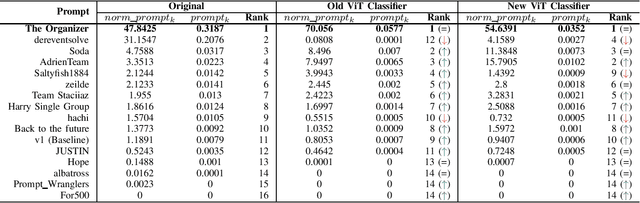
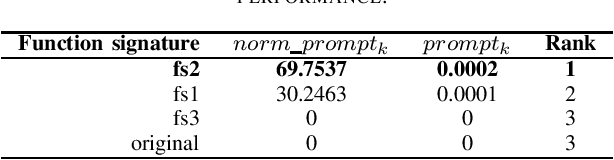
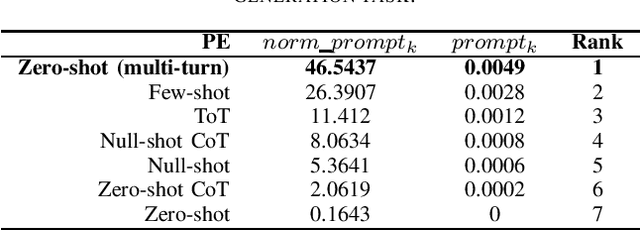
This paper presents the second ChatGPT4PCG competition at the 2024 IEEE Conference on Games. In this edition of the competition, we follow the first edition, but make several improvements and changes. We introduce a new evaluation metric along with allowing a more flexible format for participants' submissions and making several improvements to the evaluation pipeline. Continuing from the first edition, we aim to foster and explore the realm of prompt engineering (PE) for procedural content generation (PCG). While the first competition saw success, it was hindered by various limitations; we aim to mitigate these limitations in this edition. We introduce diversity as a new metric to discourage submissions aimed at producing repetitive structures. Furthermore, we allow submission of a Python program instead of a prompt text file for greater flexibility in implementing advanced PE approaches, which may require control flow, including conditions and iterations. We also make several improvements to the evaluation pipeline with a better classifier for similarity evaluation and better-performing function signatures. We thoroughly evaluate the effectiveness of the new metric and the improved classifier. Additionally, we perform an ablation study to select a function signature to instruct ChatGPT for level generation. Finally, we provide implementation examples of various PE techniques in Python and evaluate their preliminary performance. We hope this competition serves as a resource and platform for learning about PE and PCG in general.