 Add to Chrome
 Add to Firefox
 Add to Edge
The Llama 4 Herd: Architecture, Training, Evaluation, and Deployment Notes
Jan 15, 2026
This document consolidates publicly reported technical details about Metas Llama 4 model family. It summarizes (i) released variants (Scout and Maverick) and the broader herd context including the previewed Behemoth teacher model, (ii) architectural characteristics beyond a high-level MoE description covering routed/shared-expert structure, early-fusion multimodality, and long-context design elements reported for Scout (iRoPE and length generalization strategies), (iii) training disclosures spanning pre-training, mid-training for long-context extension, and post-training methodology (lightweight SFT, online RL, and lightweight DPO) as described in release materials, (iv) developer-reported benchmark results for both base and instruction-tuned checkpoints, and (v) practical deployment constraints observed across major serving environments, including provider-specific context limits and quantization packaging. The manuscript also summarizes licensing obligations relevant to redistribution and derivative naming, and reviews publicly described safeguards and evaluation practices. The goal is to provide a compact technical reference for researchers and practitioners who need precise, source-backed facts about Llama 4.

Fairness On The Ground: Applying Algorithmic Fairness Approaches to Production Systems
Mar 24, 2021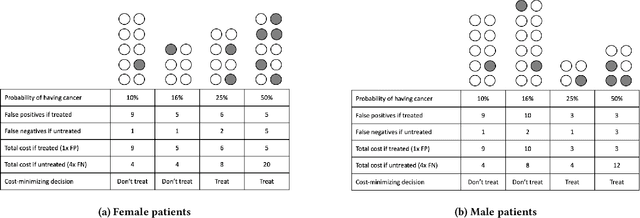
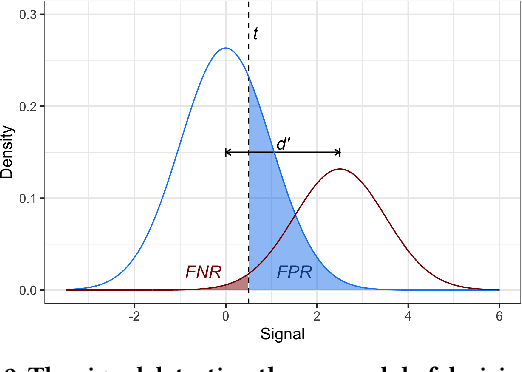
Many technical approaches have been proposed for ensuring that decisions made by machine learning systems are fair, but few of these proposals have been stress-tested in real-world systems. This paper presents an example of one team's approach to the challenge of applying algorithmic fairness approaches to complex production systems within the context of a large technology company. We discuss how we disentangle normative questions of product and policy design (like, "how should the system trade off between different stakeholders' interests and needs?") from empirical questions of system implementation (like, "is the system achieving the desired tradeoff in practice?"). We also present an approach for answering questions of the latter sort, which allows us to measure how machine learning systems and human labelers are making these tradeoffs across different relevant groups. We hope our experience integrating fairness tools and approaches into large-scale and complex production systems will be useful to other practitioners facing similar challenges, and illuminating to academics and researchers looking to better address the needs of practitioners.