 Add to Chrome
 Add to Firefox
 Add to Edge
EGSS: Entropy-guided Stepwise Scaling for Reliable Software Engineering
Feb 05, 2026
Agentic Test-Time Scaling (TTS) has delivered state-of-the-art (SOTA) performance on complex software engineering tasks such as code generation and bug fixing. However, its practical adoption remains limited due to significant computational overhead, primarily driven by two key challenges: (1) the high cost associated with deploying excessively large ensembles, and (2) the lack of a reliable mechanism for selecting the optimal candidate solution, ultimately constraining the performance gains that can be realized. To address these challenges, we propose Entropy-Guided Stepwise Scaling (EGSS), a novel TTS framework that dynamically balances efficiency and effectiveness through entropy-guided adaptive search and robust test-suite augmentation. Extensive experiments on SWE-Bench-Verified demonstrate that EGSS consistently boosts performance by 5-10% across all evaluated models. Specifically, it increases the resolved ratio of Kimi-K2-Intruct from 63.2% to 72.2%, and GLM-4.6 from 65.8% to 74.6%. Furthermore, when paired with GLM-4.6, EGSS achieves a new state-of-the-art among open-source large language models. In addition to these accuracy improvements, EGSS reduces inference-time token usage by over 28% compared to existing TTS methods, achieving simultaneous gains in both effectiveness and computational efficiency.

Can LLMs like GPT-4 outperform traditional AI tools in dementia diagnosis? Maybe, but not today
Jun 02, 2023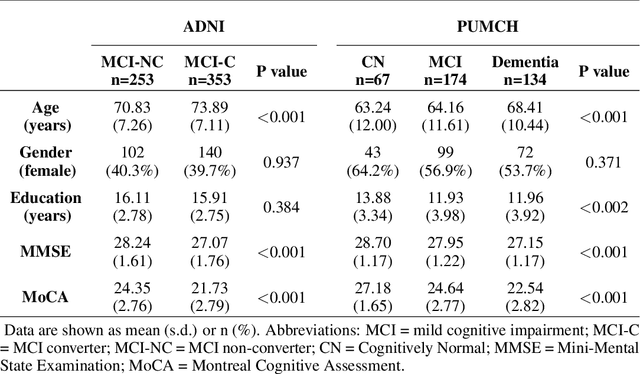
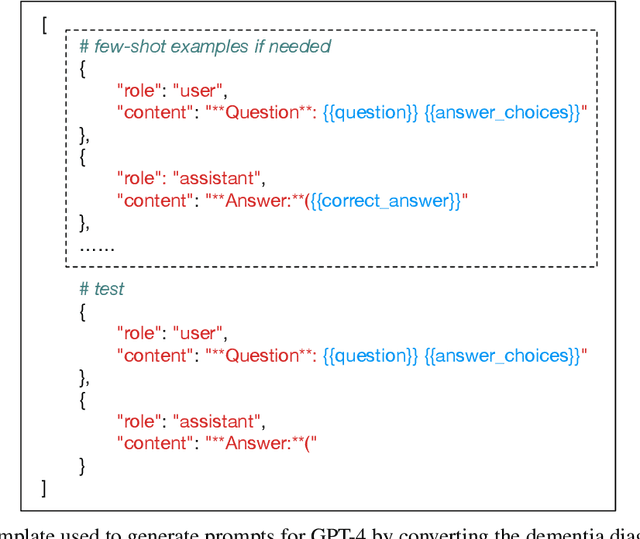
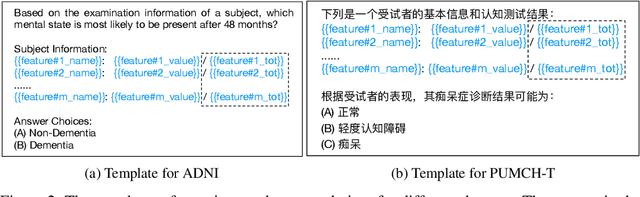
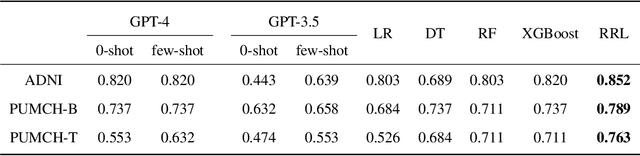
Recent investigations show that large language models (LLMs), specifically GPT-4, not only have remarkable capabilities in common Natural Language Processing (NLP) tasks but also exhibit human-level performance on various professional and academic benchmarks. However, whether GPT-4 can be directly used in practical applications and replace traditional artificial intelligence (AI) tools in specialized domains requires further experimental validation. In this paper, we explore the potential of LLMs such as GPT-4 to outperform traditional AI tools in dementia diagnosis. Comprehensive comparisons between GPT-4 and traditional AI tools are conducted to examine their diagnostic accuracy in a clinical setting. Experimental results on two real clinical datasets show that, although LLMs like GPT-4 demonstrate potential for future advancements in dementia diagnosis, they currently do not surpass the performance of traditional AI tools. The interpretability and faithfulness of GPT-4 are also evaluated by comparison with real doctors. We discuss the limitations of GPT-4 in its current state and propose future research directions to enhance GPT-4 in dementia diagnosis.