 Add to Chrome
 Add to Firefox
 Add to Edge
Let It Flow: Agentic Crafting on Rock and Roll, Building the ROME Model within an Open Agentic Learning Ecosystem
Dec 31, 2025
Agentic crafting requires LLMs to operate in real-world environments over multiple turns by taking actions, observing outcomes, and iteratively refining artifacts. Despite its importance, the open-source community lacks a principled, end-to-end ecosystem to streamline agent development. We introduce the Agentic Learning Ecosystem (ALE), a foundational infrastructure that optimizes the production pipeline for agent LLMs. ALE consists of three components: ROLL, a post-training framework for weight optimization; ROCK, a sandbox environment manager for trajectory generation; and iFlow CLI, an agent framework for efficient context engineering. We release ROME (ROME is Obviously an Agentic Model), an open-source agent grounded by ALE and trained on over one million trajectories. Our approach includes data composition protocols for synthesizing complex behaviors and a novel policy optimization algorithm, Interaction-based Policy Alignment (IPA), which assigns credit over semantic interaction chunks rather than individual tokens to improve long-horizon training stability. Empirically, we evaluate ROME within a structured setting and introduce Terminal Bench Pro, a benchmark with improved scale and contamination control. ROME demonstrates strong performance across benchmarks like SWE-bench Verified and Terminal Bench, proving the effectiveness of the ALE infrastructure.

Analysing The Impact of Sequence Composition on Language Model Pre-Training
Feb 21, 2024
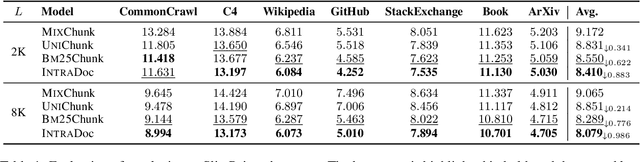
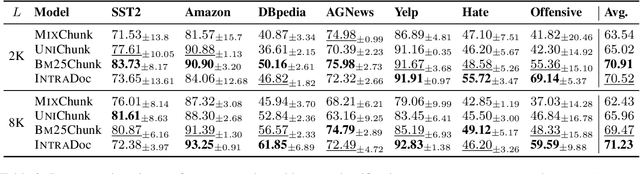
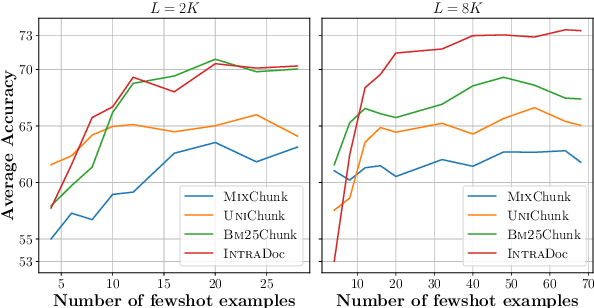
Most language model pre-training frameworks concatenate multiple documents into fixed-length sequences and use causal masking to compute the likelihood of each token given its context; this strategy is widely adopted due to its simplicity and efficiency. However, to this day, the influence of the pre-training sequence composition strategy on the generalisation properties of the model remains under-explored. In this work, we find that applying causal masking can lead to the inclusion of distracting information from previous documents during pre-training, which negatively impacts the performance of the models on language modelling and downstream tasks. In intra-document causal masking, the likelihood of each token is only conditioned on the previous tokens in the same document, eliminating potential distracting information from previous documents and significantly improving performance. Furthermore, we find that concatenating related documents can reduce some potential distractions during pre-training, and our proposed efficient retrieval-based sequence construction method, BM25Chunk, can improve in-context learning (+11.6\%), knowledge memorisation (+9.8\%), and context utilisation (+7.2\%) abilities of language models without sacrificing efficiency.