 Add to Chrome
 Add to Firefox
 Add to Edge
LMMRec: LLM-driven Motivation-aware Multimodal Recommendation
Feb 05, 2026
Motivation-based recommendation systems uncover user behavior drivers. Motivation modeling, crucial for decision-making and content preference, explains recommendation generation. Existing methods often treat motivation as latent variables from interaction data, neglecting heterogeneous information like review text. In multimodal motivation fusion, two challenges arise: 1) achieving stable cross-modal alignment amid noise, and 2) identifying features reflecting the same underlying motivation across modalities. To address these, we propose LLM-driven Motivation-aware Multimodal Recommendation (LMMRec), a model-agnostic framework leveraging large language models for deep semantic priors and motivation understanding. LMMRec uses chain-of-thought prompting to extract fine-grained user and item motivations from text. A dual-encoder architecture models textual and interaction-based motivations for cross-modal alignment, while Motivation Coordination Strategy and Interaction-Text Correspondence Method mitigate noise and semantic drift through contrastive learning and momentum updates. Experiments on three datasets show LMMRec achieves up to a 4.98\% performance improvement.

Improving Unsupervised Task-driven Models of Ventral Visual Stream via Relative Position Predictivity
May 13, 2025Based on the concept that ventral visual stream (VVS) mainly functions for object recognition, current unsupervised task-driven methods model VVS by contrastive learning, and have achieved good brain similarity. However, we believe functions of VVS extend beyond just object recognition. In this paper, we introduce an additional function involving VVS, named relative position (RP) prediction. We first theoretically explain contrastive learning may be unable to yield the model capability of RP prediction. Motivated by this, we subsequently integrate RP learning with contrastive learning, and propose a new unsupervised task-driven method to model VVS, which is more inline with biological reality. We conduct extensive experiments, demonstrating that: (i) our method significantly improves downstream performance of object recognition while enhancing RP predictivity; (ii) RP predictivity generally improves the model brain similarity. Our results provide strong evidence for the involvement of VVS in location perception (especially RP prediction) from a computational perspective.
A Simple Review of EEG Foundation Models: Datasets, Advancements and Future Perspectives
Apr 24, 2025Electroencephalogram (EEG) signals play a crucial role in understanding brain activity and diagnosing neurological disorders. This review focuses on the recent development of EEG foundation models(EEG-FMs), which have shown great potential in processing and analyzing EEG data. We discuss various EEG-FMs, including their architectures, pre-training strategies, their pre-training and downstream datasets and other details. The review also highlights the challenges and future directions in this field, aiming to provide a comprehensive overview for researchers and practitioners interested in EEG analysis and related EEG-FMs.
Speed-enhanced Subdomain Adaptation Regression for Long-term Stable Neural Decoding in Brain-computer Interfaces
Jul 25, 2024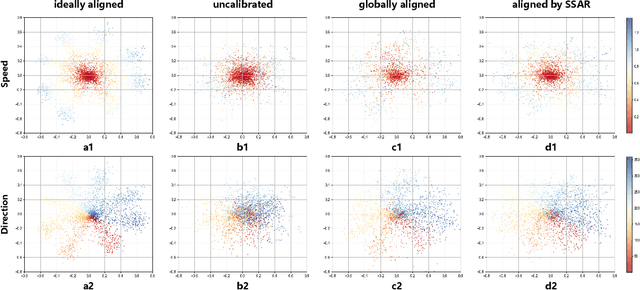
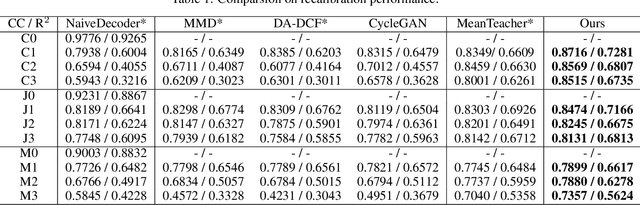
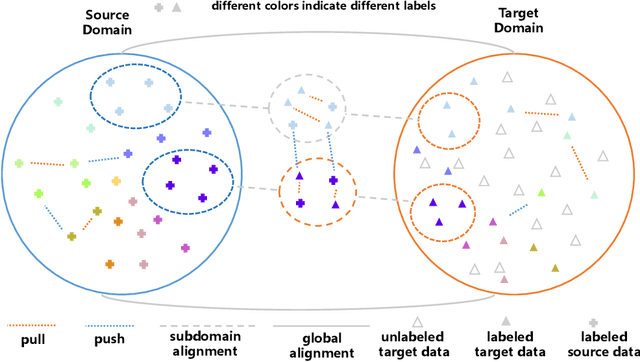
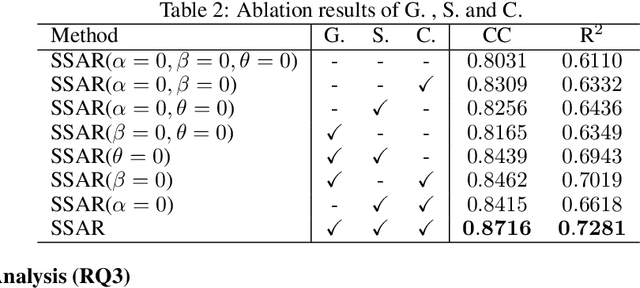
Brain-computer interfaces (BCIs) offer a means to convert neural signals into control signals, providing a potential restoration of movement for people with paralysis. Despite their promise, BCIs face a significant challenge in maintaining decoding accuracy over time due to neural nonstationarities. However, the decoding accuracy of BCI drops severely across days due to the neural data drift. While current recalibration techniques address this issue to a degree, they often fail to leverage the limited labeled data, to consider the signal correlation between two days, or to perform conditional alignment in regression tasks. This paper introduces a novel approach to enhance recalibration performance. We begin with preliminary experiments that reveal the temporal patterns of neural signal changes and identify three critical elements for effective recalibration: global alignment, conditional speed alignment, and feature-label consistency. Building on these insights, we propose the Speed-enhanced Subdomain Adaptation Regression (SSAR) framework, integrating semi-supervised learning with domain adaptation techniques in regression neural decoding. SSAR employs Speed-enhanced Subdomain Alignment (SeSA) for global and speed conditional alignment of similarly labeled data, with Contrastive Consistency Constraint (CCC) to enhance the alignment of SeSA by reinforcing feature-label consistency through contrastive learning. Our comprehensive set of experiments, both qualitative and quantitative, substantiate the superior recalibration performance and robustness of SSAR.