 Add to Chrome
 Add to Firefox
 Add to Edge
The Llama 4 Herd: Architecture, Training, Evaluation, and Deployment Notes
Jan 15, 2026
This document consolidates publicly reported technical details about Metas Llama 4 model family. It summarizes (i) released variants (Scout and Maverick) and the broader herd context including the previewed Behemoth teacher model, (ii) architectural characteristics beyond a high-level MoE description covering routed/shared-expert structure, early-fusion multimodality, and long-context design elements reported for Scout (iRoPE and length generalization strategies), (iii) training disclosures spanning pre-training, mid-training for long-context extension, and post-training methodology (lightweight SFT, online RL, and lightweight DPO) as described in release materials, (iv) developer-reported benchmark results for both base and instruction-tuned checkpoints, and (v) practical deployment constraints observed across major serving environments, including provider-specific context limits and quantization packaging. The manuscript also summarizes licensing obligations relevant to redistribution and derivative naming, and reviews publicly described safeguards and evaluation practices. The goal is to provide a compact technical reference for researchers and practitioners who need precise, source-backed facts about Llama 4.

FIXME: Enhance Software Reliability with Hybrid Approaches in Cloud
Feb 17, 2021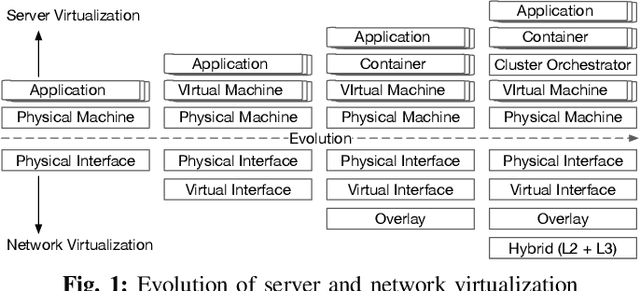
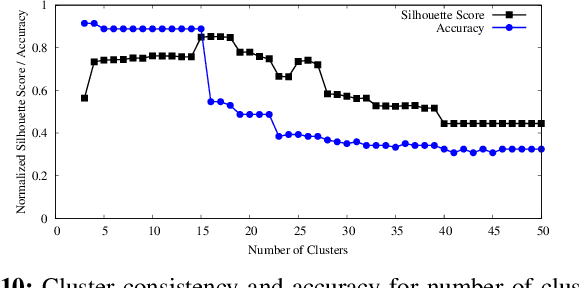
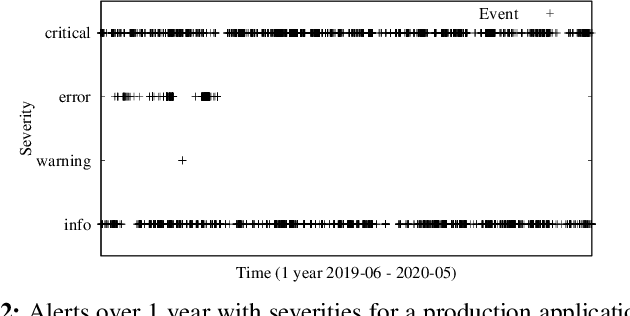
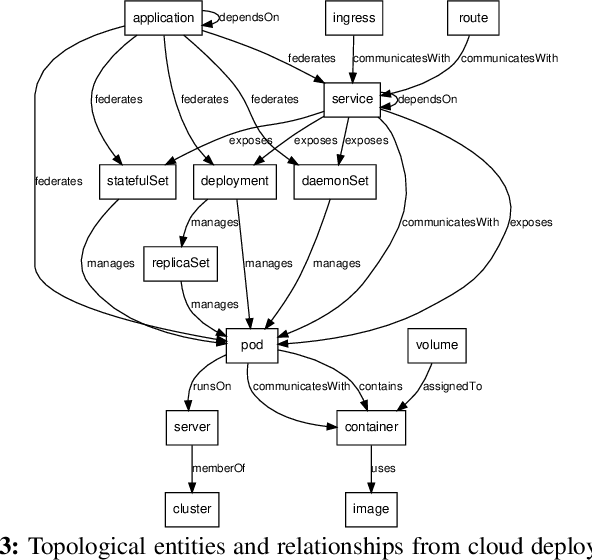
With the promise of reliability in cloud, more enterprises are migrating to cloud. The process of continuous integration/deployment (CICD) in cloud connects developers who need to deliver value faster and more transparently with site reliability engineers (SREs) who need to manage applications reliably. SREs feed back development issues to developers, and developers commit fixes and trigger CICD to redeploy. The release cycle is more continuous than ever, thus the code to production is faster and more automated. To provide this higher level agility, the cloud platforms become more complex in the face of flexibility with deeper layers of virtualization. However, reliability does not come for free with all these complexities. Software engineers and SREs need to deal with wider information spectrum from virtualized layers. Therefore, providing correlated information with true positive evidences is critical to identify the root cause of issues quickly in order to reduce mean time to recover (MTTR), performance metrics for SREs. Similarity, knowledge, or statistics driven approaches have been effective, but with increasing data volume and types, an individual approach is limited to correlate semantic relations of different data sources. In this paper, we introduce FIXME to enhance software reliability with hybrid diagnosis approaches for enterprises. Our evaluation results show using hybrid diagnosis approach is about 17% better in precision. The results are helpful for both practitioners and researchers to develop hybrid diagnosis in the highly dynamic cloud environment.