 Add to Chrome
 Add to Firefox
 Add to Edge
CooperBench: Why Coding Agents Cannot be Your Teammates Yet
Jan 19, 2026
Resolving team conflicts requires not only task-specific competence, but also social intelligence to find common ground and build consensus. As AI agents increasingly collaborate on complex work, they must develop coordination capabilities to function as effective teammates. Yet we hypothesize that current agents lack these capabilities. To test this, we introduce CooperBench, a benchmark of over 600 collaborative coding tasks across 12 libraries in 4 programming languages. Each task assigns two agents different features that can be implemented independently but may conflict without proper coordination. Tasks are grounded in real open-source repositories with expert-written tests. Evaluating state-of-the-art coding agents, we observe the curse of coordination: agents achieve on average 30% lower success rates when working together compared to performing both tasks individually. This contrasts sharply with human teams, where adding teammates typically improves productivity. Our analysis reveals three key issues: (1) communication channels become jammed with vague, ill-timed, and inaccurate messages; (2) even with effective communication, agents deviate from their commitments; and (3) agents often hold incorrect expectations about others' plans and communication. Through large-scale simulation, we also observe rare but interesting emergent coordination behavior including role division, resource division, and negotiation. Our research presents a novel benchmark for collaborative coding and calls for a shift from pursuing individual agent capability to developing social intelligence.

Learning to Predict Usage Options of Product Reviews with LLM-Generated Labels
Oct 16, 2024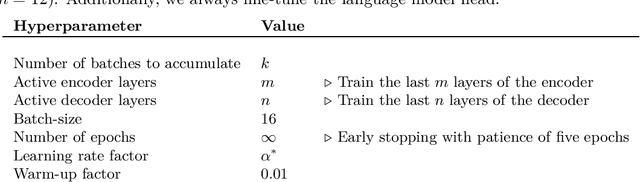

Annotating large datasets can be challenging. However, crowd-sourcing is often expensive and can lack quality, especially for non-trivial tasks. We propose a method of using LLMs as few-shot learners for annotating data in a complex natural language task where we learn a standalone model to predict usage options for products from customer reviews. We also propose a new evaluation metric for this scenario, HAMS4, that can be used to compare a set of strings with multiple reference sets. Learning a custom model offers individual control over energy efficiency and privacy measures compared to using the LLM directly for the sequence-to-sequence task. We compare this data annotation approach with other traditional methods and demonstrate how LLMs can enable considerable cost savings. We find that the quality of the resulting data exceeds the level attained by third-party vendor services and that GPT-4-generated labels even reach the level of domain experts. We make the code and generated labels publicly available.