 Add to Chrome
 Add to Firefox
 Add to Edge
5G PRS
Papers and Code
Design of Orthogonal Phase of Arrival Positioning Scheme Based on 5G PRS and Optimization of TOA Performance
Oct 30, 2025
This study analyzes the performance of positioning techniques based on configuration changes of 5G New Radio signals. In 5G networks, a terminal position is determined from the Time of Arrival of Positioning Reference Signals transmitted by base stations. We propose an algorithm that improves TOA accuracy under low sampling rate constraints and implement 5G PRS for positioning in a software defined modem. We also examine how flexible time frequency resource allocation of PRS affects TOA estimation accuracy and discuss optimal PRS configurations for a given signal environment.

MULTI-SCOUT: Multistatic Integrated Sensing and Communications in 5G and Beyond for Moving Target Detection, Positioning, and Tracking
Jul 03, 2025This paper presents a complete signal-processing chain for multistatic integrated sensing and communications (ISAC) using 5G Positioning Reference Signal (PRS). We consider a distributed architecture in which one gNB transmits a periodic OFDM-PRS waveform while multiple spatially separated receivers exploit the same signal for target detection, parameter estimation and tracking. A coherent cross-ambiguity function (CAF) is evaluated to form a range-Doppler map from which the bistatic delay and radial velocity are extracted for every target. For a single target, the resulting bistatic delays are fused through nonlinear least-squares trilateration, yielding a geometric position estimate, and a regularized linear inversion of the radial-speed equations yields a two-dimensional velocity vector, where speed and heading are obtained. The approach is applied to 2D and 3D settings, extended to account for time synchronization bias, and generalized to multiple targets by resolving target association. The sequence of position-velocity estimates is then fed to standard and extended Kalman filters to obtain smoothed tracks. Our results show high-fidelity moving-target detection, positioning, and tracking using 5G PRS signals for multistatic ISAC.
Detecting Airborne Objects with 5G NR Radars
May 30, 2025The integration of sensing capabilities into 5G New Radio (5G NR) networks offers an opportunity to enable the detection of airborne objects without the need for dedicated radars. This paper investigates the feasibility of using standardized Positioning Reference Signals (PRS) to detect UAVs in Urban Micro (UMi) and Urban Macro (UMa) propagation environments. A full 5G NR radar processing chain is implemented, including clutter suppression, angle and range estimation, and 3D position reconstruction. Simulation results show that performance strongly depends on the propagation environment. 5G NR radars exhibit the highest missed detection rate, up to 16%, in UMi, due to severe clutter. Positioning error increases with target distance, resulting in larger errors in UMa scenarios and at higher UAV altitudes. In particular, the system achieves a position error within 4m in the UMi environment and within 8m in UMa. The simulation platform has been released as open-source software to support reproducible research in integrated sensing and communication (ISAC) systems.
Localization Accuracy Improvement in Multistatic ISAC with LoS/NLoS Condition using 5G NR Signals
Dec 23, 2024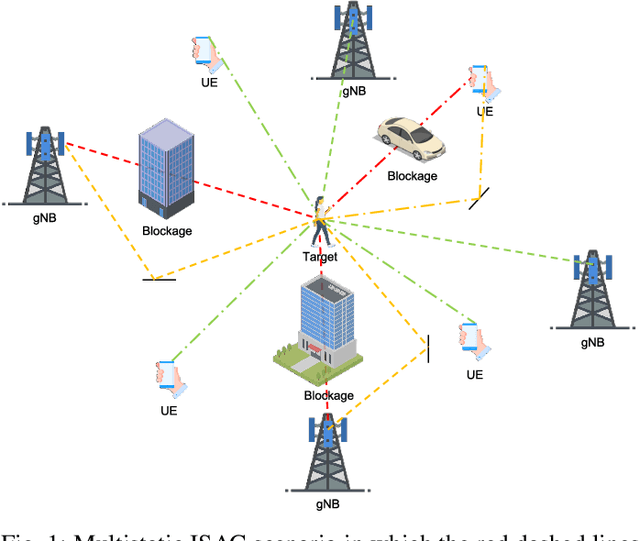
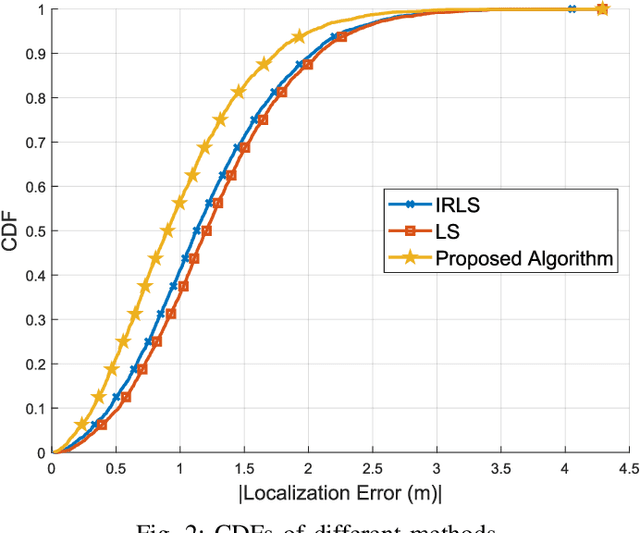
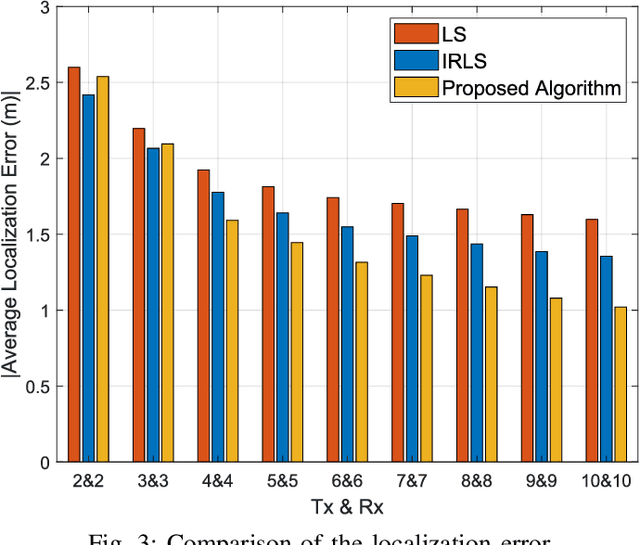
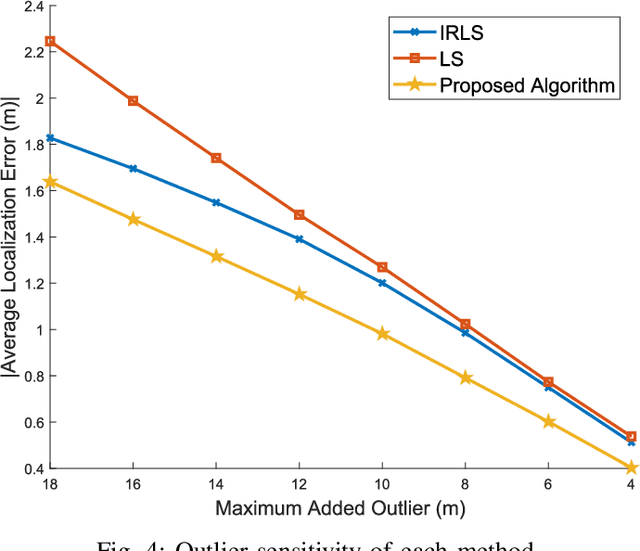
Integrated sensing and communication (ISAC) is anticipated to play a crucial role in sixth-generation (6G) mobile communication networks. A significant challenge in ISAC systems is the degradation of localization accuracy due to poor propagation conditions, such as multipath effects and non-line-of-sight (NLoS) scenarios. These conditions result in outlier measurements that can severely impact localization performance. This paper investigates the enhancement of target localization accuracy in multistatic ISAC systems under both line-of-sight (LoS) and NLoS conditions. We leverage positioning reference signal (PRS), which is currently employed in fifth-generation (5G) new radio (NR) for user equipment (UE) positioning, as the sensing signal. We introduce a novel algorithm to improve localization accuracy by mitigating the impact of outliers in range measurements, while also accounting for errors due to PRS range resolution. Eventually, through simulation results, we demonstrate the superiority of the proposed method over previous approaches. Indeed, we achieve up to 28% and 20% improvements in average localization error over least squares (LS) and iteratively reweighted least squares (IRLS) methods, respectively. Additionally, we observe up to 16% and 13% enhancements in the 90th percentile of localization error compared to LS and IRLS, respectively. Our simulation is based on 3rd Generation Partnership Project (3GPP) standards, ensuring the applicability of our results across diverse environments, including urban and indoor areas.
Empowering 5G PRS-Based ISAC with Compressed Sensing
Jul 18, 2024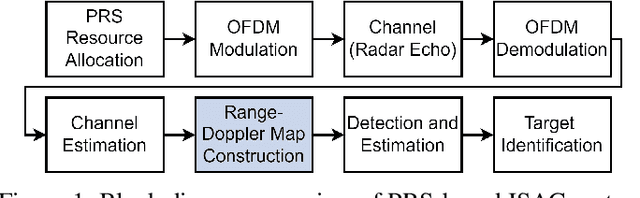
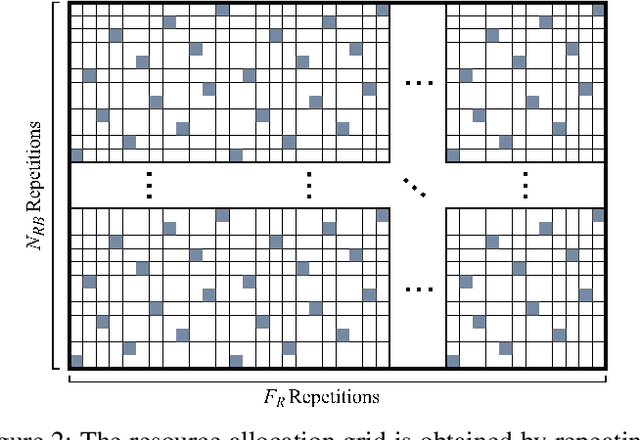
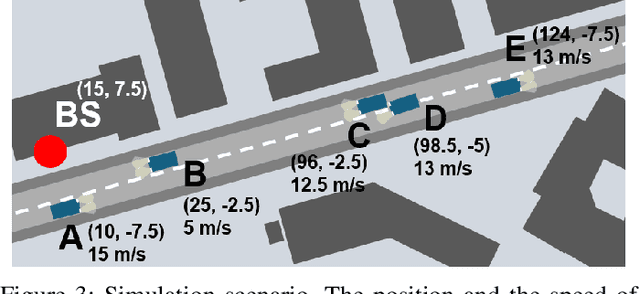
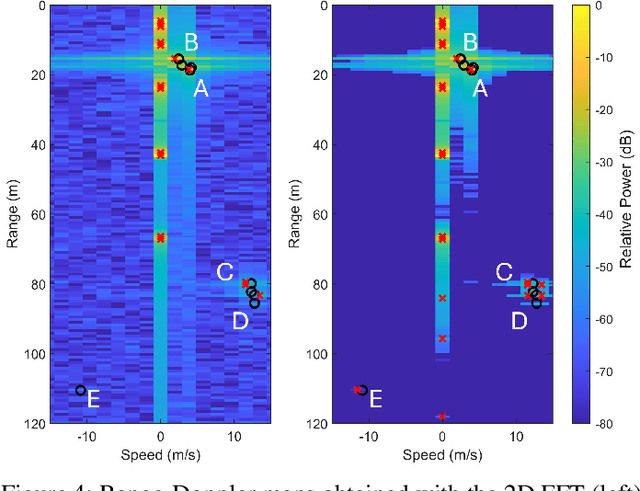
To enable widespread use of Integrated Sensing and Communication (ISAC) in future communication systems, an important requirement is the ease of integration. A possible way to achieve this is to use existing communication reference signals for sensing, such as the 5G Positioning Reference Signal (PRS). Existing works have demonstrated promising results by using the PRS with classical signal processing techniques. However, this approach suffers from a loss of SNR due to the sparse resource allocation. In this work, we improve upon existing results by combining the 5G PRS with compressed sensing methods. We demonstrate that our method achieves better noise robustness compared to the existing works and has superresolution properties, making it an ideal choice for range-Doppler map generation and target detection even in noisy environments.
I-SCOUT: Integrated Sensing and Communications to Uncover Moving Targets in NextG Networks
Oct 11, 2024Integrated Sensing and Communication (ISAC) represents a transformative approach within 5G and beyond, aiming to merge wireless communication and sensing functionalities into a unified network infrastructure. This integration offers enhanced spectrum efficiency, real-time situational awareness, cost and energy reductions, and improved operational performance. ISAC provides simultaneous communication and sensing capabilities, enhancing the ability to detect, track, and respond to spectrum dynamics and potential threats in complex environments. In this paper, we introduce I-SCOUT, an innovative ISAC solution designed to uncover moving targets in NextG networks. We specifically repurpose the Positioning Reference Signal (PRS) of the 5G waveform, exploiting its distinctive autocorrelation characteristics for environment sensing. The reflected signals from moving targets are processed to estimate both the range and velocity of these targets using the cross ambiguity function (CAF). We conduct an in-depth analysis of the tradeoff between sensing and communication functionalities, focusing on the allocation of PRSs for ISAC purposes. Our study reveals that the number of PRSs dedicated to ISAC has a significant impact on the system's performance, necessitating a careful balance to optimize both sensing accuracy and communication efficiency. Our results demonstrate that I-SCOUT effectively leverages ISAC to accurately determine the range and velocity of moving targets. Moreover, I-SCOUT is capable of distinguishing between multiple targets within a group, showcasing its potential for complex scenarios. These findings underscore the viability of ISAC in enhancing the capabilities of NextG networks, for both commercial and tactical applications where precision and reliability are critical.
Leveraging PRS and PDSCH for Integrated Sensing and Communication Systems
Aug 02, 2024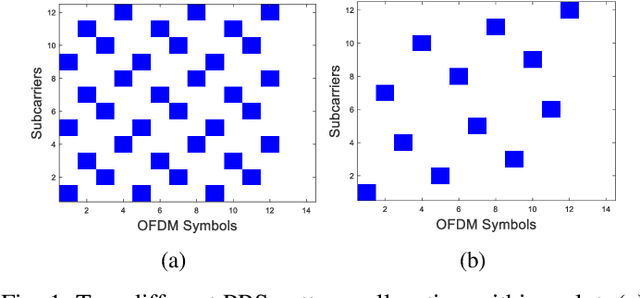
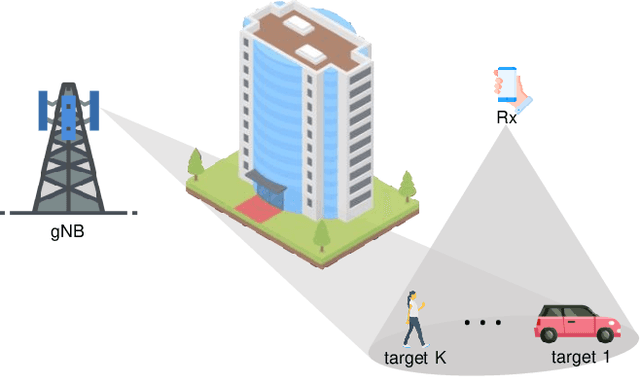
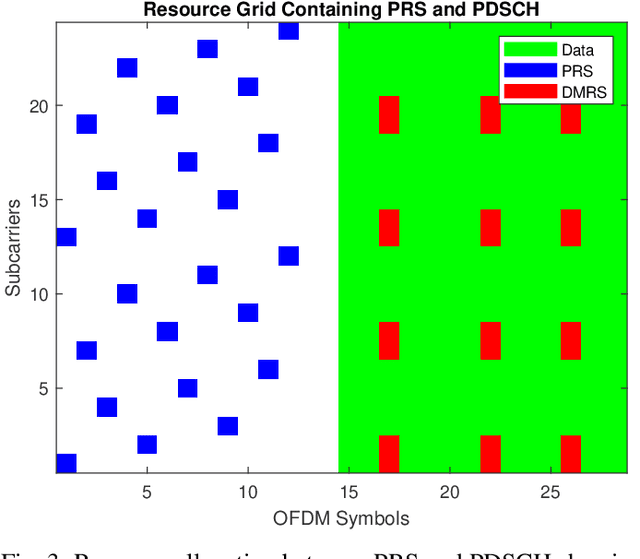
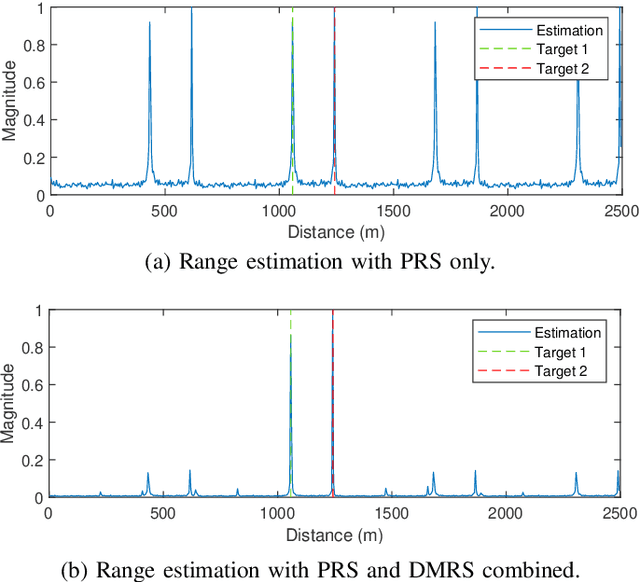
From the industrial standpoint on integrated sensing and communication (ISAC), the preference lies in augmenting existing infrastructure with sensing services while minimizing network changes and leveraging available resources. This paper investigates the potential of utilizing the existing infrastructure of fifth-generation (5G) new radio (NR) signals as defined by the 3rd generation partnership project (3GPP), particularly focusing on pilot signals for sensing within the ISAC framework. We propose to take advantage of the existing positioning reference signal (PRS) for sensing and the physical downlink shared channel (PDSCH) for communication, both readily available in 5G NR. However, the use of PRS for sensing poses challenges, leading to the appearance of ghost targets. To overcome this obstacle, we propose two innovative approaches for different PRS comb sizes within the ISAC framework, leveraging the demodulation reference signal (DMRS) within PDSCH to eliminate ghost targets. Subsequently, we formulate a resource allocation problem between PRS and PDSCH and determine the Pareto optimal point between communication and sensing without ghost targets. Through comprehensive simulation and analysis, we demonstrate that the joint exploitation of DMRS and PRS offers a promising solution for ghost target removal, while effective time and frequency resource allocation enables the achievement of Pareto optimality in ISAC.
Superposition of PRS and PDSCH for ISAC System: Spectral Efficiency Enhancement and Range Ambiguity Elimination
Sep 30, 2024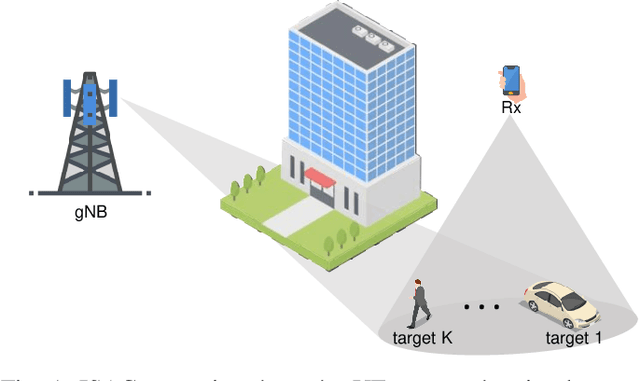
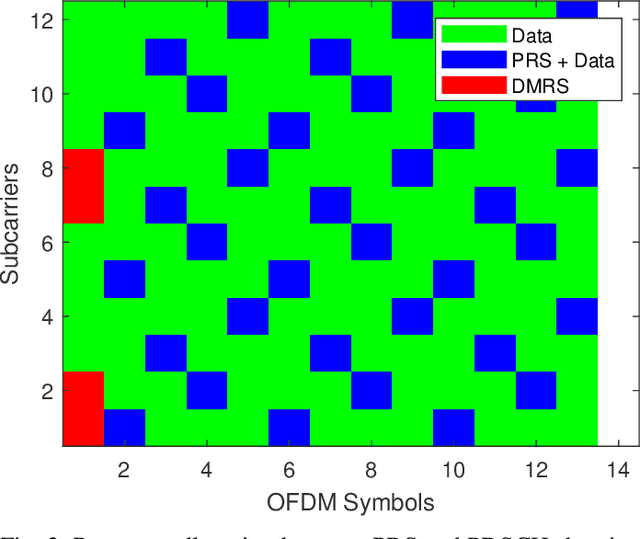
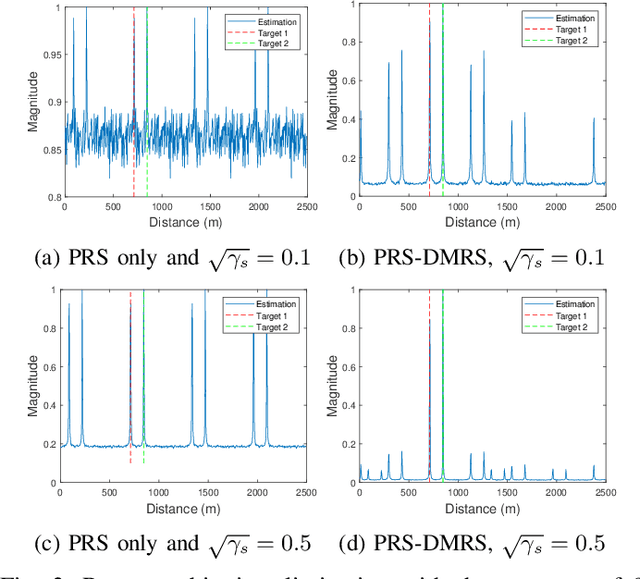
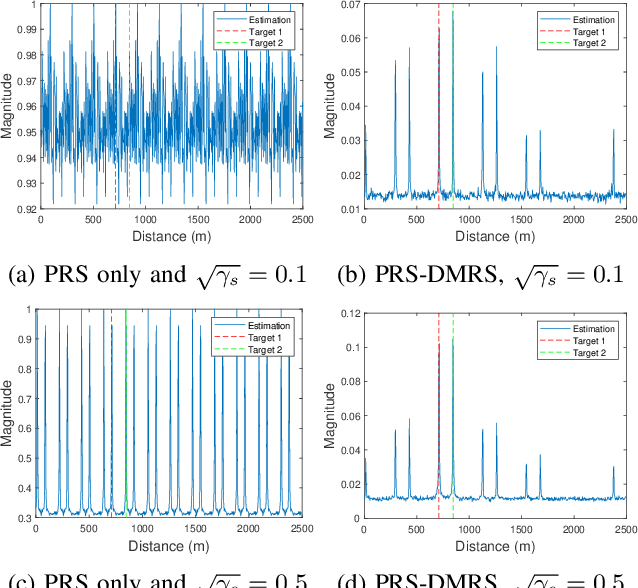
From the telecommunication companies' perspective, the preference for integrated sensing and communication (ISAC) for sixth-generation (6G) is to enhance existing infrastructure with sensing capabilities while minimizing network alterations and optimizing available resources. This prompts the investigation of ISAC leveraging the existing infrastructure of fifth-generation (5G) new radio (NR) signals as defined by the 3rd generation partnership project (3GPP). Additionally, improving spectral efficiency is crucial in scenarios with high demand for both communication and sensing applications to maintain the required quality of service (QoS). To address these challenges, we propose the superposition of the physical downlink shared channel (PDSCH) for communication and the positioning reference signal (PRS) for sensing with proper power allocation. Furthermore, we propose a novel algorithm to reduce the interference for data decoding caused by PRS. Moreover, we introduce the joint exploitation of PRS and demodulation reference signal (DMRS) to prevent range ambiguity in the form of ghost targets. Through simulation analysis, we demonstrate the effectiveness of integrating PDSCH and PRS symbols within a unified resource grid. Our results show that the introduced approaches not only eliminate range ambiguity when sensing targets from gNBs but also enhance spectral efficiency by reducing interference between PRS and PDSCH. Simulation results show throughput enhancement and up to 57% improvement in bit error rate (BER). This paves the way for supporting sensing applications in the forthcoming network generation.
Doppler Ambiguity Elimination Using 5G Signals in Integrated Sensing and Communication
Aug 02, 2024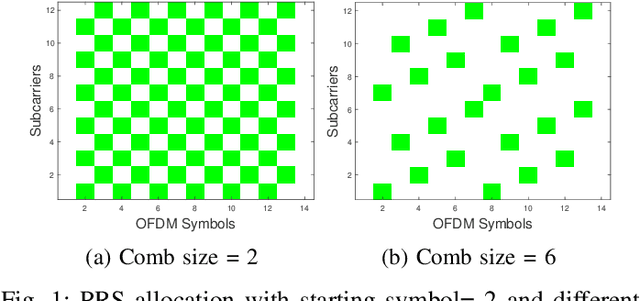
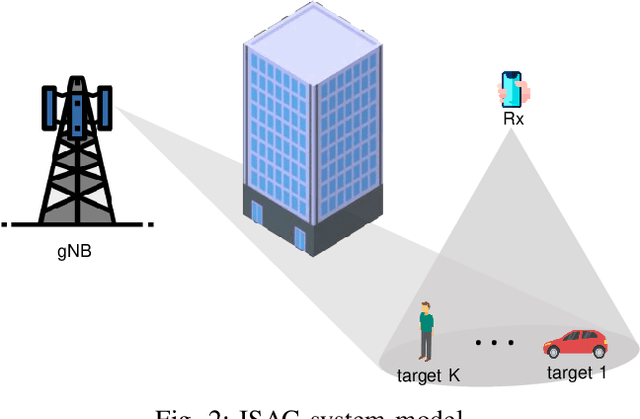
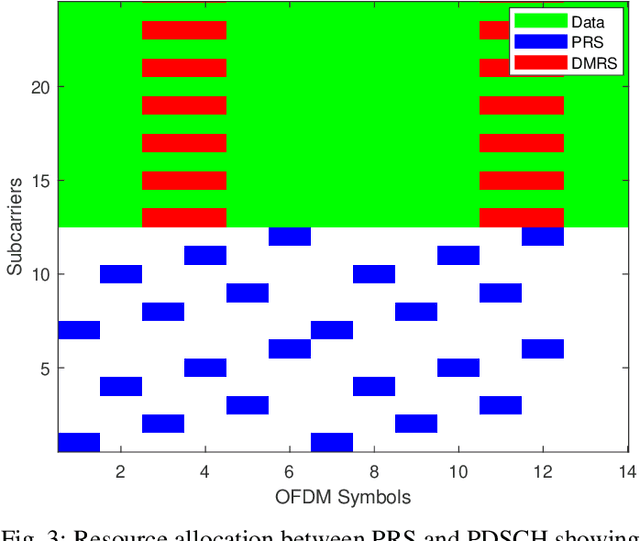
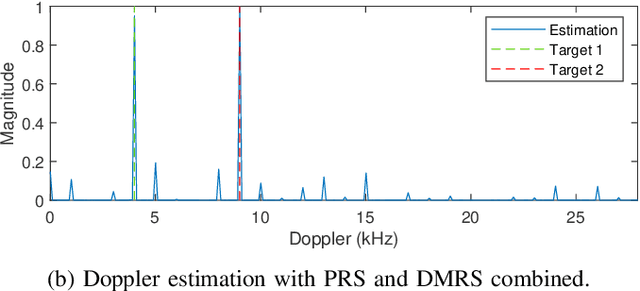
The industrial point of view towards integrated sensing and communication (ISAC), the preference is to leverage existing resources and fifth-generation (5G) infrastructure to minimize deployment costs and complexity. In this context, we explore the utilization of current 5G new radio (NR) signals aligned with 3rd generation partnership project (3GPP) standards. Positioning reference signals (PRS) for sensing and physical downlink shared channel (PDSCH) for communication have been chosen to form an ISAC framework. However, PRS-based sensing suffers from Doppler ambiguity when the Doppler frequency shift is severe. To address this challenge, we introduce a novel method within the ISAC system that leverages the demodulation reference signal (DMRS) present in PDSCH to eliminate Doppler ambiguity. Furthermore, we formulate a resource allocation problem between PRS and PDSCH to achieve a Pareto optimal point between communication and sensing without Doppler ambiguity. Through simulations and analysis, we demonstrate the effectiveness of our proposed method on joint DMRS-PRS exploitation in mitigating Doppler ambiguity and the efficiency of the resource allocation scheme in achieving Pareto optimality for ISAC within a 5G NR framework.
LEO-based Positioning: Foundations, Signal Design, and Receiver Enhancements for 6G NTN
Oct 23, 2024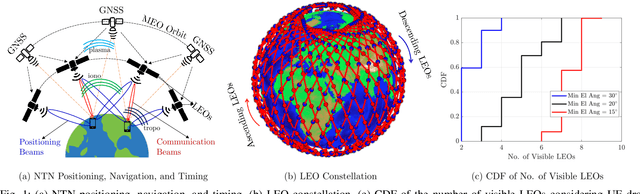
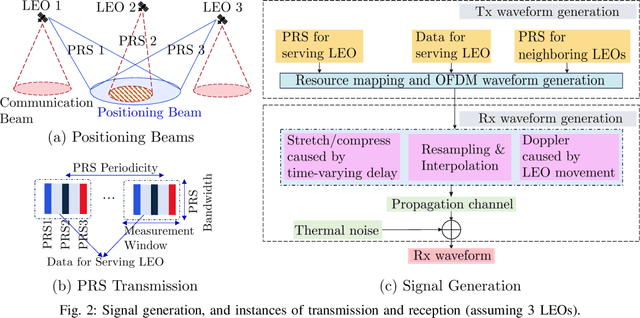
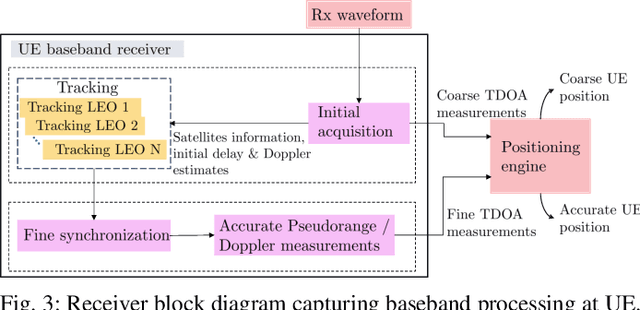
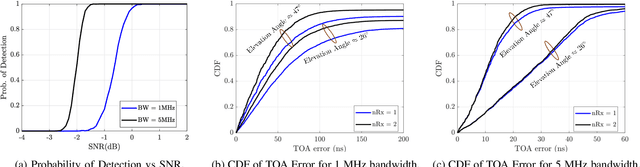
The integration of non-terrestrial networks (NTN) into 5G new radio (NR) has opened up the possibility of developing a new positioning infrastructure using NR signals from Low-Earth Orbit (LEO) satellites. LEO-based cellular positioning offers several advantages, such as a superior link budget, higher operating bandwidth, and large forthcoming constellations. Due to these factors, LEO-based positioning, navigation, and timing (PNT) is a potential enhancement for NTN in 6G cellular networks. However, extending the existing terrestrial cellular positioning methods to LEO-based NTN positioning requires considering key fundamental enhancements. These include creating broad positioning beams orthogonal to conventional communication beams, time-domain processing at the user equipment (UE) to resolve large delay and Doppler uncertainties, and efficiently accommodating positioning reference signals (PRS) from multiple satellites within the communication resource grid. In this paper, we present the first set of design insights by incorporating these enhancements and thoroughly evaluating LEO-based positioning, considering the constraints and capabilities of the NR-NTN physical layer. To evaluate the performance of LEO-based NTN positioning, we develop a comprehensive NR-compliant simulation framework, including LEO orbit simulation, transmission (Tx) and receiver (Rx) architectures, and a positioning engine incorporating the necessary enhancements. Our findings suggest that LEO-based NTN positioning could serve as a complementary infrastructure to existing Global Navigation Satellite Systems (GNSS) and, with appropriate enhancements, may also offer a viable alternative.