 Add to Chrome
 Add to Firefox
 Add to Edge
Unified Generation and Self-Verification for Vision-Language Models via Advantage Decoupled Preference Optimization
Jan 04, 2026
Parallel test-time scaling typically trains separate generation and verification models, incurring high training and inference costs. We propose Advantage Decoupled Preference Optimization (ADPO), a unified reinforcement learning framework that jointly learns answer generation and self-verification within a single policy. ADPO introduces two innovations: a preference verification reward improving verification capability and a decoupled optimization mechanism enabling synergistic optimization of generation and verification. Specifically, the preference verification reward computes mean verification scores from positive and negative samples as decision thresholds, providing positive feedback when prediction correctness aligns with answer correctness. Meanwhile, the advantage decoupled optimization computes separate advantages for generation and verification, applies token masks to isolate gradients, and combines masked GRPO objectives, preserving generation quality while calibrating verification scores. ADPO achieves up to +34.1% higher verification AUC and -53.5% lower inference time, with significant gains of +2.8%/+1.4% accuracy on MathVista/MMMU, +1.9 cIoU on ReasonSeg, and +1.7%/+1.0% step success rate on AndroidControl/GUI Odyssey.

Zero-Shot End-to-End Relation Extraction in Chinese: A Comparative Study of Gemini, LLaMA and ChatGPT
Feb 08, 2025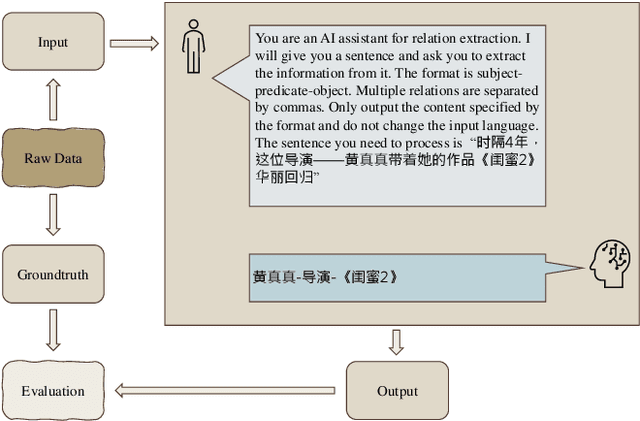
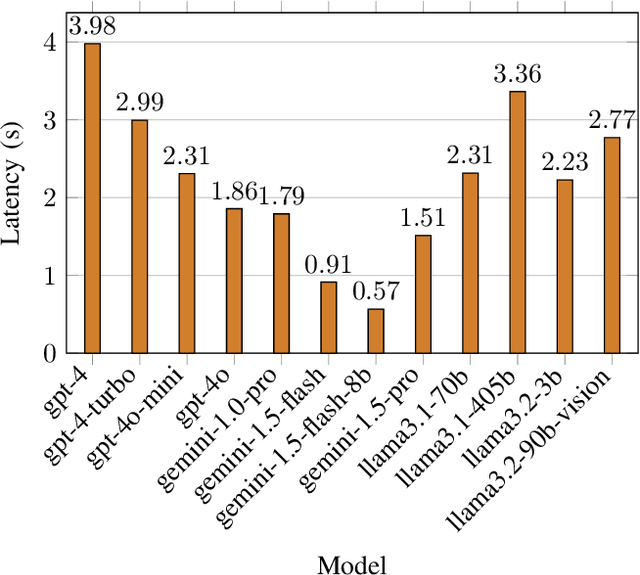
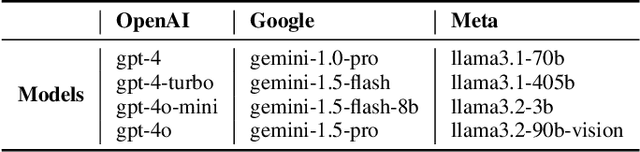
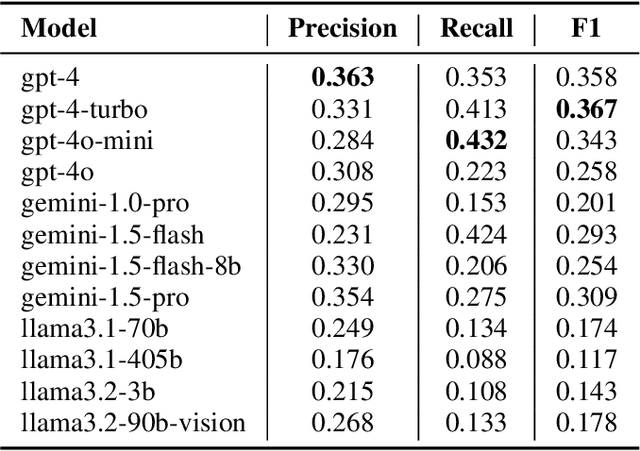
This study investigates the performance of various large language models (LLMs) on zero-shot end-to-end relation extraction (RE) in Chinese, a task that integrates entity recognition and relation extraction without requiring annotated data. While LLMs show promise for RE, most prior work focuses on English or assumes pre-annotated entities, leaving their effectiveness in Chinese RE largely unexplored. To bridge this gap, we evaluate ChatGPT, Gemini, and LLaMA based on accuracy, efficiency, and adaptability. ChatGPT demonstrates the highest overall performance, balancing precision and recall, while Gemini achieves the fastest inference speed, making it suitable for real-time applications. LLaMA underperforms in both accuracy and latency, highlighting the need for further adaptation. Our findings provide insights into the strengths and limitations of LLMs for zero-shot Chinese RE, shedding light on trade-offs between accuracy and efficiency. This study serves as a foundation for future research aimed at improving LLM adaptability to complex linguistic tasks in Chinese NLP.
Few-Shot Learning with Adaptive Weight Masking in Conditional GANs
Dec 04, 2024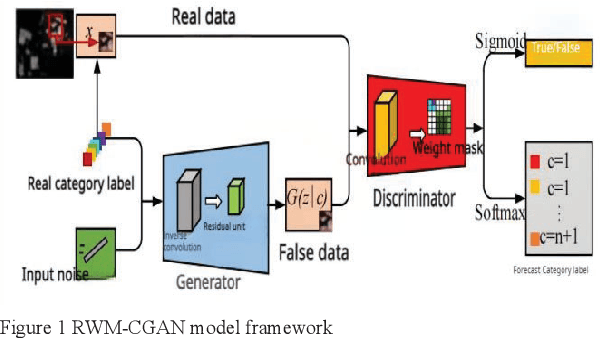
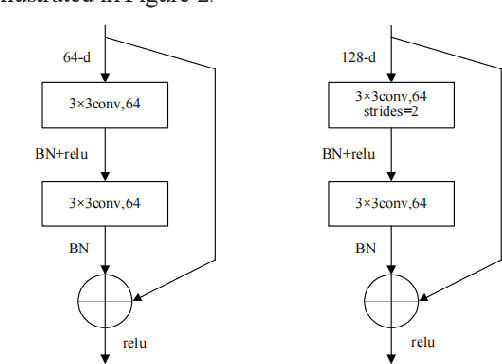
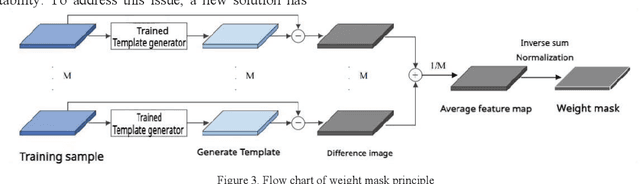
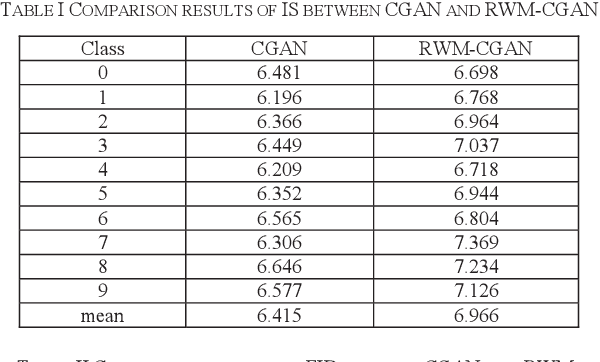
Deep learning has revolutionized various fields, yet its efficacy is hindered by overfitting and the requirement of extensive annotated data, particularly in few-shot learning scenarios where limited samples are available. This paper introduces a novel approach to few-shot learning by employing a Residual Weight Masking Conditional Generative Adversarial Network (RWM-CGAN) for data augmentation. The proposed model integrates residual units within the generator to enhance network depth and sample quality, coupled with a weight mask regularization technique in the discriminator to improve feature learning from small-sample categories. This method addresses the core issues of robustness and generalization in few-shot learning by providing a controlled and clear augmentation of the sample space. Extensive experiments demonstrate that RWM-CGAN not only expands the sample space effectively but also enriches the diversity and quality of generated samples, leading to significant improvements in detection and classification accuracy on public datasets. The paper contributes to the advancement of few-shot learning by offering a practical solution to the challenges posed by data scarcity and the need for rapid generalization to new tasks or categories.