 Add to Chrome
 Add to Firefox
 Add to Edge
Semantic-Aware Command and Control Transmission for Multi-UAVs
Jan 29, 2026
Uncrewed aerial vehicles (UAVs) have played an important role in the low-altitude economy and have been used in various applications. However, with the increasing number of UAVs and explosive wireless data, the existing bit-oriented communication network has approached the Shannon capacity, which cannot satisfy the quality of service (QoS) with ultra-reliable low-latency communication (URLLC) requirements for command and control (C\&C) transmission in bit-oriented UAV communication networks. To address this issue, we propose a novel semantic-aware C\&C transmission for multi-UAVs under limited wireless resources. Specifically, we leverage semantic similarity to measure the variation in C\&C messages for each UAV over continuous transmission time intervals (TTIs) and capture the correlation of C\&C messages among UAVs, enabling multicast transmission. Based on the semantic similarity and the importance of UAV commands, we design a trigger function to quantify the QoS of UAVs. Then, to maximize the long-term QoS and exploit multicast opportunities of C\&C messages induced by semantic similarity, we develop a proximal policy optimization (PPO) algorithm to jointly determine the transmission mode (unicast/multicast/idle) and the allocation of limited resource blocks (RBs) between a base station (BS) and UAVs. Experimental results show that our proposed semantic-aware framework significantly increases transmission efficiency and improves effectiveness compared with bit-oriented UAV transmission.

A Robust Deep Learning Method with Uncertainty Estimation for the Pathological Classification of Renal Cell Carcinoma based on CT Images
Nov 12, 2023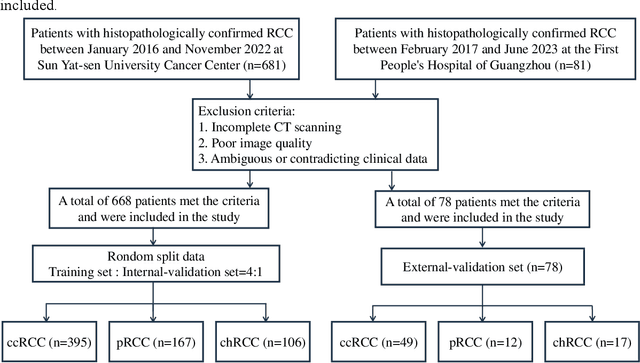
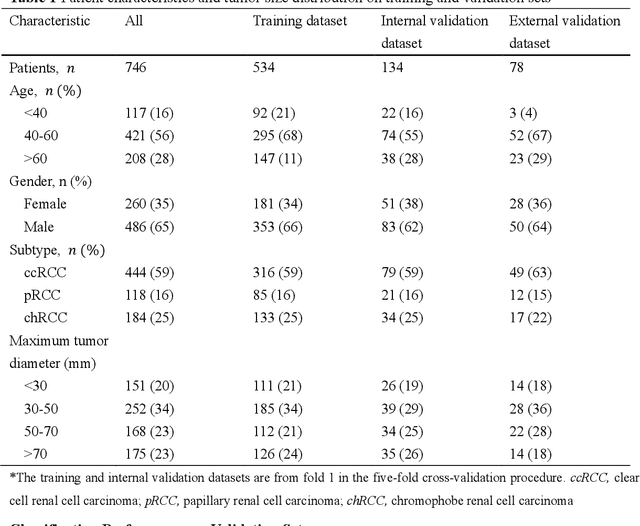
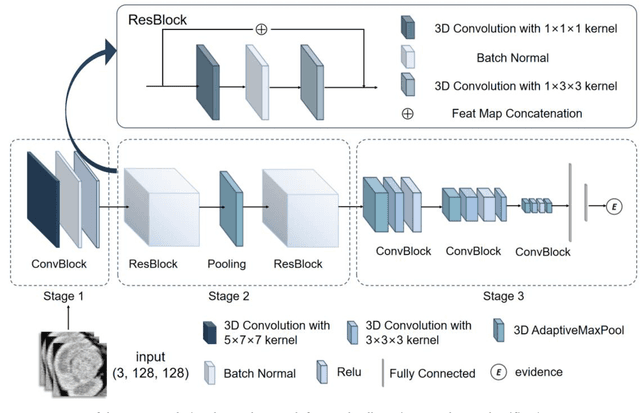
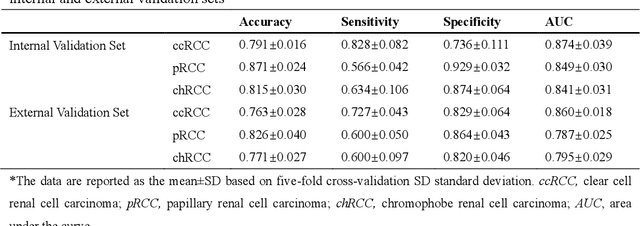
Objectives To develop and validate a deep learning-based diagnostic model incorporating uncertainty estimation so as to facilitate radiologists in the preoperative differentiation of the pathological subtypes of renal cell carcinoma (RCC) based on CT images. Methods Data from 668 consecutive patients, pathologically proven RCC, were retrospectively collected from Center 1. By using five-fold cross-validation, a deep learning model incorporating uncertainty estimation was developed to classify RCC subtypes into clear cell RCC (ccRCC), papillary RCC (pRCC), and chromophobe RCC (chRCC). An external validation set of 78 patients from Center 2 further evaluated the model's performance. Results In the five-fold cross-validation, the model's area under the receiver operating characteristic curve (AUC) for the classification of ccRCC, pRCC, and chRCC was 0.868 (95% CI: 0.826-0.923), 0.846 (95% CI: 0.812-0.886), and 0.839 (95% CI: 0.802-0.88), respectively. In the external validation set, the AUCs were 0.856 (95% CI: 0.838-0.882), 0.787 (95% CI: 0.757-0.818), and 0.793 (95% CI: 0.758-0.831) for ccRCC, pRCC, and chRCC, respectively. Conclusions The developed deep learning model demonstrated robust performance in predicting the pathological subtypes of RCC, while the incorporated uncertainty emphasized the importance of understanding model confidence, which is crucial for assisting clinical decision-making for patients with renal tumors. Clinical relevance statement Our deep learning approach, integrated with uncertainty estimation, offers clinicians a dual advantage: accurate RCC subtype predictions complemented by diagnostic confidence references, promoting informed decision-making for patients with RCC.