 Add to Chrome
 Add to Firefox
 Add to Edge
MiDAS: A Multimodal Data Acquisition System and Dataset for Robot-Assisted Minimally Invasive Surgery
Feb 12, 2026
Background: Robot-assisted minimally invasive surgery (RMIS) research increasingly relies on multimodal data, yet access to proprietary robot telemetry remains a major barrier. We introduce MiDAS, an open-source, platform-agnostic system enabling time-synchronized, non-invasive multimodal data acquisition across surgical robotic platforms. Methods: MiDAS integrates electromagnetic and RGB-D hand tracking, foot pedal sensing, and surgical video capturing without requiring proprietary robot interfaces. We validated MiDAS on the open-source Raven-II and the clinical da Vinci Xi by collecting multimodal datasets of peg transfer and hernia repair suturing tasks performed by surgical residents. Correlation analysis and downstream gesture recognition experiments were conducted. Results: External hand and foot sensing closely approximated internal robot kinematics and non-invasive motion signals achieved gesture recognition performance comparable to proprietary telemetry. Conclusion: MiDAS enables reproducible multimodal RMIS data collection and is released with annotated datasets, including the first multimodal dataset capturing hernia repair suturing on high-fidelity simulation models.

Realtime Robust Shape Estimation of Deformable Linear Object
Mar 24, 2024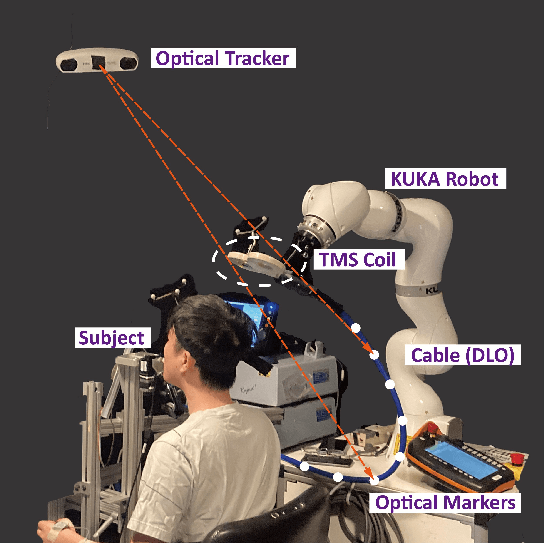
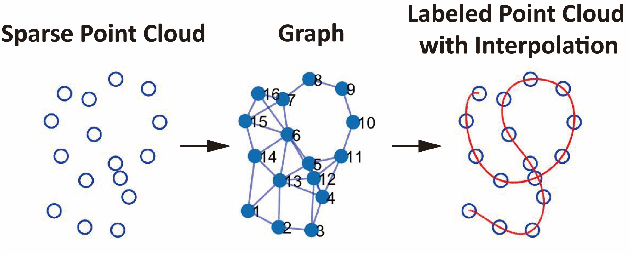
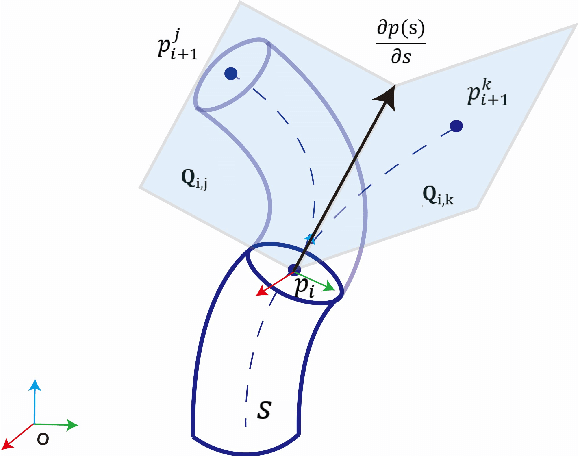
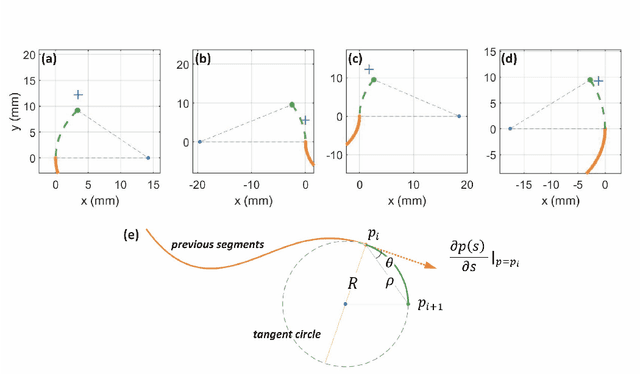
Realtime shape estimation of continuum objects and manipulators is essential for developing accurate planning and control paradigms. The existing methods that create dense point clouds from camera images, and/or use distinguishable markers on a deformable body have limitations in realtime tracking of large continuum objects/manipulators. The physical occlusion of markers can often compromise accurate shape estimation. We propose a robust method to estimate the shape of linear deformable objects in realtime using scattered and unordered key points. By utilizing a robust probability-based labeling algorithm, our approach identifies the true order of the detected key points and then reconstructs the shape using piecewise spline interpolation. The approach only relies on knowing the number of the key points and the interval between two neighboring points. We demonstrate the robustness of the method when key points are partially occluded. The proposed method is also integrated into a simulation in Unity for tracking the shape of a cable with a length of 1m and a radius of 5mm. The simulation results show that our proposed approach achieves an average length error of 1.07% over the continuum's centerline and an average cross-section error of 2.11mm. The real-world experiments of tracking and estimating a heavy-load cable prove that the proposed approach is robust under occlusion and complex entanglement scenarios.