 Add to Chrome
 Add to Firefox
 Add to Edge
Training Multi-Turn Search Agent via Contrastive Dynamic Branch Sampling
Feb 03, 2026
Agentic reinforcement learning has enabled large language models to perform complex multi-turn planning and tool use. However, learning in long-horizon settings remains challenging due to sparse, trajectory-level outcome rewards. While prior tree-based methods attempt to mitigate this issue, they often suffer from high variance and computational inefficiency. Through empirical analysis of search agents, We identify a common pattern: performance diverges mainly due to decisions near the tail. Motivated by this observation, we propose Branching Relative Policy Optimization (BranPO), a value-free method that provides step-level contrastive supervision without dense rewards. BranPO truncates trajectories near the tail and resamples alternative continuations to construct contrastive suffixes over shared prefixes, reducing credit ambiguity in long-horizon rollouts. To further boost efficiency and stabilize training, we introduce difficulty-aware branch sampling to adapt branching frequency across tasks, and redundant step masking to suppress uninformative actions. Extensive experiments on various question answering benchmarks demonstrate that BranPO consistently outperforms strong baselines, achieving significant accuracy gains on long-horizon tasks without increasing the overall training budget. Our code is available at \href{https://github.com/YubaoZhao/BranPO}{code}.

ECG-Chat: A Large ECG-Language Model for Cardiac Disease Diagnosis
Aug 16, 2024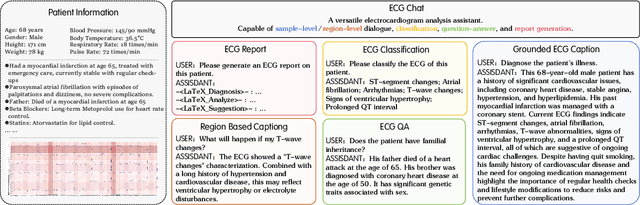
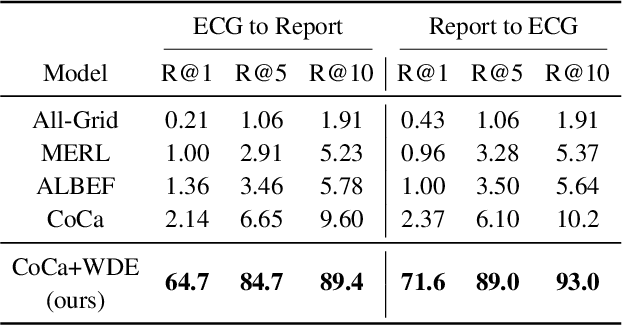
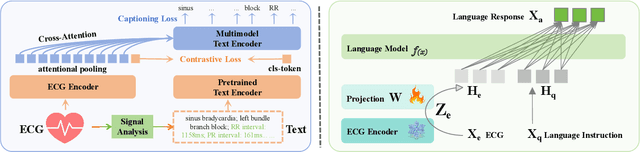
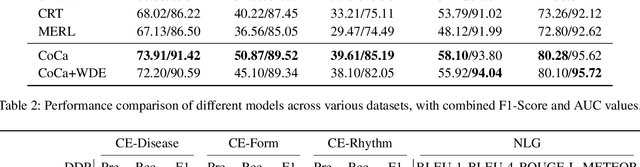
The success of Multimodal Large Language Models (MLLMs) in the medical auxiliary field shows great potential, allowing patients to engage in conversations using physiological signal data. However, general MLLMs perform poorly in cardiac disease diagnosis, particularly in the integration of ECG data analysis and long-text medical report generation, mainly due to the complexity of ECG data analysis and the gap between text and ECG signal modalities. Additionally, models often exhibit severe stability deficiencies in long-text generation due to the lack of precise knowledge strongly related to user queries. To address these issues, we propose ECG-Chat, the first multitask MLLMs focused on ECG medical report generation, providing multimodal conversational capabilities based on cardiology knowledge. We propose a contrastive learning approach that integrates ECG waveform data with text reports, aligning ECG features with reports in a fine-grained manner. This method also results in an ECG encoder that excels in zero-shot report retrieval tasks. Additionally, expanding existing datasets, we constructed a 19k ECG diagnosis dataset and a 25k multi-turn dialogue dataset for training and fine-tuning ECG-Chat, which provides professional diagnostic and conversational capabilities. Furthermore, ECG-Chat can generate comprehensive ECG analysis reports through an automated LaTeX generation pipeline. We established a benchmark for the ECG report generation task and tested our model on multiple baselines. ECG-Chat achieved the best performance in classification, retrieval, multimodal dialogue, and medical report generation tasks. Our report template design has also been widely recognized by medical practitioners.