 Add to Chrome
 Add to Firefox
 Add to Edge
RDT2: Exploring the Scaling Limit of UMI Data Towards Zero-Shot Cross-Embodiment Generalization
Feb 03, 2026
Vision-Language-Action (VLA) models hold promise for generalist robotics but currently struggle with data scarcity, architectural inefficiencies, and the inability to generalize across different hardware platforms. We introduce RDT2, a robotic foundation model built upon a 7B parameter VLM designed to enable zero-shot deployment on novel embodiments for open-vocabulary tasks. To achieve this, we collected one of the largest open-source robotic datasets--over 10,000 hours of demonstrations in diverse families--using an enhanced, embodiment-agnostic Universal Manipulation Interface (UMI). Our approach employs a novel three-stage training recipe that aligns discrete linguistic knowledge with continuous control via Residual Vector Quantization (RVQ), flow-matching, and distillation for real-time inference. Consequently, RDT2 becomes one of the first models that simultaneously zero-shot generalizes to unseen objects, scenes, instructions, and even robotic platforms. Besides, it outperforms state-of-the-art baselines in dexterous, long-horizon, and dynamic downstream tasks like playing table tennis. See https://rdt-robotics.github.io/rdt2/ for more information.

Theory-inspired Label Shift Adaptation via Aligned Distribution Mixture
Nov 05, 2024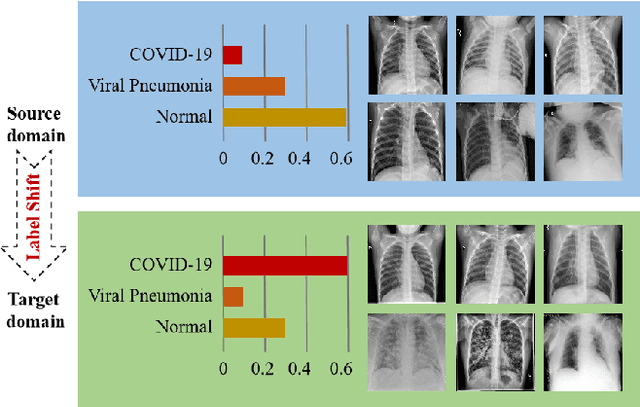
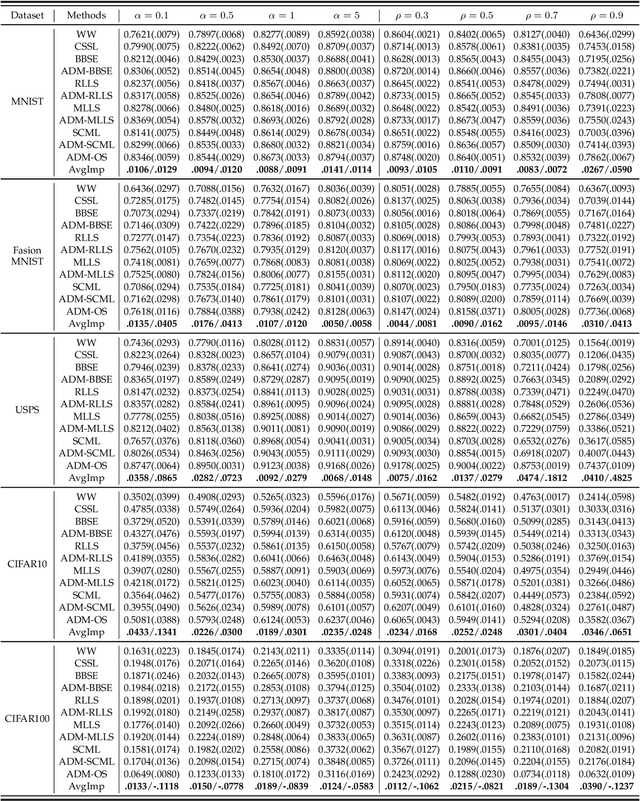
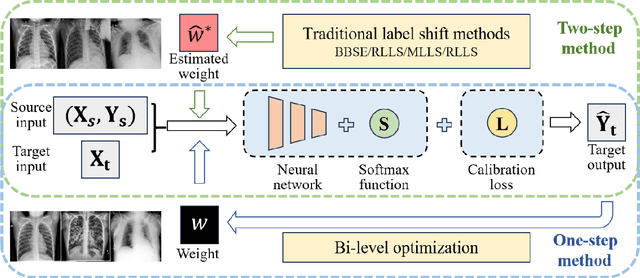
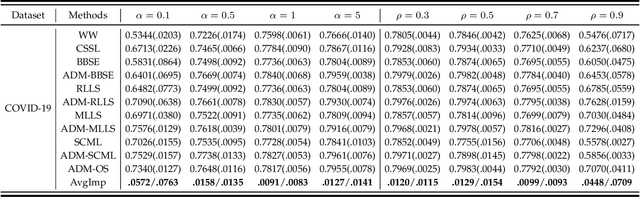
As a prominent challenge in addressing real-world issues within a dynamic environment, label shift, which refers to the learning setting where the source (training) and target (testing) label distributions do not match, has recently received increasing attention. Existing label shift methods solely use unlabeled target samples to estimate the target label distribution, and do not involve them during the classifier training, resulting in suboptimal utilization of available information. One common solution is to directly blend the source and target distributions during the training of the target classifier. However, we illustrate the theoretical deviation and limitations of the direct distribution mixture in the label shift setting. To tackle this crucial yet unexplored issue, we introduce the concept of aligned distribution mixture, showcasing its theoretical optimality and generalization error bounds. By incorporating insights from generalization theory, we propose an innovative label shift framework named as Aligned Distribution Mixture (ADM). Within this framework, we enhance four typical label shift methods by introducing modifications to the classifier training process. Furthermore, we also propose a one-step approach that incorporates a pioneering coupling weight estimation strategy. Considering the distinctiveness of the proposed one-step approach, we develop an efficient bi-level optimization strategy. Experimental results demonstrate the effectiveness of our approaches, together with their effectiveness in COVID-19 diagnosis applications.