 Add to Chrome
 Add to Firefox
 Add to Edge
AscendKernelGen: A Systematic Study of LLM-Based Kernel Generation for Neural Processing Units
Jan 12, 2026
To meet the ever-increasing demand for computational efficiency, Neural Processing Units (NPUs) have become critical in modern AI infrastructure. However, unlocking their full potential requires developing high-performance compute kernels using vendor-specific Domain-Specific Languages (DSLs), a task that demands deep hardware expertise and is labor-intensive. While Large Language Models (LLMs) have shown promise in general code generation, they struggle with the strict constraints and scarcity of training data in the NPU domain. Our preliminary study reveals that state-of-the-art general-purpose LLMs fail to generate functional complex kernels for Ascend NPUs, yielding a near-zero success rate. To address these challenges, we propose AscendKernelGen, a generation-evaluation integrated framework for NPU kernel development. We introduce Ascend-CoT, a high-quality dataset incorporating chain-of-thought reasoning derived from real-world kernel implementations, and KernelGen-LM, a domain-adaptive model trained via supervised fine-tuning and reinforcement learning with execution feedback. Furthermore, we design NPUKernelBench, a comprehensive benchmark for assessing compilation, correctness, and performance across varying complexity levels. Experimental results demonstrate that our approach significantly bridges the gap between general LLMs and hardware-specific coding. Specifically, the compilation success rate on complex Level-2 kernels improves from 0% to 95.5% (Pass@10), while functional correctness achieves 64.3% compared to the baseline's complete failure. These results highlight the critical role of domain-specific reasoning and rigorous evaluation in automating accelerator-aware code generation.

Aeroacoustic Source Localization
Jul 05, 2023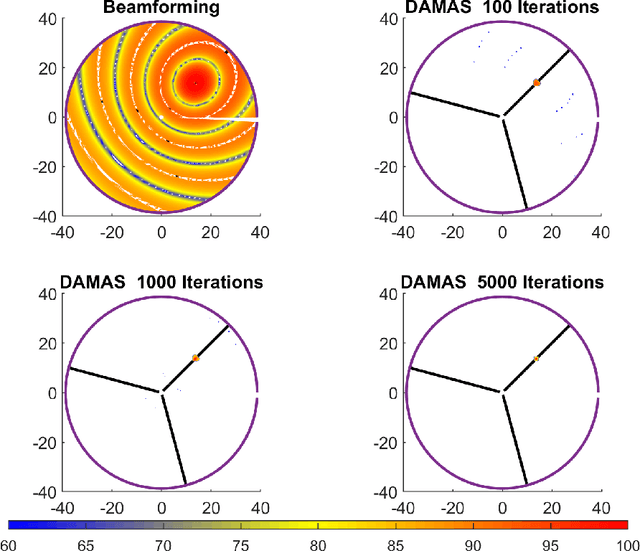
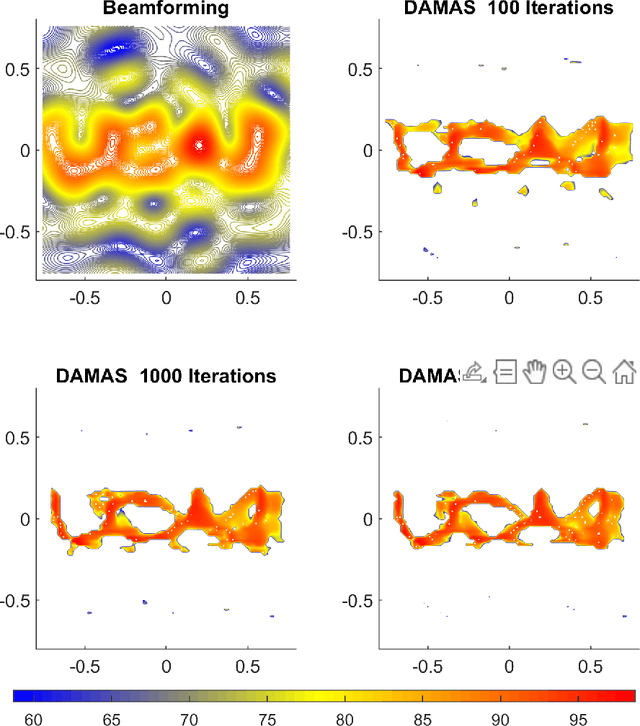
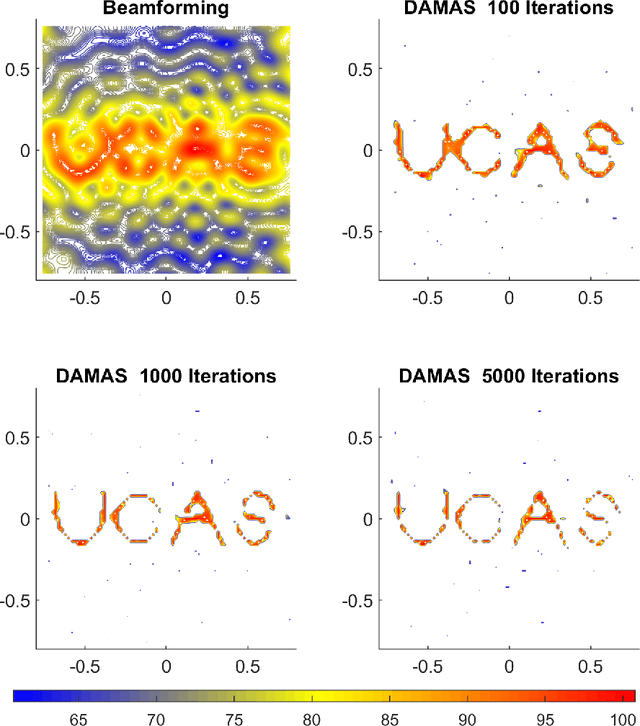
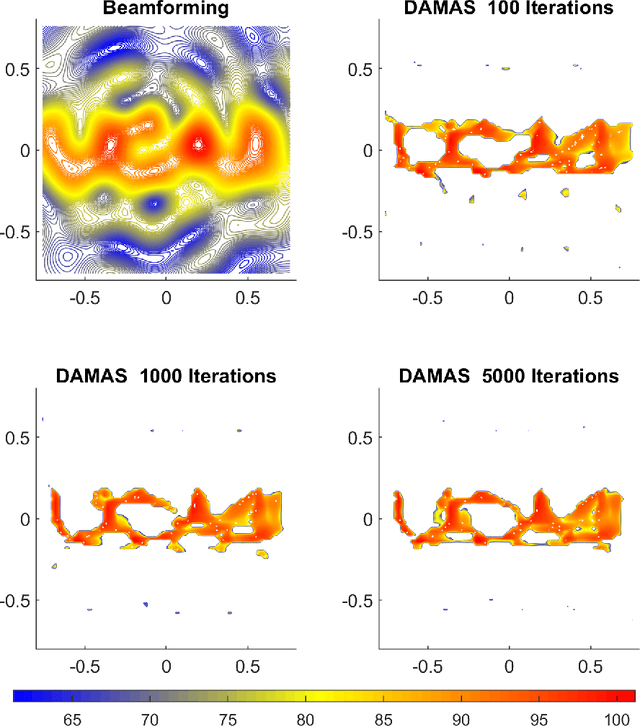
The deconvolutional DAMAS algorithm can effectively eliminate the misconceptions in the usually-used beamforming localization algorithm, allowing for more accurate calculation of the source location as well as the intensity. When solving a linear system of equations, the DAMAS algorithm takes into account the mutual influence of different locations, reducing or even eliminating sidelobes and producing more accurate results. This work first introduces the principles of the DAMAS algorithm. Then it applies both the beamforming algorithm and the DAMAS algorithm to simulate the localization of a single-frequency source from a 1.5 MW wind turbine, a complex line source with the text "UCAS" and a line source downstream of an airfoil trailing edge. Finally, the work presents experimental localization results of the source of a 1.5 MW wind turbine using both the beamforming algorithm and the DAMAS algorithm.
A Roadmap for Big Model
Apr 02, 2022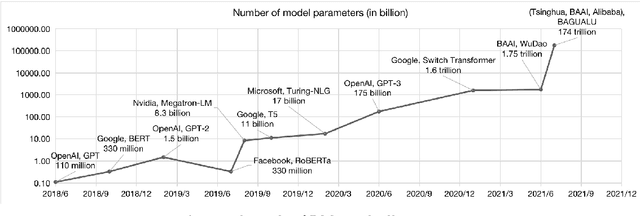
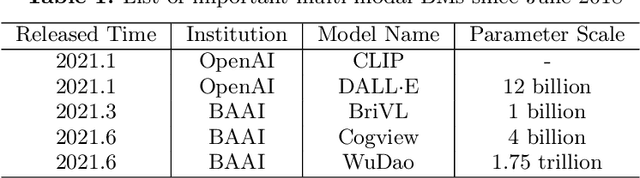
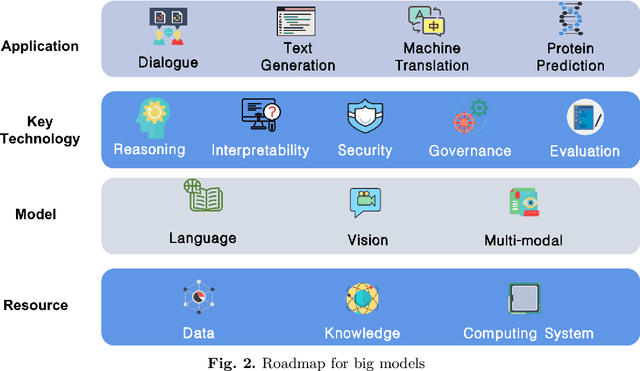
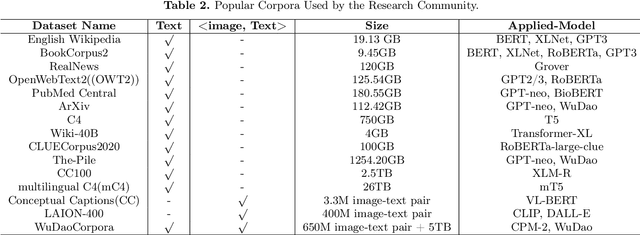
With the rapid development of deep learning, training Big Models (BMs) for multiple downstream tasks becomes a popular paradigm. Researchers have achieved various outcomes in the construction of BMs and the BM application in many fields. At present, there is a lack of research work that sorts out the overall progress of BMs and guides the follow-up research. In this paper, we cover not only the BM technologies themselves but also the prerequisites for BM training and applications with BMs, dividing the BM review into four parts: Resource, Models, Key Technologies and Application. We introduce 16 specific BM-related topics in those four parts, they are Data, Knowledge, Computing System, Parallel Training System, Language Model, Vision Model, Multi-modal Model, Theory&Interpretability, Commonsense Reasoning, Reliability&Security, Governance, Evaluation, Machine Translation, Text Generation, Dialogue and Protein Research. In each topic, we summarize clearly the current studies and propose some future research directions. At the end of this paper, we conclude the further development of BMs in a more general view.