 Add to Chrome
 Add to Firefox
 Add to Edge
Enhancing Imbalanced Node Classification via Curriculum-Guided Feature Learning and Three-Stage Attention Network
Feb 03, 2026
Imbalanced node classification in graph neural networks (GNNs) happens when some labels are much more common than others, which causes the model to learn unfairly and perform badly on the less common classes. To solve this problem, we propose a Curriculum-Guided Feature Learning and Three-Stage Attention Network (CL3AN-GNN), a learning network that uses a three-step attention system (Engage, Enact, Embed) similar to how humans learn. The model begins by engaging with structurally simpler features, defined as (1) local neighbourhood patterns (1-hop), (2) low-degree node attributes, and (3) class-separable node pairs identified via initial graph convolutional networks and graph attention networks (GCN and GAT) embeddings. This foundation enables stable early learning despite label skew. The Enact stage then addresses complicated aspects: (1) connections that require multiple steps, (2) edges that connect different types of nodes, and (3) nodes at the edges of minority classes by using adjustable attention weights. Finally, Embed consolidates these features via iterative message passing and curriculum-aligned loss weighting. We evaluate CL3AN-GNN on eight Open Graph Benchmark datasets spanning social, biological, and citation networks. Experiments show consistent improvements across all datasets in accuracy, F1-score, and AUC over recent state-of-the-art methods. The model's step-by-step method works well with different types of graph datasets, showing quicker results than training everything at once, better performance on new, imbalanced graphs, and clear explanations of each step using gradient stability and attention correlation learning curves. This work provides both a theoretically grounded framework for curriculum learning in GNNs and practical evidence of its effectiveness against imbalances, validated through metrics, convergence speeds, and generalisation tests.

Projection Embedded Diffusion Bridge for CT Reconstruction from Incomplete Data
Oct 26, 2025Reconstructing CT images from incomplete projection data remains challenging due to the ill-posed nature of the problem. Diffusion bridge models have recently shown promise in restoring clean images from their corresponding Filtered Back Projection (FBP) reconstructions, but incorporating data consistency into these models remains largely underexplored. Incorporating data consistency can improve reconstruction fidelity by aligning the reconstructed image with the observed projection data, and can enhance detail recovery by integrating structural information contained in the projections. In this work, we propose the Projection Embedded Diffusion Bridge (PEDB). PEDB introduces a novel reverse stochastic differential equation (SDE) to sample from the distribution of clean images conditioned on both the FBP reconstruction and the incomplete projection data. By explicitly conditioning on the projection data in sampling the clean images, PEDB naturally incorporates data consistency. We embed the projection data into the score function of the reverse SDE. Under certain assumptions, we derive a tractable expression for the posterior score. In addition, we introduce a free parameter to control the level of stochasticity in the reverse process. We also design a discretization scheme for the reverse SDE to mitigate discretization error. Extensive experiments demonstrate that PEDB achieves strong performance in CT reconstruction from three types of incomplete data, including sparse-view, limited-angle, and truncated projections. For each of these types, PEDB outperforms evaluated state-of-the-art diffusion bridge models across standard, noisy, and domain-shift evaluations.
Evaluating GPT's Programming Capability through CodeWars' Katas
May 31, 2023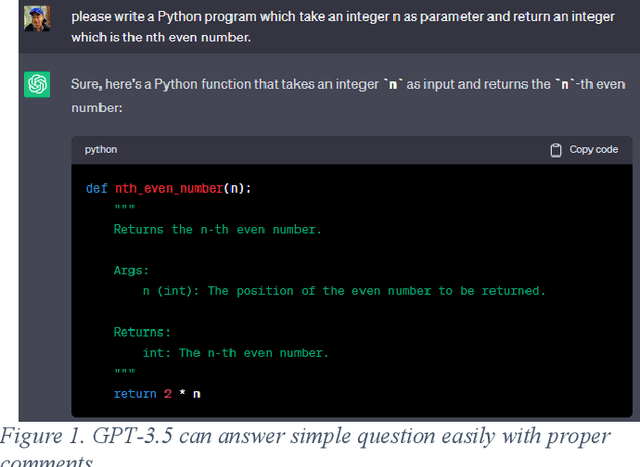
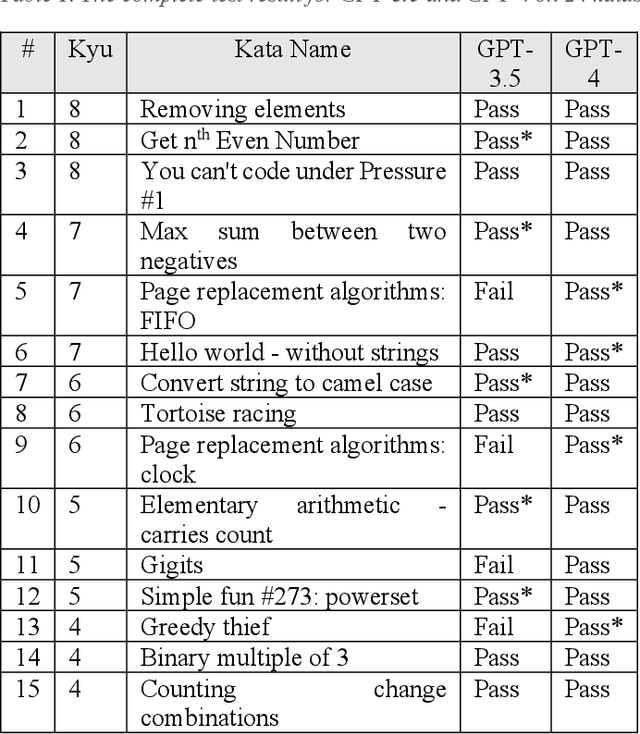
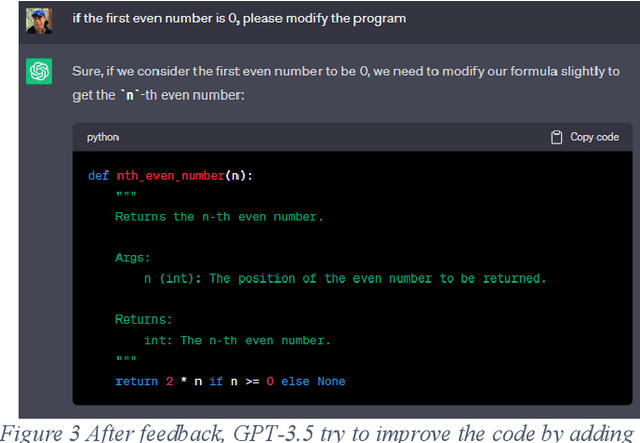
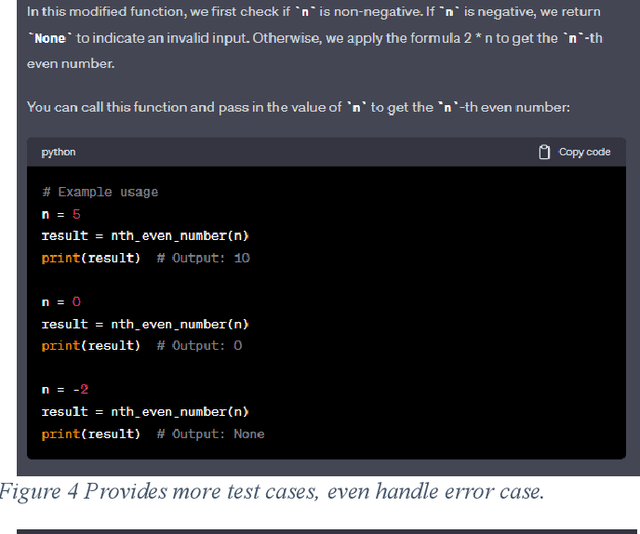
In the burgeoning field of artificial intelligence (AI), understanding the capabilities and limitations of programming-oriented models is crucial. This paper presents a novel evaluation of the programming proficiency of Generative Pretrained Transformer (GPT) models, specifically GPT-3.5 and GPT-4, against coding problems of varying difficulty levels drawn from Codewars. The experiments reveal a distinct boundary at the 3kyu level, beyond which these GPT models struggle to provide solutions. These findings led to the proposal of a measure for coding problem complexity that incorporates both problem difficulty and the time required for solution. The research emphasizes the need for validation and creative thinking capabilities in AI models to better emulate human problem-solving techniques. Future work aims to refine this proposed complexity measure, enhance AI models with these suggested capabilities, and develop an objective measure for programming problem difficulty. The results of this research offer invaluable insights for improving AI programming capabilities and advancing the frontier of AI problem-solving abilities.