 Add to Chrome
 Add to Firefox
 Add to Edge
Atlas 2 - Foundation models for clinical deployment
Jan 08, 2026
Pathology foundation models substantially advanced the possibilities in computational pathology -- yet tradeoffs in terms of performance, robustness, and computational requirements remained, which limited their clinical deployment. In this report, we present Atlas 2, Atlas 2-B, and Atlas 2-S, three pathology vision foundation models which bridge these shortcomings by showing state-of-the-art performance in prediction performance, robustness, and resource efficiency in a comprehensive evaluation across eighty public benchmarks. Our models were trained on the largest pathology foundation model dataset to date comprising 5.5 million histopathology whole slide images, collected from three medical institutions Charité - Universtätsmedizin Berlin, LMU Munich, and Mayo Clinic.

TransferLight: Zero-Shot Traffic Signal Control on any Road-Network
Dec 12, 2024
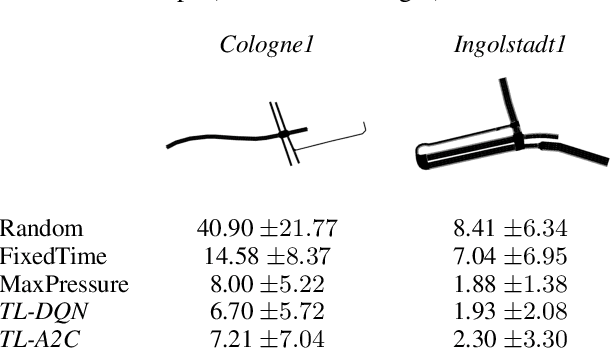
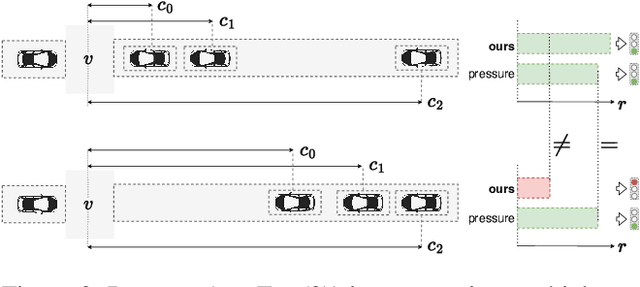
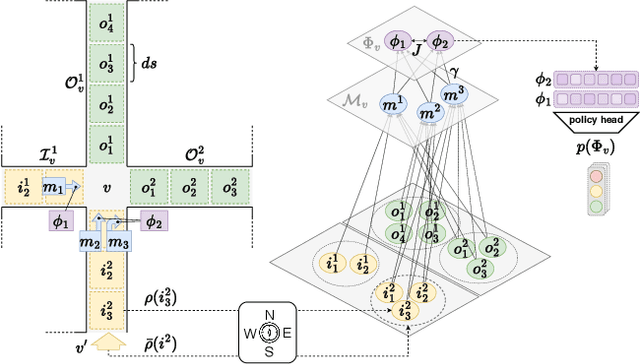
Traffic signal control plays a crucial role in urban mobility. However, existing methods often struggle to generalize beyond their training environments to unseen scenarios with varying traffic dynamics. We present TransferLight, a novel framework designed for robust generalization across road-networks, diverse traffic conditions and intersection geometries. At its core, we propose a log-distance reward function, offering spatially-aware signal prioritization while remaining adaptable to varied lane configurations - overcoming the limitations of traditional pressure-based rewards. Our hierarchical, heterogeneous, and directed graph neural network architecture effectively captures granular traffic dynamics, enabling transferability to arbitrary intersection layouts. Using a decentralized multi-agent approach, global rewards, and novel state transition priors, we develop a single, weight-tied policy that scales zero-shot to any road network without re-training. Through domain randomization during training, we additionally enhance generalization capabilities. Experimental results validate TransferLight's superior performance in unseen scenarios, advancing practical, generalizable intelligent transportation systems to meet evolving urban traffic demands.