 Add to Chrome
 Add to Firefox
 Add to Edge
How Order-Sensitive Are LLMs? OrderProbe for Deterministic Structural Reconstruction
Jan 13, 2026
Large language models (LLMs) excel at semantic understanding, yet their ability to reconstruct internal structure from scrambled inputs remains underexplored. Sentence-level restoration is ill-posed for automated evaluation because multiple valid word orders often exist. We introduce OrderProbe, a deterministic benchmark for structural reconstruction using fixed four-character expressions in Chinese, Japanese, and Korean, which have a unique canonical order and thus support exact-match scoring. We further propose a diagnostic framework that evaluates models beyond recovery accuracy, including semantic fidelity, logical validity, consistency, robustness sensitivity, and information density. Experiments on twelve widely used LLMs show that structural reconstruction remains difficult even for frontier systems: zero-shot recovery frequently falls below 35%. We also observe a consistent dissociation between semantic recall and structural planning, suggesting that structural robustness is not an automatic byproduct of semantic competence.

Research on Optimization of Natural Language Processing Model Based on Multimodal Deep Learning
Jun 13, 2024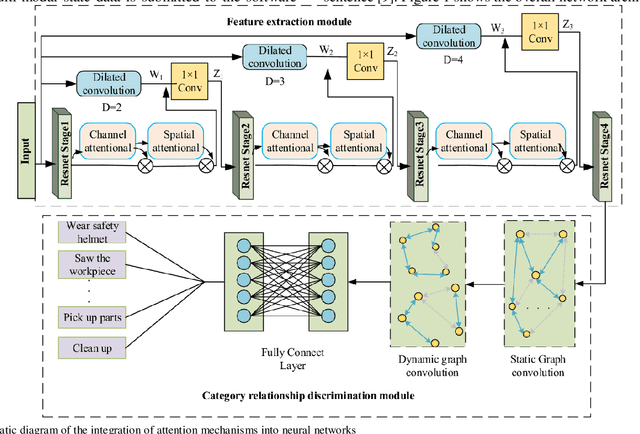
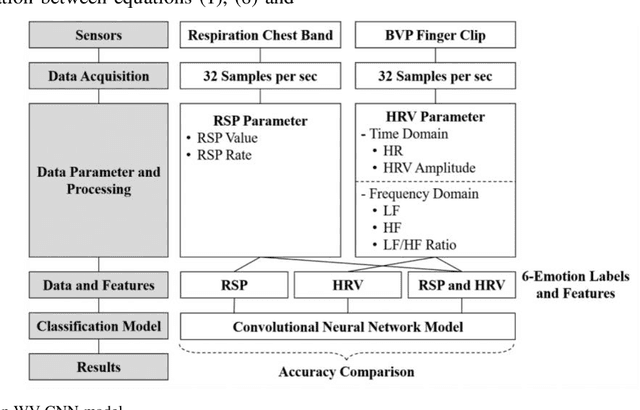
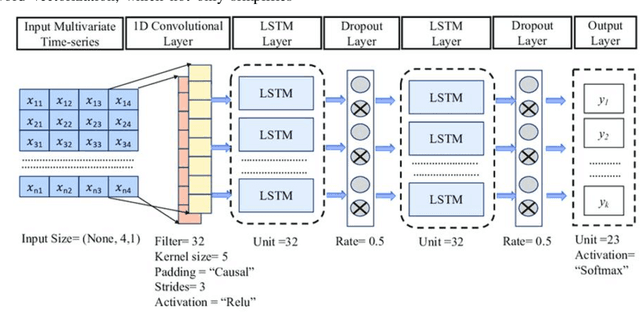
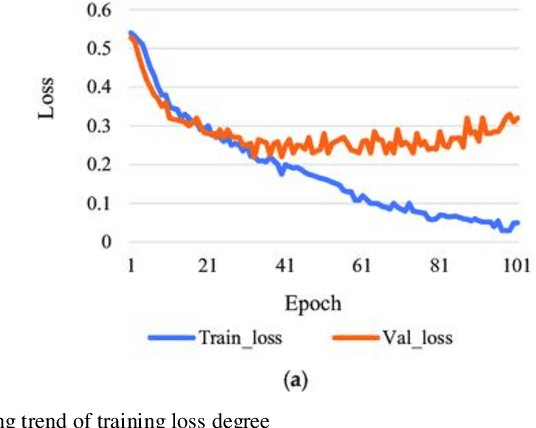
This project intends to study the image representation based on attention mechanism and multimodal data. By adding multiple pattern layers to the attribute model, the semantic and hidden layers of image content are integrated. The word vector is quantified by the Word2Vec method and then evaluated by a word embedding convolutional neural network. The published experimental results of the two groups were tested. The experimental results show that this method can convert discrete features into continuous characters, thus reducing the complexity of feature preprocessing. Word2Vec and natural language processing technology are integrated to achieve the goal of direct evaluation of missing image features. The robustness of the image feature evaluation model is improved by using the excellent feature analysis characteristics of a convolutional neural network. This project intends to improve the existing image feature identification methods and eliminate the subjective influence in the evaluation process. The findings from the simulation indicate that the novel approach has developed is viable, effectively augmenting the features within the produced representations.