 Add to Chrome
 Add to Firefox
 Add to Edge
HALO: Semantic-Aware Distributed LLM Inference in Lossy Edge Network
Jan 16, 2026
The deployment of large language models' (LLMs) inference at the edge can facilitate prompt service responsiveness while protecting user privacy. However, it is critically challenged by the resource constraints of a single edge node. Distributed inference has emerged to aggregate and leverage computational resources across multiple devices. Yet, existing methods typically require strict synchronization, which is often infeasible due to the unreliable network conditions. In this paper, we propose HALO, a novel framework that can boost the distributed LLM inference in lossy edge network. The core idea is to enable a relaxed yet effective synchronization by strategically allocating less critical neuron groups to unstable devices, thus avoiding the excessive waiting time incurred by delayed packets. HALO introduces three key mechanisms: (1) a semantic-aware predictor to assess the significance of neuron groups prior to activation. (2) a parallel execution scheme of neuron group loading during the model inference. (3) a load-balancing scheduler that efficiently orchestrates multiple devices with heterogeneous resources. Experimental results from a Raspberry Pi cluster demonstrate that HALO achieves a 3.41x end-to-end speedup for LLaMA-series LLMs under unreliable network conditions. It maintains performance comparable to optimal conditions and significantly outperforms the state-of-the-art in various scenarios.

Deploying Foundation Model Powered Agent Services: A Survey
Dec 18, 2024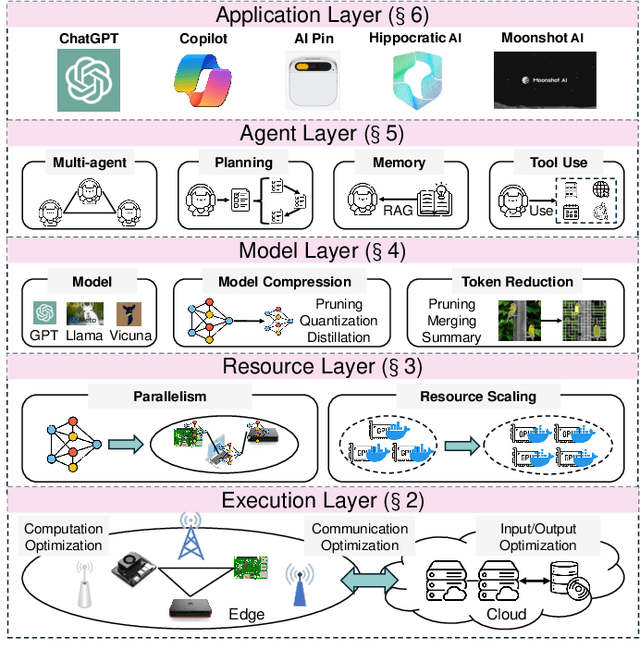
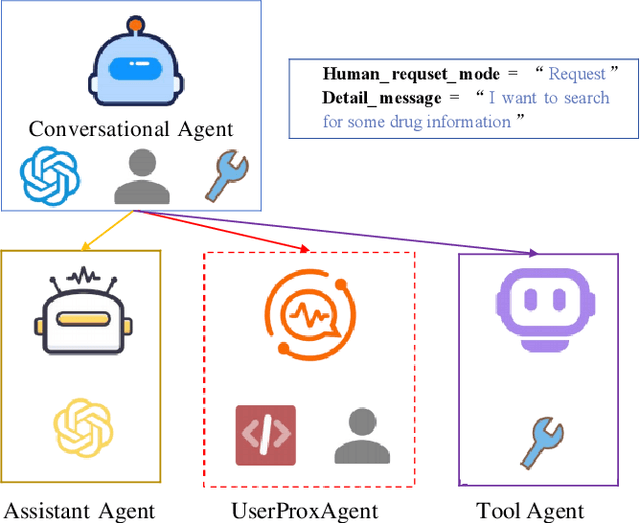
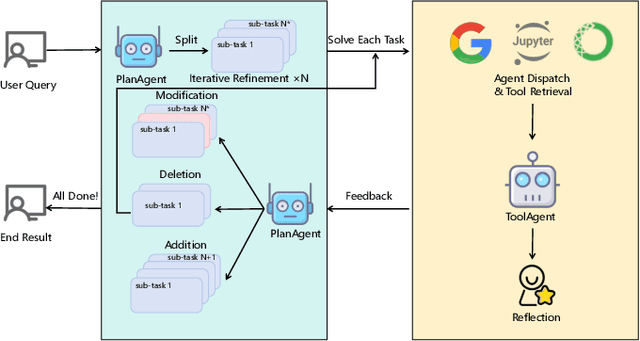
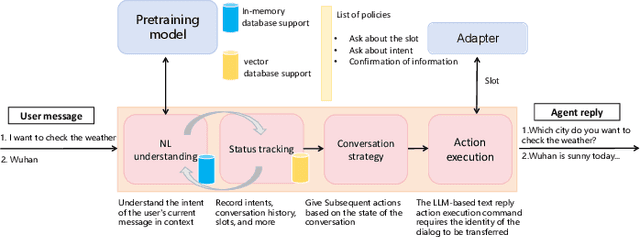
Foundation model (FM) powered agent services are regarded as a promising solution to develop intelligent and personalized applications for advancing toward Artificial General Intelligence (AGI). To achieve high reliability and scalability in deploying these agent services, it is essential to collaboratively optimize computational and communication resources, thereby ensuring effective resource allocation and seamless service delivery. In pursuit of this vision, this paper proposes a unified framework aimed at providing a comprehensive survey on deploying FM-based agent services across heterogeneous devices, with the emphasis on the integration of model and resource optimization to establish a robust infrastructure for these services. Particularly, this paper begins with exploring various low-level optimization strategies during inference and studies approaches that enhance system scalability, such as parallelism techniques and resource scaling methods. The paper then discusses several prominent FMs and investigates research efforts focused on inference acceleration, including techniques such as model compression and token reduction. Moreover, the paper also investigates critical components for constructing agent services and highlights notable intelligent applications. Finally, the paper presents potential research directions for developing real-time agent services with high Quality of Service (QoS).