 Add to Chrome
 Add to Firefox
 Add to Edge
The Llama 4 Herd: Architecture, Training, Evaluation, and Deployment Notes
Jan 15, 2026
This document consolidates publicly reported technical details about Metas Llama 4 model family. It summarizes (i) released variants (Scout and Maverick) and the broader herd context including the previewed Behemoth teacher model, (ii) architectural characteristics beyond a high-level MoE description covering routed/shared-expert structure, early-fusion multimodality, and long-context design elements reported for Scout (iRoPE and length generalization strategies), (iii) training disclosures spanning pre-training, mid-training for long-context extension, and post-training methodology (lightweight SFT, online RL, and lightweight DPO) as described in release materials, (iv) developer-reported benchmark results for both base and instruction-tuned checkpoints, and (v) practical deployment constraints observed across major serving environments, including provider-specific context limits and quantization packaging. The manuscript also summarizes licensing obligations relevant to redistribution and derivative naming, and reviews publicly described safeguards and evaluation practices. The goal is to provide a compact technical reference for researchers and practitioners who need precise, source-backed facts about Llama 4.

ProbLP: A framework for low-precision probabilistic inference
Feb 27, 2021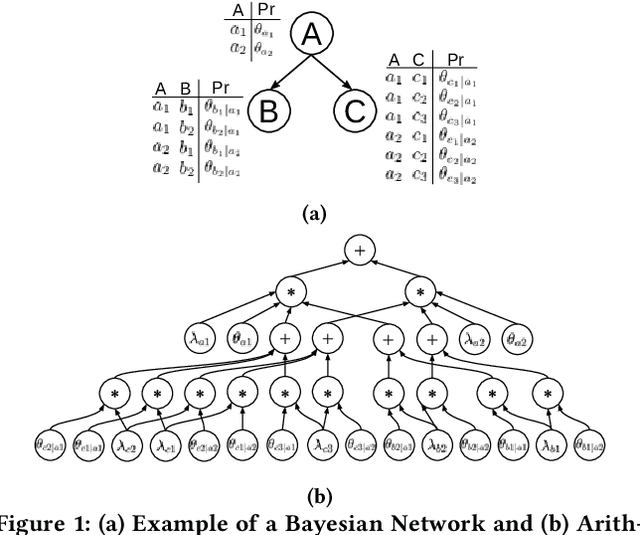
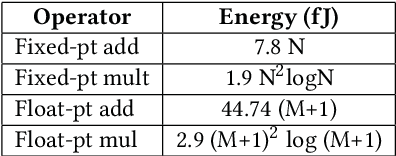
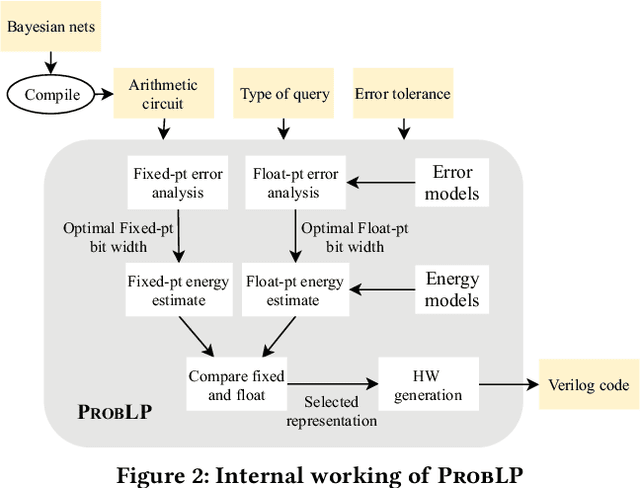
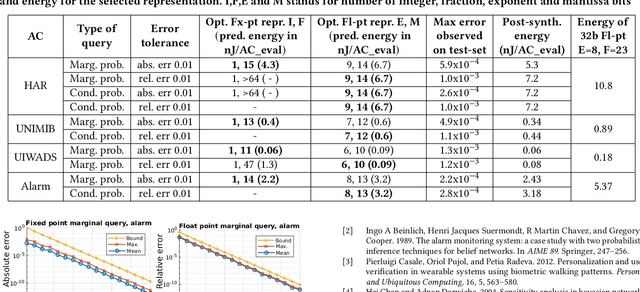
Bayesian reasoning is a powerful mechanism for probabilistic inference in smart edge-devices. During such inferences, a low-precision arithmetic representation can enable improved energy efficiency. However, its impact on inference accuracy is not yet understood. Furthermore, general-purpose hardware does not natively support low-precision representation. To address this, we propose ProbLP, a framework that automates the analysis and design of low-precision probabilistic inference hardware. It automatically chooses an appropriate energy-efficient representation based on worst-case error-bounds and hardware energy-models. It generates custom hardware for the resulting inference network exploiting parallelism, pipelining and low-precision operation. The framework is validated on several embedded-sensing benchmarks.