 Add to Chrome
 Add to Firefox
 Add to Edge
Enhancing Alzheimer's Detection through Late Fusion of Multi-Modal EEG Features
Dec 17, 2025
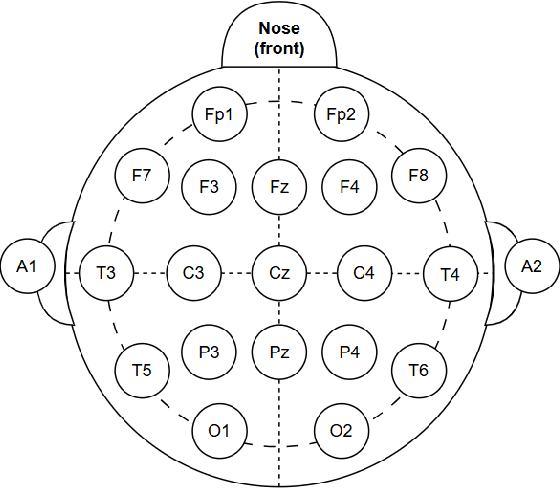
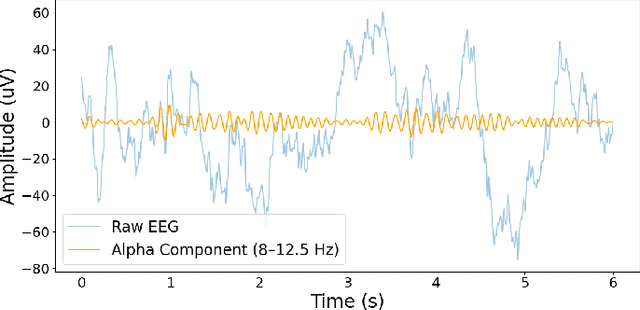
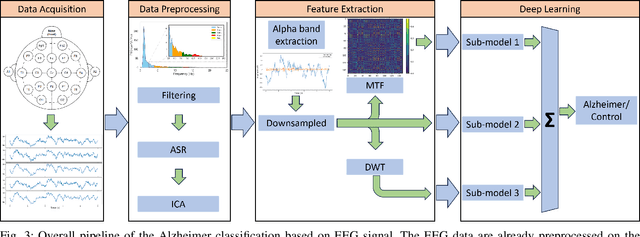
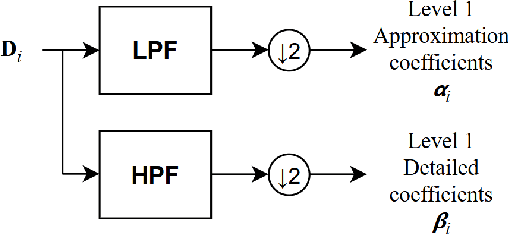
Alzheimer s disease (AD) is a progressive neurodegenerative disorder characterized by cognitive decline, where early detection is essential for timely intervention and improved patient outcomes. Traditional diagnostic methods are time-consuming and require expert interpretation, thus, automated approaches are highly desirable. This study presents a novel deep learning framework for AD diagnosis using Electroencephalograph (EEG) signals, integrating multiple feature extraction techniques including alpha-wave analysis, Discrete Wavelet Transform (DWT), and Markov Transition Fields (MTF). A late-fusion strategy is employed to combine predictions from separate neural networks trained on these diverse representations, capturing both temporal and frequency-domain patterns in the EEG data. The proposed model attains a classification accuracy of 87.23%, with a precision of 87.95%, a recall of 86.91%, and an F1 score of 87.42% when evaluated on a publicly available dataset, demonstrating its potential for reliable, scalable, and early AD screening. Rigorous preprocessing and targeted frequency band selection, particularly in the alpha range due to its cognitive relevance, further enhance performance. This work highlights the promise of deep learning in supporting physicians with efficient and accessible tools for early AD diagnosis.

Collaborative Learning for Cyberattack Detection in Blockchain Networks
Mar 21, 2022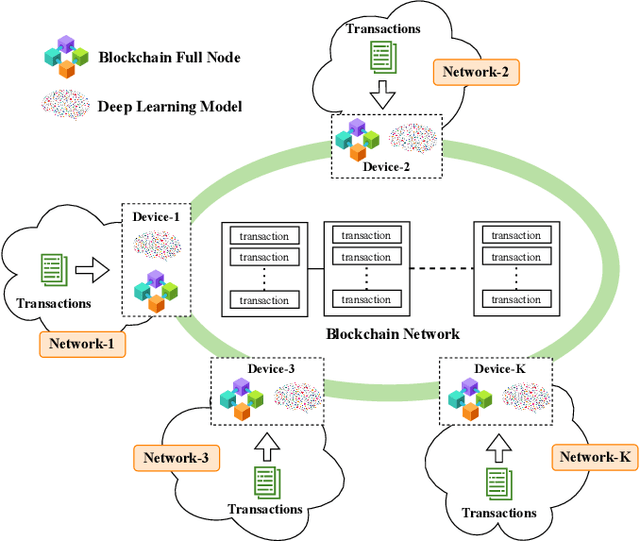
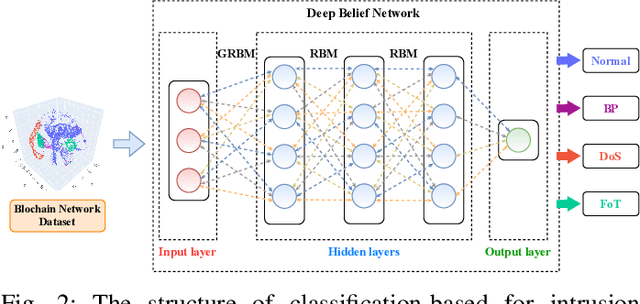
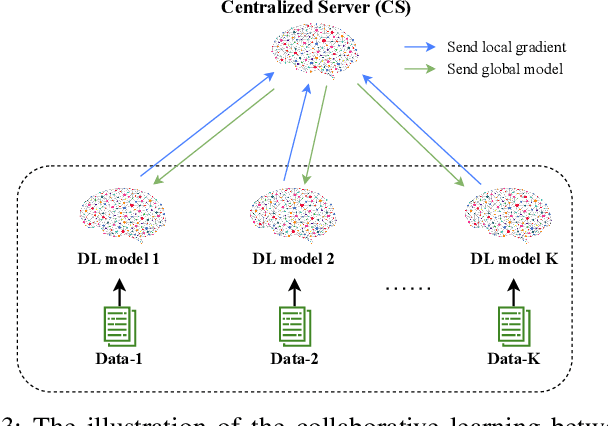
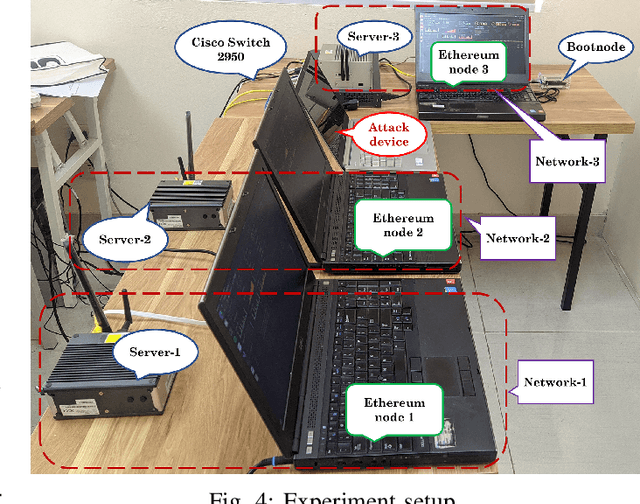
This article aims to study intrusion attacks and then develop a novel cyberattack detection framework for blockchain networks. Specifically, we first design and implement a blockchain network in our laboratory. This blockchain network will serve two purposes, i.e., generate the real traffic data (including both normal data and attack data) for our learning models and implement real-time experiments to evaluate the performance of our proposed intrusion detection framework. To the best of our knowledge, this is the first dataset that is synthesized in a laboratory for cyberattacks in a blockchain network. We then propose a novel collaborative learning model that allows efficient deployment in the blockchain network to detect attacks. The main idea of the proposed learning model is to enable blockchain nodes to actively collect data, share the knowledge learned from its data, and then exchange the knowledge with other blockchain nodes in the network. In this way, we can not only leverage the knowledge from all the nodes in the network but also do not need to gather all raw data for training at a centralized node like conventional centralized learning solutions. Such a framework can also avoid the risk of exposing local data's privacy as well as the excessive network overhead/congestion. Both intensive simulations and real-time experiments clearly show that our proposed collaborative learning-based intrusion detection framework can achieve an accuracy of up to 97.7% in detecting attacks.
Deep Transfer Learning: A Novel Collaborative Learning Model for Cyberattack Detection Systems in IoT Networks
Dec 02, 2021
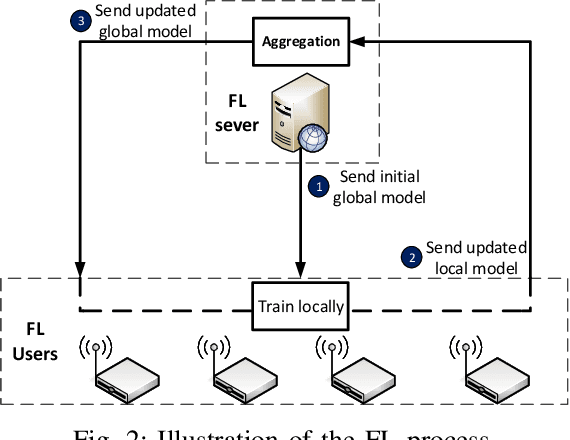

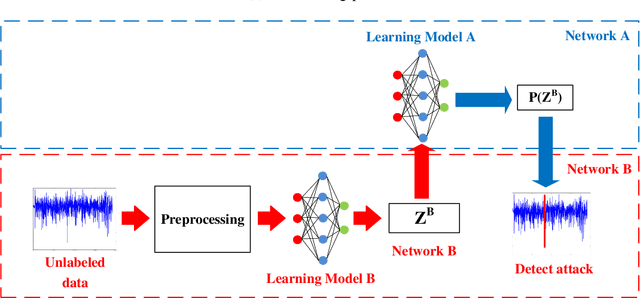
Federated Learning (FL) has recently become an effective approach for cyberattack detection systems, especially in Internet-of-Things (IoT) networks. By distributing the learning process across IoT gateways, FL can improve learning efficiency, reduce communication overheads and enhance privacy for cyberattack detection systems. Challenges in implementation of FL in such systems include unavailability of labeled data and dissimilarity of data features in different IoT networks. In this paper, we propose a novel collaborative learning framework that leverages Transfer Learning (TL) to overcome these challenges. Particularly, we develop a novel collaborative learning approach that enables a target network with unlabeled data to effectively and quickly learn knowledge from a source network that possesses abundant labeled data. It is important that the state-of-the-art studies require the participated datasets of networks to have the same features, thus limiting the efficiency, flexibility as well as scalability of intrusion detection systems. However, our proposed framework can address these problems by exchanging the learning knowledge among various deep learning models, even when their datasets have different features. Extensive experiments on recent real-world cybersecurity datasets show that the proposed framework can improve more than 40% as compared to the state-of-the-art deep learning based approaches.