 Add to Chrome
 Add to Firefox
 Add to Edge
Position on LLM-Assisted Peer Review: Addressing Reviewer Gap through Mentoring and Feedback
Jan 14, 2026
The rapid expansion of AI research has intensified the Reviewer Gap, threatening the peer-review sustainability and perpetuating a cycle of low-quality evaluations. This position paper critiques existing LLM approaches that automatically generate reviews and argues for a paradigm shift that positions LLMs as tools for assisting and educating human reviewers. We define the core principles of high-quality peer review and propose two complementary systems grounded in these foundations: (i) an LLM-assisted mentoring system that cultivates reviewers' long-term competencies, and (ii) an LLM-assisted feedback system that helps reviewers refine the quality of their reviews. This human-centered approach aims to strengthen reviewer expertise and contribute to building a more sustainable scholarly ecosystem.

Proceedings of 1st Workshop on Advancing Artificial Intelligence through Theory of Mind
Apr 28, 2025
This volume includes a selection of papers presented at the Workshop on Advancing Artificial Intelligence through Theory of Mind held at AAAI 2025 in Philadelphia US on 3rd March 2025. The purpose of this volume is to provide an open access and curated anthology for the ToM and AI research community.
See-Saw Modality Balance: See Gradient, and Sew Impaired Vision-Language Balance to Mitigate Dominant Modality Bias
Mar 18, 2025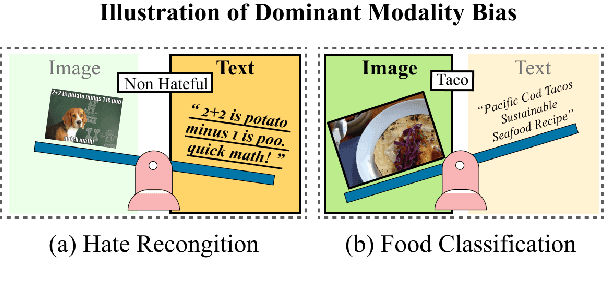
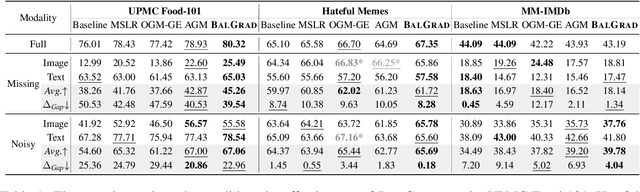
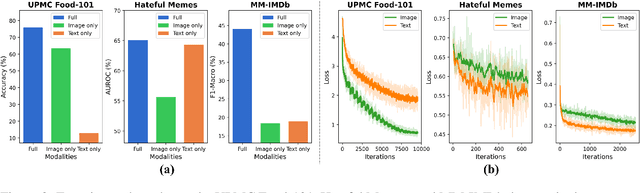
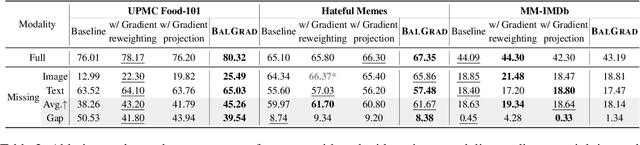
Vision-language (VL) models have demonstrated strong performance across various tasks. However, these models often rely on a specific modality for predictions, leading to "dominant modality bias.'' This bias significantly hurts performance, especially when one modality is impaired. In this study, we analyze model behavior under dominant modality bias and theoretically show that unaligned gradients or differences in gradient magnitudes prevent balanced convergence of the loss. Based on these findings, we propose a novel framework, BalGrad to mitigate dominant modality bias. Our approach includes inter-modality gradient reweighting, adjusting the gradient of KL divergence based on each modality's contribution, and inter-task gradient projection to align task directions in a non-conflicting manner. Experiments on UPMC Food-101, Hateful Memes, and MM-IMDb datasets confirm that BalGrad effectively alleviates over-reliance on specific modalities when making predictions.