 Add to Chrome
 Add to Firefox
 Add to Edge
RC-GRPO: Reward-Conditioned Group Relative Policy Optimization for Multi-Turn Tool Calling Agents
Feb 03, 2026
Multi-turn tool calling is challenging for Large Language Models (LLMs) because rewards are sparse and exploration is expensive. A common recipe, SFT followed by GRPO, can stall when within-group reward variation is low (e.g., more rollouts in a group receive the all 0 or all 1 reward), making the group-normalized advantage uninformative and yielding vanishing updates. To address this problem, we propose RC-GRPO (Reward-Conditioned Group Relative Policy Optimization), which treats exploration as a controllable steering problem via discrete reward tokens. We first fine-tune a Reward-Conditioned Trajectory Policy (RCTP) on mixed-quality trajectories with reward goal special tokens (e.g., <|high_reward|>, <|low_reward|>) injected into the prompts, enabling the model to learn how to generate distinct quality trajectories on demand. Then during RL, we sample diverse reward tokens within each GRPO group and condition rollouts on the sampled token to improve within-group diversity, improving advantage gains. On the Berkeley Function Calling Leaderboard v4 (BFCLv4) multi-turn benchmark, our method yields consistently improved performance than baselines, and the performance on Qwen-2.5-7B-Instruct even surpasses all closed-source API models.

SCMPPI: Supervised Contrastive Multimodal Framework for Predicting Protein-Protein Interactions
Apr 03, 2025
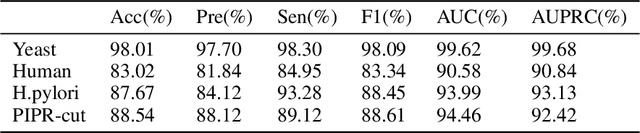
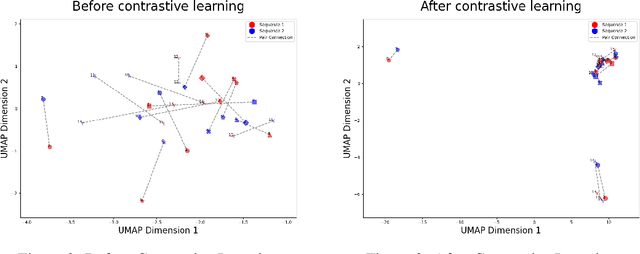
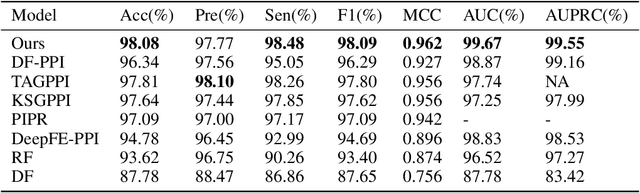
Protein-Protein Interaction (PPI) prediction is a key task in uncovering cellular functional networks and disease mechanisms. However, traditional experimental methods are time-consuming and costly, and existing computational models face challenges in cross-modal feature fusion, robustness, and false-negative suppression. In this paper, we propose a novel supervised contrastive multimodal framework, SCMPPI, for PPI prediction. By integrating protein sequence features (AAC, DPC, CKSAAP-ESMC) with PPI network topology information (Node2Vec graph embedding), and combining an improved supervised contrastive learning strategy, SCMPPI significantly enhances PPI prediction performance. For the PPI task, SCMPPI introduces a negative sample filtering mechanism and modifies the contrastive loss function, effectively optimizing multimodal features. Experiments on eight benchmark datasets, including yeast, human, and H.pylori, show that SCMPPI outperforms existing state-of-the-art methods (such as DF-PPI and TAGPPI) in key metrics such as accuracy ( 98.01%) and AUC (99.62%), and demonstrates strong generalization in cross-species prediction (AUC > 99% on multi-species datasets). Furthermore, SCMPPI has been successfully applied to CD9 networks, the Wnt pathway, and cancer-specific networks, providing a reliable tool for disease target discovery. This framework also offers a new paradigm for multimodal biological information fusion and contrastive learning in collaborative optimization for various combined predictions.
PDeepPP:A Deep learning framework with Pretrained Protein language for peptide classification
Feb 21, 2025Protein post-translational modifications (PTMs) and bioactive peptides (BPs) play critical roles in various biological processes and have significant therapeutic potential. However, identifying PTM sites and bioactive peptides through experimental methods is often labor-intensive, costly, and time-consuming. As a result, computational tools, particularly those based on deep learning, have become effective solutions for predicting PTM sites and peptide bioactivity. Despite progress in this field, existing methods still struggle with the complexity of protein sequences and the challenge of requiring high-quality predictions across diverse datasets. To address these issues, we propose a deep learning framework that integrates pretrained protein language models with a neural network combining transformer and CNN for peptide classification. By leveraging the ability of pretrained models to capture complex relationships within protein sequences, combined with the predictive power of parallel networks, our approach improves feature extraction while enhancing prediction accuracy. This framework was applied to multiple tasks involving PTM site and bioactive peptide prediction, utilizing large-scale datasets to enhance the model's robustness. In the comparison across 33 tasks, the model achieved state-of-the-art (SOTA) performance in 25 of them, surpassing existing methods and demonstrating its versatility across different datasets. Our results suggest that this approach provides a scalable and effective solution for large-scale peptide discovery and PTM analysis, paving the way for more efficient peptide classification and functional annotation.