 Add to Chrome
 Add to Firefox
 Add to Edge
CitiLink-Summ: Summarization of Discussion Subjects in European Portuguese Municipal Meeting Minutes
Feb 18, 2026
Municipal meeting minutes are formal records documenting the discussions and decisions of local government, yet their content is often lengthy, dense, and difficult for citizens to navigate. Automatic summarization can help address this challenge by producing concise summaries for each discussion subject. Despite its potential, research on summarizing discussion subjects in municipal meeting minutes remains largely unexplored, especially in low-resource languages, where the inherent complexity of these documents adds further challenges. A major bottleneck is the scarcity of datasets containing high-quality, manually crafted summaries, which limits the development and evaluation of effective summarization models for this domain. In this paper, we present CitiLink-Summ, a new corpus of European Portuguese municipal meeting minutes, comprising 100 documents and 2,322 manually hand-written summaries, each corresponding to a distinct discussion subject. Leveraging this dataset, we establish baseline results for automatic summarization in this domain, employing state-of-the-art generative models (e.g., BART, PRIMERA) as well as large language models (LLMs), evaluated with both lexical and semantic metrics such as ROUGE, BLEU, METEOR, and BERTScore. CitiLink-Summ provides the first benchmark for municipal-domain summarization in European Portuguese, offering a valuable resource for advancing NLP research on complex administrative texts.

CitiLink-Minutes: A Multilayer Annotated Dataset of Municipal Meeting Minutes
Feb 12, 2026City councils play a crucial role in local governance, directly influencing citizens' daily lives through decisions made during municipal meetings. These deliberations are formally documented in meeting minutes, which serve as official records of discussions, decisions, and voting outcomes. Despite their importance, municipal meeting records have received little attention in Information Retrieval (IR) and Natural Language Processing (NLP), largely due to the lack of annotated datasets, which ultimately limit the development of computational models. To address this gap, we introduce CitiLink-Minutes, a multilayer dataset of 120 European Portuguese municipal meeting minutes from six municipalities. Unlike prior annotated datasets of parliamentary or video records, CitiLink-Minutes provides multilayer annotations and structured linkage of official written minutes. The dataset contains over one million tokens, with all personal identifiers de-identified. Each minute was manually annotated by two trained annotators and curated by an experienced linguist across three complementary dimensions: (1) metadata, (2) subjects of discussion, and (3) voting outcomes, totaling over 38,000 individual annotations. Released under FAIR principles and accompanied by baseline results on metadata extraction, topic classification, and vote labeling, CitiLink-Minutes demonstrates its potential for downstream NLP and IR tasks, while promoting transparent access to municipal decisions.
ClaimPT: A Portuguese Dataset of Annotated Claims in News Articles
Jan 27, 2026Fact-checking remains a demanding and time-consuming task, still largely dependent on manual verification and unable to match the rapid spread of misinformation online. This is particularly important because debunking false information typically takes longer to reach consumers than the misinformation itself; accelerating corrections through automation can therefore help counter it more effectively. Although many organizations perform manual fact-checking, this approach is difficult to scale given the growing volume of digital content. These limitations have motivated interest in automating fact-checking, where identifying claims is a crucial first step. However, progress has been uneven across languages, with English dominating due to abundant annotated data. Portuguese, like other languages, still lacks accessible, licensed datasets, limiting research, NLP developments and applications. In this paper, we introduce ClaimPT, a dataset of European Portuguese news articles annotated for factual claims, comprising 1,308 articles and 6,875 individual annotations. Unlike most existing resources based on social media or parliamentary transcripts, ClaimPT focuses on journalistic content, collected through a partnership with LUSA, the Portuguese News Agency. To ensure annotation quality, two trained annotators labeled each article, with a curator validating all annotations according to a newly proposed scheme. We also provide baseline models for claim detection, establishing initial benchmarks and enabling future NLP and IR applications. By releasing ClaimPT, we aim to advance research on low-resource fact-checking and enhance understanding of misinformation in news media.
Enhancing Portuguese Variety Identification with Cross-Domain Approaches
Feb 20, 2025
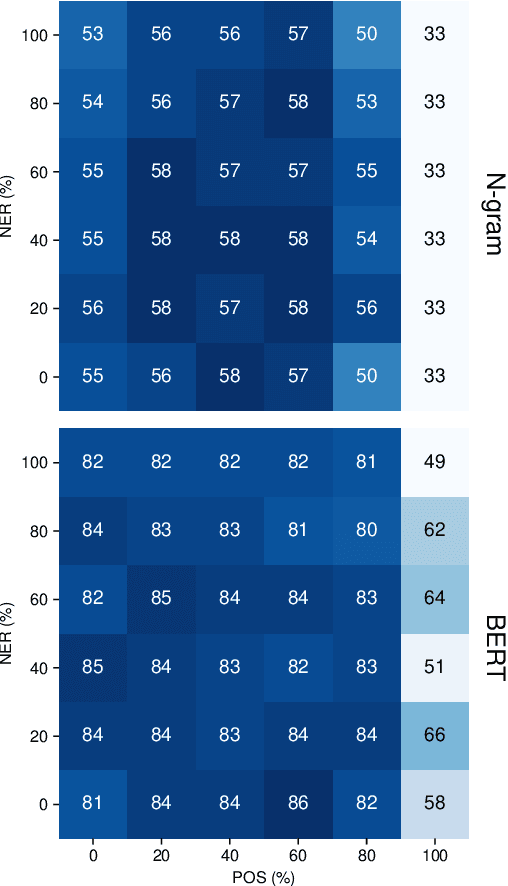
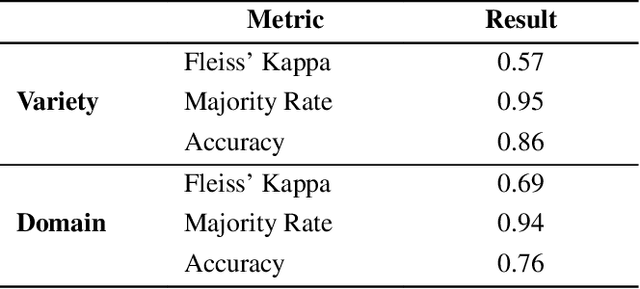
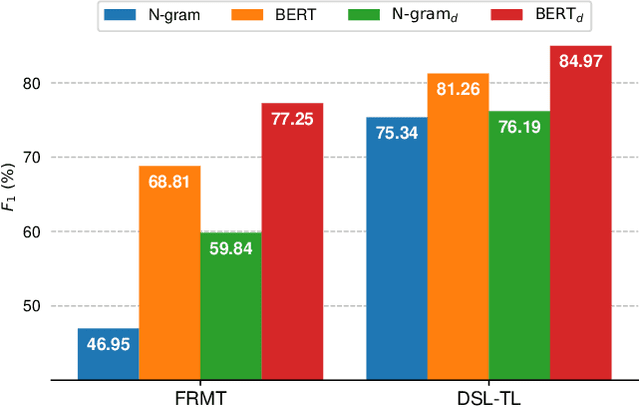
Recent advances in natural language processing have raised expectations for generative models to produce coherent text across diverse language varieties. In the particular case of the Portuguese language, the predominance of Brazilian Portuguese corpora online introduces linguistic biases in these models, limiting their applicability outside of Brazil. To address this gap and promote the creation of European Portuguese resources, we developed a cross-domain language variety identifier (LVI) to discriminate between European and Brazilian Portuguese. Motivated by the findings of our literature review, we compiled the PtBrVarId corpus, a cross-domain LVI dataset, and study the effectiveness of transformer-based LVI classifiers for cross-domain scenarios. Although this research focuses on two Portuguese varieties, our contribution can be extended to other varieties and languages. We open source the code, corpus, and models to foster further research in this task.