 Add to Chrome
 Add to Firefox
 Add to Edge
Towards Automating Blockchain Consensus Verification with IsabeLLM
Jan 12, 2026
Consensus protocols are crucial for a blockchain system as they are what allow agreement between the system's nodes in a potentially adversarial environment. For this reason, it is paramount to ensure their correct design and implementation to prevent such adversaries from carrying out malicious behaviour. Formal verification allows us to ensure the correctness of such protocols, but requires high levels of effort and expertise to carry out and thus is often omitted in the development process. In this paper, we present IsabeLLM, a tool that integrates the proof assistant Isabelle with a Large Language Model to assist and automate proofs. We demonstrate the effectiveness of IsabeLLM by using it to develop a novel model of Bitcoin's Proof of Work consensus protocol and verify its correctness. We use the DeepSeek R1 API for this demonstration and found that we were able to generate correct proofs for each of the non-trivial lemmas present in the verification.

The Reality of AI and Biorisk
Dec 02, 2024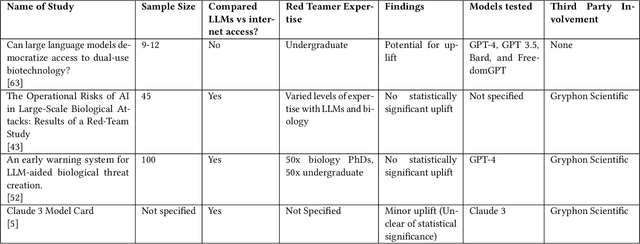
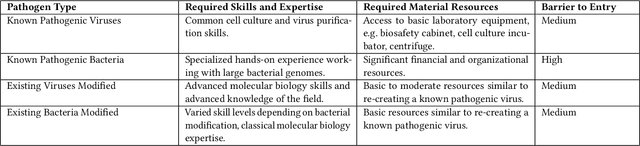
To accurately and confidently answer the question 'could an AI model or system increase biorisk', it is necessary to have both a sound theoretical threat model for how AI models or systems could increase biorisk and a robust method for testing that threat model. This paper provides an analysis of existing available research surrounding two AI and biorisk threat models: 1) access to information and planning via large language models (LLMs), and 2) the use of AI-enabled biological tools (BTs) in synthesizing novel biological artifacts. We find that existing studies around AI-related biorisk are nascent, often speculative in nature, or limited in terms of their methodological maturity and transparency. The available literature suggests that current LLMs and BTs do not pose an immediate risk, and more work is needed to develop rigorous approaches to understanding how future models could increase biorisks. We end with recommendations about how empirical work can be expanded to more precisely target biorisk and ensure rigor and validity of findings.