 Add to Chrome
 Add to Firefox
 Add to Edge
AI-generated data contamination erodes pathological variability and diagnostic reliability
Jan 21, 2026
Generative artificial intelligence (AI) is rapidly populating medical records with synthetic content, creating a feedback loop where future models are increasingly at risk of training on uncurated AI-generated data. However, the clinical consequences of this AI-generated data contamination remain unexplored. Here, we show that in the absence of mandatory human verification, this self-referential cycle drives a rapid erosion of pathological variability and diagnostic reliability. By analysing more than 800,000 synthetic data points across clinical text generation, vision-language reporting, and medical image synthesis, we find that models progressively converge toward generic phenotypes regardless of the model architecture. Specifically, rare but critical findings, including pneumothorax and effusions, vanish from the synthetic content generated by AI models, while demographic representations skew heavily toward middle-aged male phenotypes. Crucially, this degradation is masked by false diagnostic confidence; models continue to issue reassuring reports while failing to detect life-threatening pathology, with false reassurance rates tripling to 40%. Blinded physician evaluation confirms that this decoupling of confidence and accuracy renders AI-generated documentation clinically useless after just two generations. We systematically evaluate three mitigation strategies, finding that while synthetic volume scaling fails to prevent collapse, mixing real data with quality-aware filtering effectively preserves diversity. Ultimately, our results suggest that without policy-mandated human oversight, the deployment of generative AI threatens to degrade the very healthcare data ecosystems it relies upon.

Adversarial Machine Learning -- Industry Perspectives
Feb 04, 2020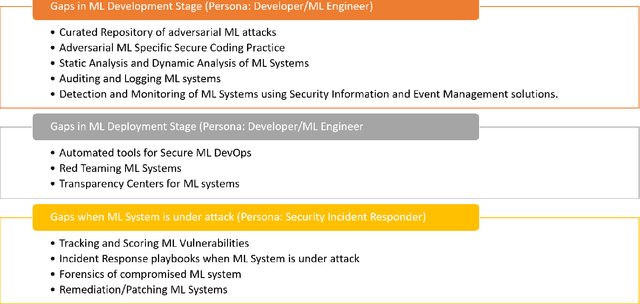
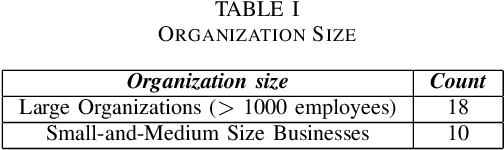
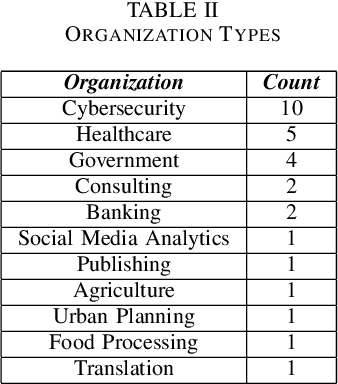
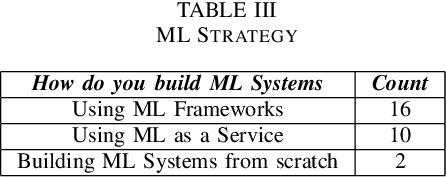
Based on interviews with 28 organizations, we found that industry practitioners are not equipped with tactical and strategic tools to protect, detect and respond to attacks on their Machine Learning (ML) systems. We leverage the insights from the interviews and we enumerate the gaps in perspective in securing machine learning systems when viewed in the context of traditional software security development. We write this paper from the perspective of two personas: developers/ML engineers and security incident responders who are tasked with securing ML systems as they are designed, developed and deployed ML systems. The goal of this paper is to engage researchers to revise and amend the Security Development Lifecycle for industrial-grade software in the adversarial ML era.