 Add to Chrome
 Add to Firefox
 Add to Edge
The Llama 4 Herd: Architecture, Training, Evaluation, and Deployment Notes
Jan 15, 2026
This document consolidates publicly reported technical details about Metas Llama 4 model family. It summarizes (i) released variants (Scout and Maverick) and the broader herd context including the previewed Behemoth teacher model, (ii) architectural characteristics beyond a high-level MoE description covering routed/shared-expert structure, early-fusion multimodality, and long-context design elements reported for Scout (iRoPE and length generalization strategies), (iii) training disclosures spanning pre-training, mid-training for long-context extension, and post-training methodology (lightweight SFT, online RL, and lightweight DPO) as described in release materials, (iv) developer-reported benchmark results for both base and instruction-tuned checkpoints, and (v) practical deployment constraints observed across major serving environments, including provider-specific context limits and quantization packaging. The manuscript also summarizes licensing obligations relevant to redistribution and derivative naming, and reviews publicly described safeguards and evaluation practices. The goal is to provide a compact technical reference for researchers and practitioners who need precise, source-backed facts about Llama 4.

Matched Pair Calibration for Ranking Fairness
Jun 20, 2023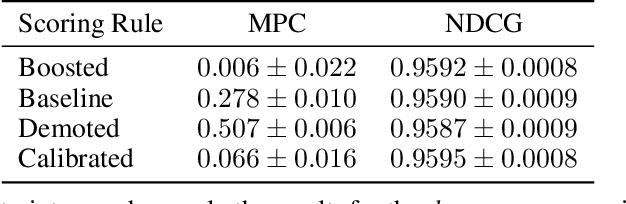
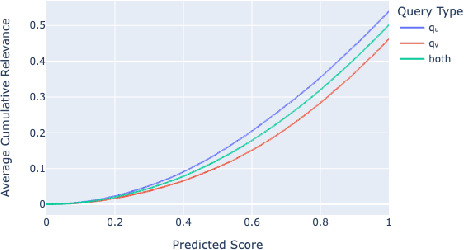
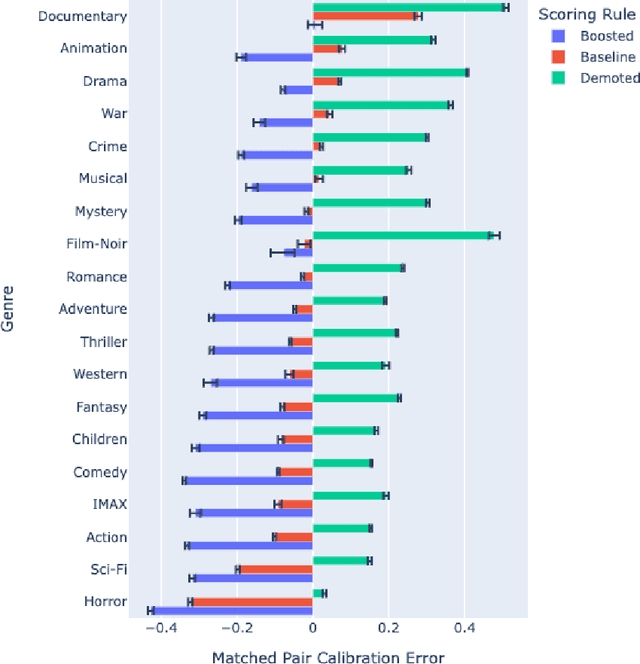
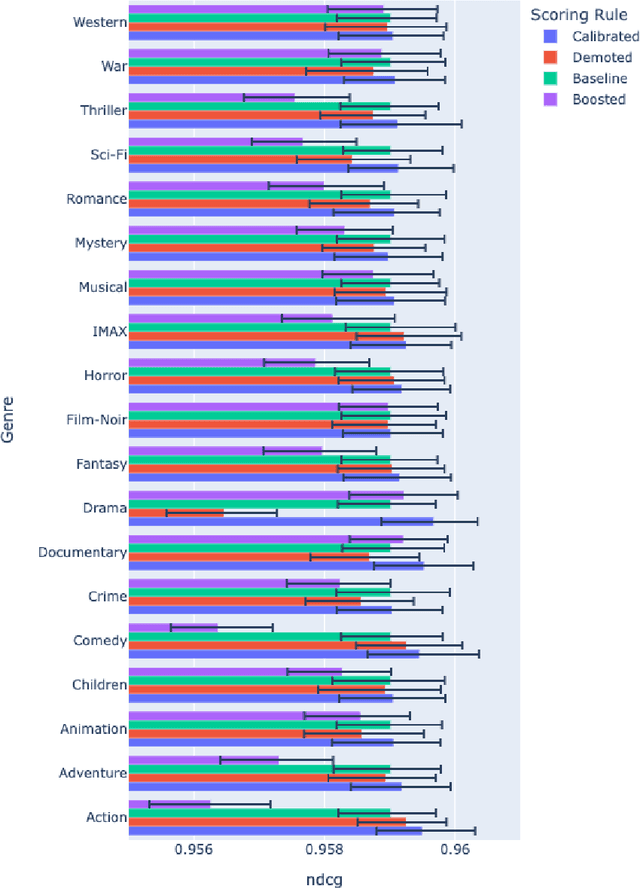
We propose a test of fairness in score-based ranking systems called matched pair calibration. Our approach constructs a set of matched item pairs with minimal confounding differences between subgroups before computing an appropriate measure of ranking error over the set. The matching step ensures that we compare subgroup outcomes between identically scored items so that measured performance differences directly imply unfairness in subgroup-level exposures. We show how our approach generalizes the fairness intuitions of calibration from a binary classification setting to ranking and connect our approach to other proposals for ranking fairness measures. Moreover, our strategy shows how the logic of marginal outcome tests extends to cases where the analyst has access to model scores. Lastly, we provide an example of applying matched pair calibration to a real-word ranking data set to demonstrate its efficacy in detecting ranking bias.