 Add to Chrome
 Add to Firefox
 Add to Edge
Can Large Language Models Resolve Semantic Discrepancy in Self-Destructive Subcultures? Evidence from Jirai Kei
Jan 08, 2026
Self-destructive behaviors are linked to complex psychological states and can be challenging to diagnose. These behaviors may be even harder to identify within subcultural groups due to their unique expressions. As large language models (LLMs) are applied across various fields, some researchers have begun exploring their application for detecting self-destructive behaviors. Motivated by this, we investigate self-destructive behavior detection within subcultures using current LLM-based methods. However, these methods have two main challenges: (1) Knowledge Lag: Subcultural slang evolves rapidly, faster than LLMs' training cycles; and (2) Semantic Misalignment: it is challenging to grasp the specific and nuanced expressions unique to subcultures. To address these issues, we proposed Subcultural Alignment Solver (SAS), a multi-agent framework that incorporates automatic retrieval and subculture alignment, significantly enhancing the performance of LLMs in detecting self-destructive behavior. Our experimental results show that SAS outperforms the current advanced multi-agent framework OWL. Notably, it competes well with fine-tuned LLMs. We hope that SAS will advance the field of self-destructive behavior detection in subcultural contexts and serve as a valuable resource for future researchers.

IH-ViT: Vision Transformer-based Integrated Circuit Appear-ance Defect Detection
Feb 09, 2023

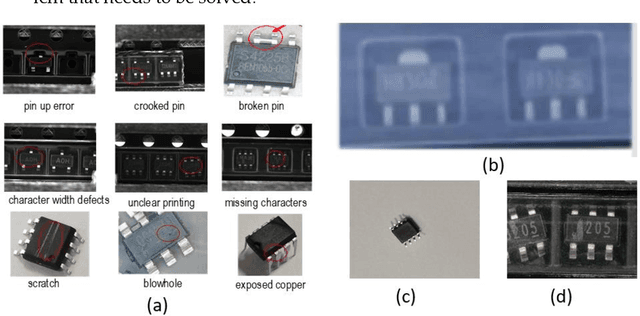
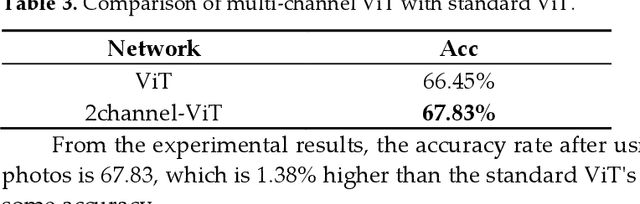
For the problems of low recognition rate and slow recognition speed of traditional detection methods in IC appearance defect detection, we propose an IC appearance defect detection algo-rithm IH-ViT. Our proposed model takes advantage of the respective strengths of CNN and ViT to acquire image features from both local and global aspects, and finally fuses the two features for decision making to determine the class of defects, thus obtaining better accuracy of IC defect recognition. To address the problem that IC appearance defects are mainly reflected in the dif-ferences in details, which are difficult to identify by traditional algorithms, we improved the tra-ditional ViT by performing an additional convolution operation inside the batch. For the problem of information imbalance of samples due to diverse sources of data sets, we adopt a dual-channel image segmentation technique to further improve the accuracy of IC appearance defects. Finally, after testing, our proposed hybrid IH-ViT model achieved 72.51% accuracy, which is 2.8% and 6.06% higher than ResNet50 and ViT models alone. The proposed algorithm can quickly and accurately detect the defect status of IC appearance and effectively improve the productivity of IC packaging and testing companies.