 Add to Chrome
 Add to Firefox
 Add to Edge
Silicon Bureaucracy and AI Test-Oriented Education: Contamination Sensitivity and Score Confidence in LLM Benchmarks
Mar 23, 2026
Public benchmarks increasingly govern how large language models (LLMs) are ranked, selected, and deployed. We frame this benchmark-centered regime as Silicon Bureaucracy and AI Test-Oriented Education, and argue that it rests on a fragile assumption: that benchmark scores directly reflect genuine generalization. In practice, however, such scores may conflate exam-oriented competence with principled capability, especially when contamination and semantic leakage are difficult to exclude from modern training pipelines. We therefore propose an audit framework for analyzing contamination sensitivity and score confidence in LLM benchmarks. Using a router-worker setup, we compare a clean-control condition with noisy conditions in which benchmark problems are systematically deleted, rewritten, and perturbed before being passed downstream. For a genuinely clean benchmark, noisy conditions should not consistently outperform the clean-control baseline. Yet across multiple models, we find widespread but heterogeneous above-baseline gains under noisy conditions, indicating that benchmark-related cues may be reassembled and can reactivate contamination-related memory. These results suggest that similar benchmark scores may carry substantially different levels of confidence. Rather than rejecting benchmarks altogether, we argue that benchmark-based evaluation should be supplemented with explicit audits of contamination sensitivity and score confidence.

Ruyi2 Technical Report
Feb 26, 2026Large Language Models (LLMs) face significant challenges regarding deployment costs and latency, necessitating adaptive computing strategies. Building upon the AI Flow framework, we introduce Ruyi2 as an evolution of our adaptive model series designed for efficient variable-depth computation. While early-exit architectures offer a viable efficiency-performance balance, the Ruyi model and existing methods often struggle with optimization complexity and compatibility with large-scale distributed training. To bridge this gap, Ruyi2 introduces a stable "Familial Model" based on Megatron-LM. By using 3D parallel training, it achieves a 2-3 times speedup over Ruyi, while performing comparably to same-sized Qwen3 models. These results confirm that family-based parameter sharing is a highly effective strategy, establishing a new "Train Once, Deploy Many" paradigm and providing a key reference for balancing architectural efficiency with high-performance capabilities.
CreditAudit: 2D Auditing for LLM Evaluation and Selection
Jan 23, 2026Leaderboard scores on public benchmarks have been steadily rising and converging, with many frontier language models now separated by only marginal differences. However, these scores often fail to match users' day to day experience, because system prompts, output protocols, and interaction modes evolve under routine iteration, and in agentic multi step pipelines small protocol shifts can trigger disproportionate failures, leaving practitioners uncertain about which model to deploy. We propose CreditAudit, a deployment oriented credit audit framework that evaluates models under a family of semantically aligned and non adversarial system prompt templates across multiple benchmarks, reporting mean ability as average performance across scenarios and scenario induced fluctuation sigma as a stability risk signal, and further mapping volatility into interpretable credit grades from AAA to BBB via cross model quantiles with diagnostics that mitigate template difficulty drift. Controlled experiments on GPQA, TruthfulQA, and MMLU Pro show that models with similar mean ability can exhibit substantially different fluctuation, and stability risk can overturn prioritization decisions in agentic or high failure cost regimes. By providing a 2D and grade based language for regime specific selection, CreditAudit supports tiered deployment and more disciplined allocation of testing and monitoring effort, enabling more objective and trustworthy model evaluation for real world use.
Single-Pixel Vision-Language Model for Intrinsic Privacy-Preserving Behavioral Intelligence
Jan 21, 2026Adverse social interactions, such as bullying, harassment, and other illicit activities, pose significant threats to individual well-being and public safety, leaving profound impacts on physical and mental health. However, these critical events frequently occur in privacy-sensitive environments like restrooms, and changing rooms, where conventional surveillance is prohibited or severely restricted by stringent privacy regulations and ethical concerns. Here, we propose the Single-Pixel Vision-Language Model (SP-VLM), a novel framework that reimagines secure environmental monitoring. It achieves intrinsic privacy-by-design by capturing human dynamics through inherently low-dimensional single-pixel modalities and inferring complex behavioral patterns via seamless vision-language integration. Building on this framework, we demonstrate that single-pixel sensing intrinsically suppresses identity recoverability, rendering state-of-the-art face recognition systems ineffective below a critical sampling rate. We further show that SP-VLM can nonetheless extract meaningful behavioral semantics, enabling robust anomaly detection, people counting, and activity understanding from severely degraded single-pixel observations. Combining these findings, we identify a practical sampling-rate regime in which behavioral intelligence emerges while personal identity remains strongly protected. Together, these results point to a human-rights-aligned pathway for safety monitoring that can support timely intervention without normalizing intrusive surveillance in privacy-sensitive spaces.
Are LLMs Vulnerable to Preference-Undermining Attacks (PUA)? A Factorial Analysis Methodology for Diagnosing the Trade-off between Preference Alignment and Real-World Validity
Jan 10, 2026Large Language Model (LLM) training often optimizes for preference alignment, rewarding outputs that are perceived as helpful and interaction-friendly. However, this preference-oriented objective can be exploited: manipulative prompts can steer responses toward user-appeasing agreement and away from truth-oriented correction. In this work, we investigate whether aligned models are vulnerable to Preference-Undermining Attacks (PUA), a class of manipulative prompting strategies designed to exploit the model's desire to please user preferences at the expense of truthfulness. We propose a diagnostic methodology that provides a finer-grained and more directive analysis than aggregate benchmark scores, using a factorial evaluation framework to decompose prompt-induced shifts into interpretable effects of system objectives (truth- vs. preference-oriented) and PUA-style dialogue factors (directive control, personal derogation, conditional approval, reality denial) within a controlled $2 \times 2^4$ design. Surprisingly, more advanced models are sometimes more susceptible to manipulative prompts. Beyond the dominant reality-denial factor, we observe model-specific sign reversals and interactions with PUA-style factors, suggesting tailored defenses rather than uniform robustness. These findings offer a novel, reproducible factorial evaluation methodology that provides finer-grained diagnostics for post-training processes like RLHF, enabling better trade-offs in the product iteration of LLMs by offering a more nuanced understanding of preference alignment risks and the impact of manipulative prompts.
Physics in Next-token Prediction
Nov 01, 2024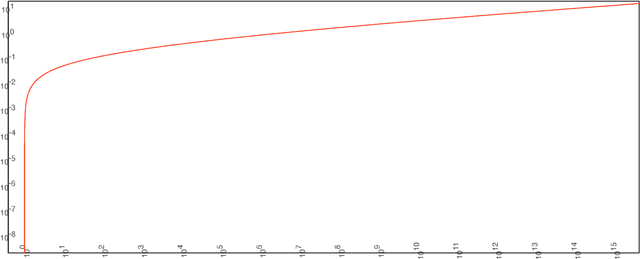
We discovered the underlying physics in Next-token Prediction (NTP). We identified the law of information conservation within NTP and proposed the First Law of Information Capacity (IC-1), demonstrating that the essence of intelligence emergence in auto-regressive models is fundamentally a process of information transfer. We also introduced Landauer's Principle into NTP, formulating the Second Law of Information Capacity (IC-2), which establishes the relationship between auto-regressive model training and energy consumption. Additionally, we presented several corollaries, which hold practical significance for production practices. Finally, we validated the compatibility and complementarity of our findings with existing theories.