 Add to Chrome
 Add to Firefox
 Add to Edge
RiskAtlas: Exposing Domain-Specific Risks in LLMs through Knowledge-Graph-Guided Harmful Prompt Generation
Jan 08, 2026
Large language models (LLMs) are increasingly applied in specialized domains such as finance and healthcare, where they introduce unique safety risks. Domain-specific datasets of harmful prompts remain scarce and still largely rely on manual construction; public datasets mainly focus on explicit harmful prompts, which modern LLM defenses can often detect and refuse. In contrast, implicit harmful prompts-expressed through indirect domain knowledge-are harder to detect and better reflect real-world threats. We identify two challenges: transforming domain knowledge into actionable constraints and increasing the implicitness of generated harmful prompts. To address them, we propose an end-to-end framework that first performs knowledge-graph-guided harmful prompt generation to systematically produce domain-relevant prompts, and then applies dual-path obfuscation rewriting to convert explicit harmful prompts into implicit variants via direct and context-enhanced rewriting. This framework yields high-quality datasets combining strong domain relevance with implicitness, enabling more realistic red-teaming and advancing LLM safety research. We release our code and datasets at GitHub.

Non-target Divergence Hypothesis: Toward Understanding Domain Gaps in Cross-Modal Knowledge Distillation
Sep 04, 2024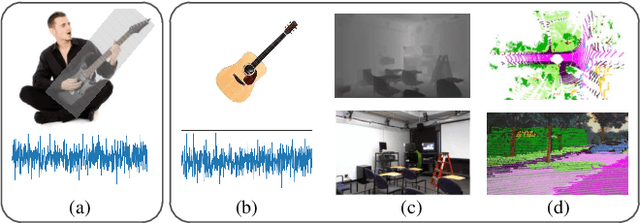
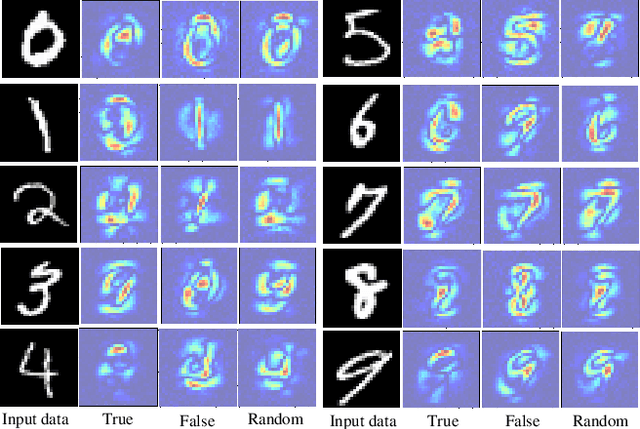
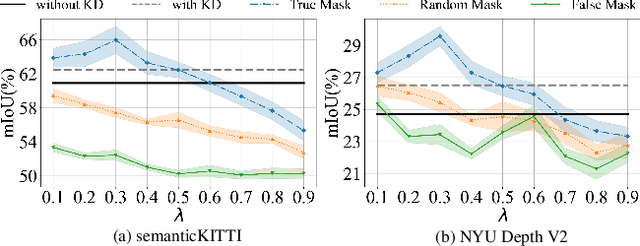
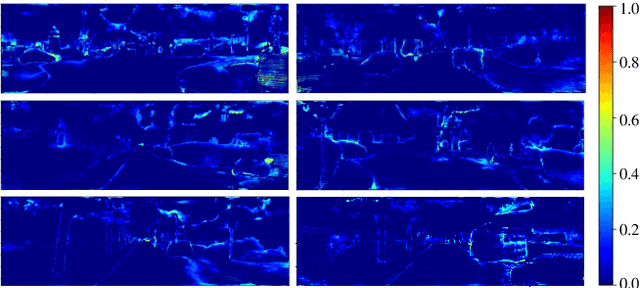
Compared to single-modal knowledge distillation, cross-modal knowledge distillation faces more severe challenges due to domain gaps between modalities. Although various methods have proposed various solutions to overcome these challenges, there is still limited research on how domain gaps affect cross-modal knowledge distillation. This paper provides an in-depth analysis and evaluation of this issue. We first introduce the Non-Target Divergence Hypothesis (NTDH) to reveal the impact of domain gaps on cross-modal knowledge distillation. Our key finding is that domain gaps between modalities lead to distribution differences in non-target classes, and the smaller these differences, the better the performance of cross-modal knowledge distillation. Subsequently, based on Vapnik-Chervonenkis (VC) theory, we derive the upper and lower bounds of the approximation error for cross-modal knowledge distillation, thereby theoretically validating the NTDH. Finally, experiments on five cross-modal datasets further confirm the validity, generalisability, and applicability of the NTDH.