 Add to Chrome
 Add to Firefox
 Add to Edge
Can LLMs Truly Embody Human Personality? Analyzing AI and Human Behavior Alignment in Dispute Resolution
Feb 07, 2026
Large language models (LLMs) are increasingly used to simulate human behavior in social settings such as legal mediation, negotiation, and dispute resolution. However, it remains unclear whether these simulations reproduce the personality-behavior patterns observed in humans. Human personality, for instance, shapes how individuals navigate social interactions, including strategic choices and behaviors in emotionally charged interactions. This raises the question: Can LLMs, when prompted with personality traits, reproduce personality-driven differences in human conflict behavior? To explore this, we introduce an evaluation framework that enables direct comparison of human-human and LLM-LLM behaviors in dispute resolution dialogues with respect to Big Five Inventory (BFI) personality traits. This framework provides a set of interpretable metrics related to strategic behavior and conflict outcomes. We additionally contribute a novel dataset creation methodology for LLM dispute resolution dialogues with matched scenarios and personality traits with respect to human conversations. Finally, we demonstrate the use of our evaluation framework with three contemporary closed-source LLMs and show significant divergences in how personality manifests in conflict across different LLMs compared to human data, challenging the assumption that personality-prompted agents can serve as reliable behavioral proxies in socially impactful applications. Our work highlights the need for psychological grounding and validation in AI simulations before real-world use.

Optimizing SIA Development: A Case Study in User-Centered Design for Estuary, a Multimodal Socially Interactive Agent Framework
Apr 20, 2025This case study presents our user-centered design model for Socially Intelligent Agent (SIA) development frameworks through our experience developing Estuary, an open source multimodal framework for building low-latency real-time socially interactive agents. We leverage the Rapid Assessment Process (RAP) to collect the thoughts of leading researchers in the field of SIAs regarding the current state of the art for SIA development as well as their evaluation of how well Estuary may potentially address current research gaps. We achieve this through a series of end-user interviews conducted by a fellow researcher in the community. We hope that the findings of our work will not only assist the continued development of Estuary but also guide the development of other future frameworks and technologies for SIAs.
Estuary: A Framework For Building Multimodal Low-Latency Real-Time Socially Interactive Agents
Oct 26, 2024
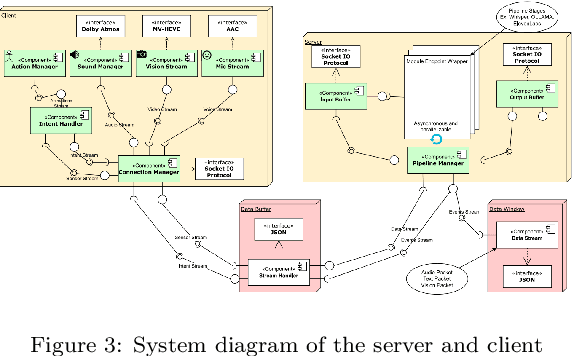
The rise in capability and ubiquity of generative artificial intelligence (AI) technologies has enabled its application to the field of Socially Interactive Agents (SIAs). Despite rising interest in modern AI-powered components used for real-time SIA research, substantial friction remains due to the absence of a standardized and universal SIA framework. To target this absence, we developed Estuary: a multimodal (text, audio, and soon video) framework which facilitates the development of low-latency, real-time SIAs. Estuary seeks to reduce repeat work between studies and to provide a flexible platform that can be run entirely off-cloud to maximize configurability, controllability, reproducibility of studies, and speed of agent response times. We are able to do this by constructing a robust multimodal framework which incorporates current and future components seamlessly into a modular and interoperable architecture.