 Add to Chrome
 Add to Firefox
 Add to Edge
The Paradox of Robustness: Decoupling Rule-Based Logic from Affective Noise in High-Stakes Decision-Making
Jan 29, 2026
While Large Language Models (LLMs) are widely documented to be sensitive to minor prompt perturbations and prone to sycophantic alignment with user biases, their robustness in consequential, rule-bound decision-making remains under-explored. In this work, we uncover a striking "Paradox of Robustness": despite their known lexical brittleness, instruction-tuned LLMs exhibit a behavioral and near-total invariance to emotional framing effects. Using a novel controlled perturbation framework across three high-stakes domains (healthcare, law, and finance), we quantify a robustness gap where LLMs demonstrate 110-300 times greater resistance to narrative manipulation than human subjects. Specifically, we find a near-zero effect size for models (Cohen's h = 0.003) compared to the substantial biases observed in humans (Cohen's h in [0.3, 0.8]). This result is highly counterintuitive and suggests the mechanisms driving sycophancy and prompt sensitivity do not necessarily translate to a failure in logical constraint satisfaction. We show that this invariance persists across models with diverse training paradigms. Our findings show that while LLMs may be "brittle" to how a query is formatted, they are remarkably "stable" against why a decision should be biased. Our findings establish that instruction-tuned models can decouple logical rule-adherence from persuasive narratives, offering a source of decision stability that complements, and even potentially de-biases, human judgment in institutional contexts. We release the 162-scenario benchmark, code, and data to facilitate the rigorous evaluation of narrative-induced bias and robustness on GitHub.com.

When Prohibitions Become Permissions: Auditing Negation Sensitivity in Language Models
Jan 29, 2026When a user tells an AI system that someone "should not" take an action, the system ought to treat this as a prohibition. Yet many large language models do the opposite: they interpret negated instructions as affirmations. We audited 16 models across 14 ethical scenarios and found that open-source models endorse prohibited actions 77% of the time under simple negation and 100% under compound negation -- a 317% increase over affirmative framing. Commercial models fare better but still show swings of 19-128%. Agreement between models drops from 74% on affirmative prompts to 62% on negated ones, and financial scenarios prove twice as fragile as medical ones. These patterns hold under deterministic decoding, ruling out sampling noise. We present case studies showing how these failures play out in practice, propose the Negation Sensitivity Index (NSI) as a governance metric, and outline a tiered certification framework with domain-specific thresholds. The findings point to a gap between what current alignment techniques achieve and what safe deployment requires: models that cannot reliably distinguish "do X" from "do not X" should not be making autonomous decisions in high-stakes contexts.
Risks and Opportunities of Open-Source Generative AI
May 14, 2024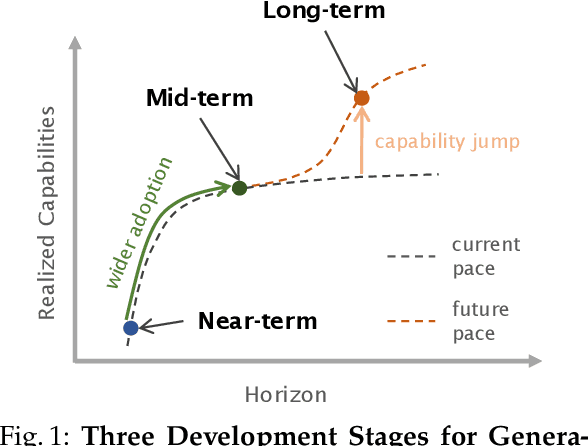
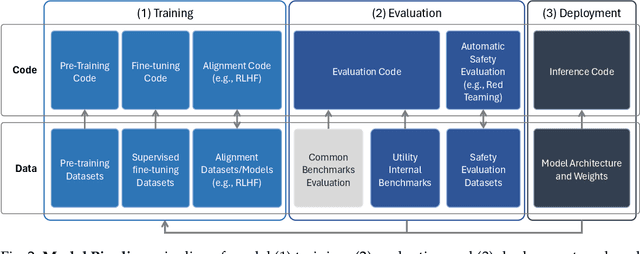
Applications of Generative AI (Gen AI) are expected to revolutionize a number of different areas, ranging from science & medicine to education. The potential for these seismic changes has triggered a lively debate about the potential risks of the technology, and resulted in calls for tighter regulation, in particular from some of the major tech companies who are leading in AI development. This regulation is likely to put at risk the budding field of open-source generative AI. Using a three-stage framework for Gen AI development (near, mid and long-term), we analyze the risks and opportunities of open-source generative AI models with similar capabilities to the ones currently available (near to mid-term) and with greater capabilities (long-term). We argue that, overall, the benefits of open-source Gen AI outweigh its risks. As such, we encourage the open sourcing of models, training and evaluation data, and provide a set of recommendations and best practices for managing risks associated with open-source generative AI.
Near to Mid-term Risks and Opportunities of Open Source Generative AI
Apr 25, 2024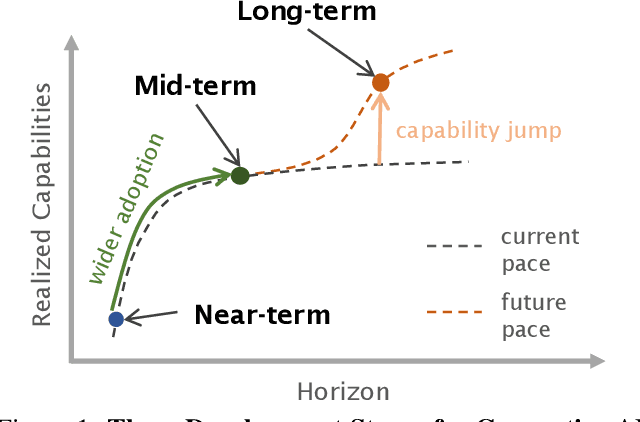
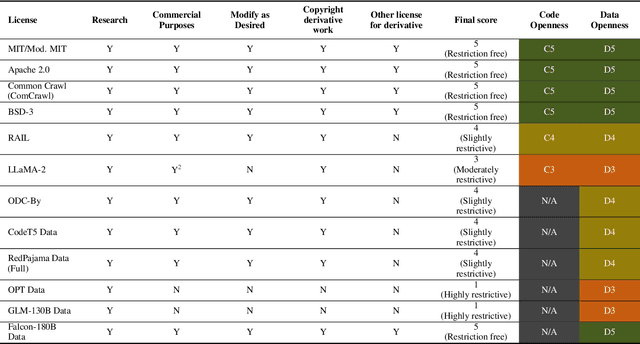
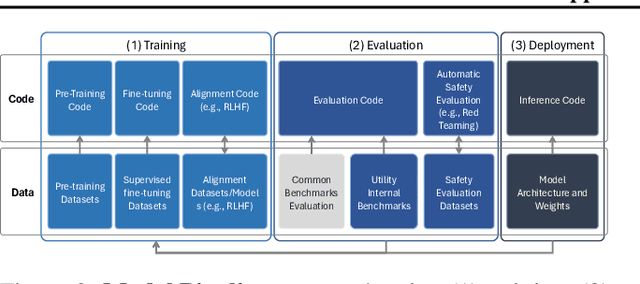
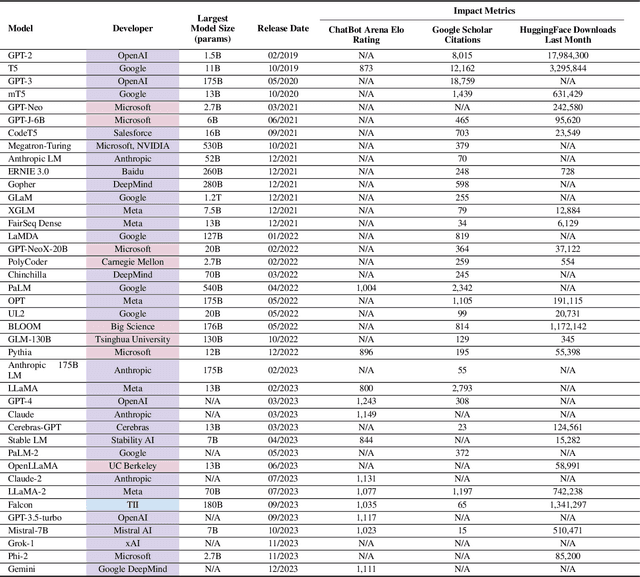
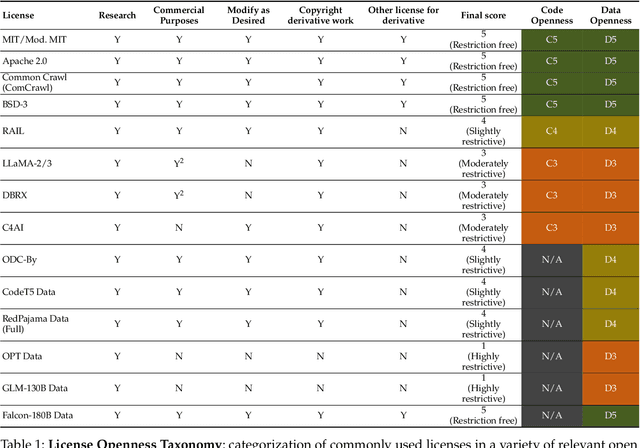
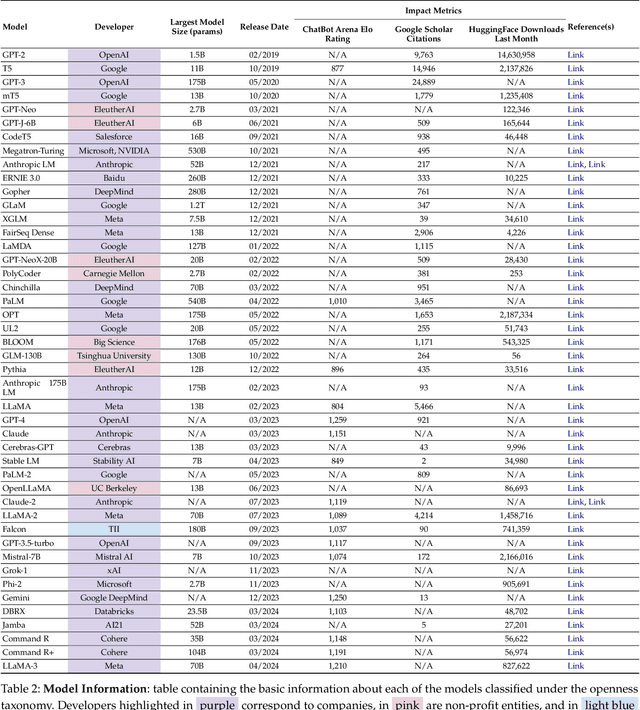
In the next few years, applications of Generative AI are expected to revolutionize a number of different areas, ranging from science & medicine to education. The potential for these seismic changes has triggered a lively debate about potential risks and resulted in calls for tighter regulation, in particular from some of the major tech companies who are leading in AI development. This regulation is likely to put at risk the budding field of open source Generative AI. We argue for the responsible open sourcing of generative AI models in the near and medium term. To set the stage, we first introduce an AI openness taxonomy system and apply it to 40 current large language models. We then outline differential benefits and risks of open versus closed source AI and present potential risk mitigation, ranging from best practices to calls for technical and scientific contributions. We hope that this report will add a much needed missing voice to the current public discourse on near to mid-term AI safety and other societal impact.