 Add to Chrome
 Add to Firefox
 Add to Edge
Tracing the Data Trail: A Survey of Data Provenance, Transparency and Traceability in LLMs
Jan 19, 2026
Large language models (LLMs) are deployed at scale, yet their training data life cycle remains opaque. This survey synthesizes research from the past ten years on three tightly coupled axes: (1) data provenance, (2) transparency, and (3) traceability, and three supporting pillars: (4) bias \& uncertainty, (5) data privacy, and (6) tools and techniques that operationalize them. A central contribution is a proposed taxonomy defining the field's domains and listing corresponding artifacts. Through analysis of 95 publications, this work identifies key methodologies concerning data generation, watermarking, bias measurement, data curation, data privacy, and the inherent trade-off between transparency and opacity.

Establishing and Evaluating Trustworthy AI: Overview and Research Challenges
Nov 15, 2024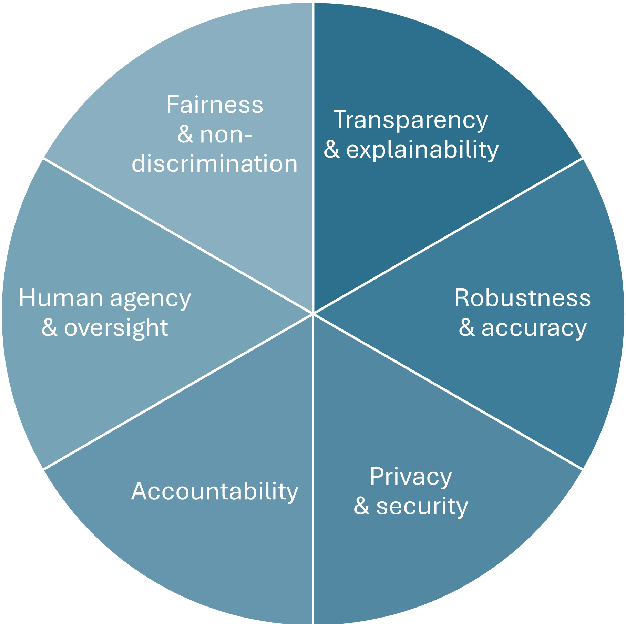
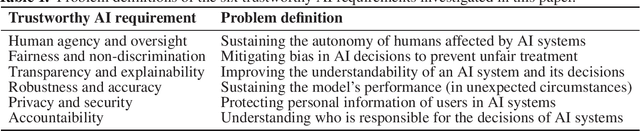
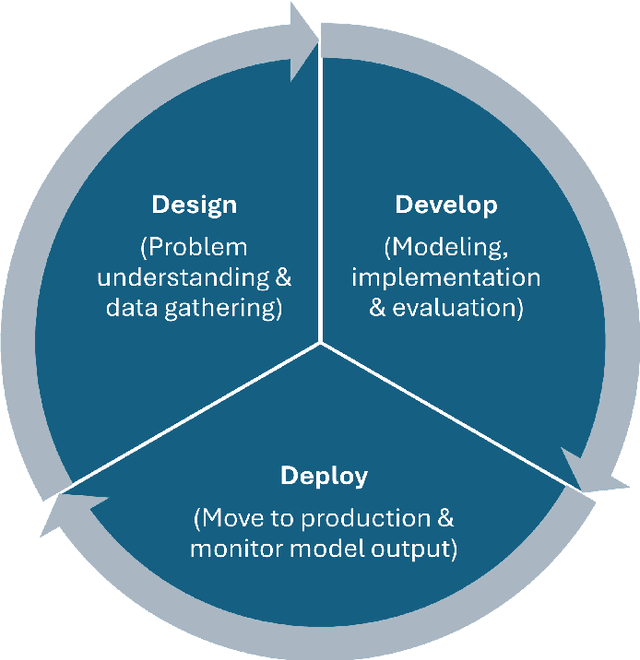
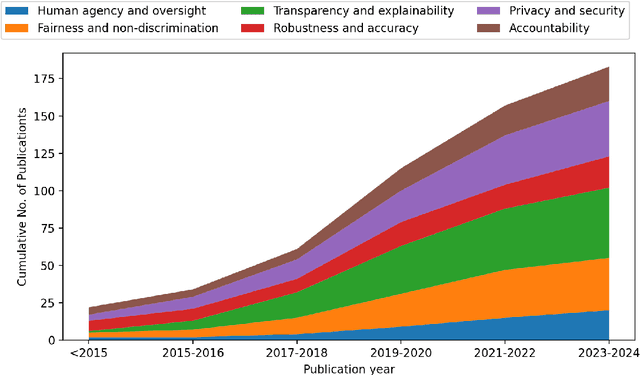
Artificial intelligence (AI) technologies (re-)shape modern life, driving innovation in a wide range of sectors. However, some AI systems have yielded unexpected or undesirable outcomes or have been used in questionable manners. As a result, there has been a surge in public and academic discussions about aspects that AI systems must fulfill to be considered trustworthy. In this paper, we synthesize existing conceptualizations of trustworthy AI along six requirements: 1) human agency and oversight, 2) fairness and non-discrimination, 3) transparency and explainability, 4) robustness and accuracy, 5) privacy and security, and 6) accountability. For each one, we provide a definition, describe how it can be established and evaluated, and discuss requirement-specific research challenges. Finally, we conclude this analysis by identifying overarching research challenges across the requirements with respect to 1) interdisciplinary research, 2) conceptual clarity, 3) context-dependency, 4) dynamics in evolving systems, and 5) investigations in real-world contexts. Thus, this paper synthesizes and consolidates a wide-ranging and active discussion currently taking place in various academic sub-communities and public forums. It aims to serve as a reference for a broad audience and as a basis for future research directions.