 Add to Chrome
 Add to Firefox
 Add to Edge
Efficient Epistemic Uncertainty Estimation for Large Language Models via Knowledge Distillation
Feb 02, 2026
Quantifying uncertainty in Large Language Models (LLMs) is essential for mitigating hallucinations and enabling risk-aware deployment in safety-critical tasks. However, estimating Epistemic Uncertainty(EU) via Deep Ensembles is computationally prohibitive at the scale of modern models. We propose a framework that leverages the small draft models to efficiently estimate token-level EU, bypassing the need for full-scale ensembling. Theoretically grounded in a Bias-Variance Decomposition, our approach approximates EU via Jensen-Shannon divergence among drafts (variance proxy) and KL divergence between the draft mixture and the target (bias proxy). To further ensure accuracy without significant overhead, we introduce Online Stochastic Distillation (OSD) to efficiently approximate target aggregation and the Data-Diverse Drafts (DDD) strategy to enhance draft diversity for better target approximation. Extensive experiments on GSM8K demonstrate that our method reduces the estimation error (RMSE) by up to 37% compared to baselines. Crucially, our approach achieves Hallucination Detection performance competitive with heavy perturbation-based methods like TokUR while incurring negligible inference costs, offering a practical solution for uncertainty-aware LLM deployment.

Diffusion-Based Offline RL for Improved Decision-Making in Augmented ARC Task
Oct 15, 2024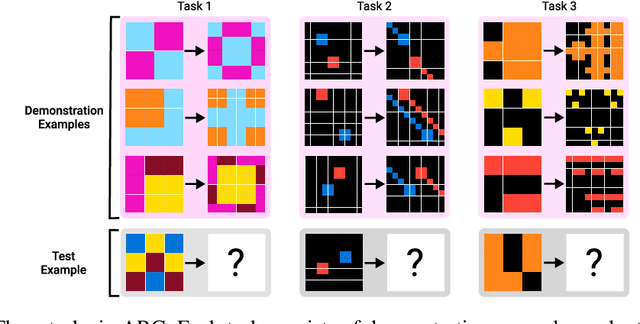
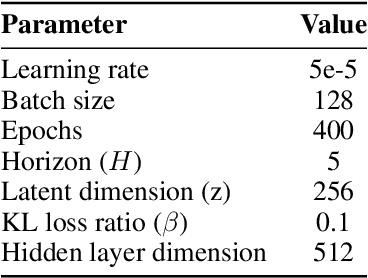
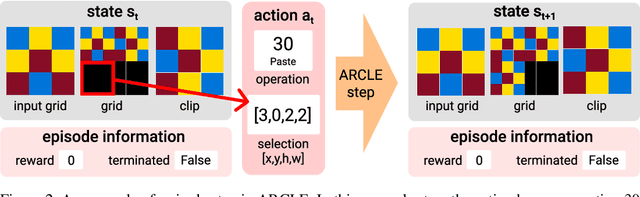
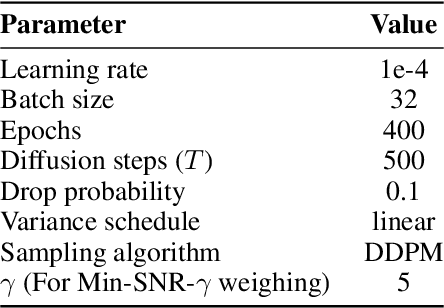
Effective long-term strategies enable AI systems to navigate complex environments by making sequential decisions over extended horizons. Similarly, reinforcement learning (RL) agents optimize decisions across sequences to maximize rewards, even without immediate feedback. To verify that Latent Diffusion-Constrained Q-learning (LDCQ), a prominent diffusion-based offline RL method, demonstrates strong reasoning abilities in multi-step decision-making, we aimed to evaluate its performance on the Abstraction and Reasoning Corpus (ARC). However, applying offline RL methodologies to enhance strategic reasoning in AI for solving tasks in ARC is challenging due to the lack of sufficient experience data in the ARC training set. To address this limitation, we introduce an augmented offline RL dataset for ARC, called Synthesized Offline Learning Data for Abstraction and Reasoning (SOLAR), along with the SOLAR-Generator, which generates diverse trajectory data based on predefined rules. SOLAR enables the application of offline RL methods by offering sufficient experience data. We synthesized SOLAR for a simple task and used it to train an agent with the LDCQ method. Our experiments demonstrate the effectiveness of the offline RL approach on a simple ARC task, showing the agent's ability to make multi-step sequential decisions and correctly identify answer states. These results highlight the potential of the offline RL approach to enhance AI's strategic reasoning capabilities.