 Add to Chrome
 Add to Firefox
 Add to Edge
VReID-XFD: Video-based Person Re-identification at Extreme Far Distance Challenge Results
Jan 04, 2026
Person re-identification (ReID) across aerial and ground views at extreme far distances introduces a distinct operating regime where severe resolution degradation, extreme viewpoint changes, unstable motion cues, and clothing variation jointly undermine the appearance-based assumptions of existing ReID systems. To study this regime, we introduce VReID-XFD, a video-based benchmark and community challenge for extreme far-distance (XFD) aerial-to-ground person re-identification. VReID-XFD is derived from the DetReIDX dataset and comprises 371 identities, 11,288 tracklets, and 11.75 million frames, captured across altitudes from 5.8 m to 120 m, viewing angles from oblique (30 degrees) to nadir (90 degrees), and horizontal distances up to 120 m. The benchmark supports aerial-to-aerial, aerial-to-ground, and ground-to-aerial evaluation under strict identity-disjoint splits, with rich physical metadata. The VReID-XFD-25 Challenge attracted 10 teams with hundreds of submissions. Systematic analysis reveals monotonic performance degradation with altitude and distance, a universal disadvantage of nadir views, and a trade-off between peak performance and robustness. Even the best-performing SAS-PReID method achieves only 43.93 percent mAP in the aerial-to-ground setting. The dataset, annotations, and official evaluation protocols are publicly available at https://www.it.ubi.pt/DetReIDX/ .

Self-supervised Fusarium Head Blight Detection with Hyperspectral Image and Feature Mining
Aug 31, 2024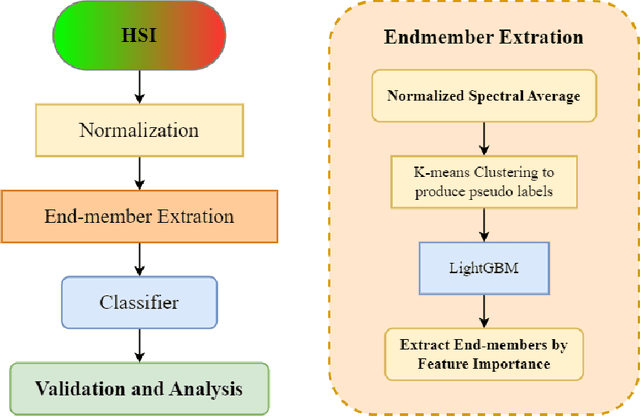
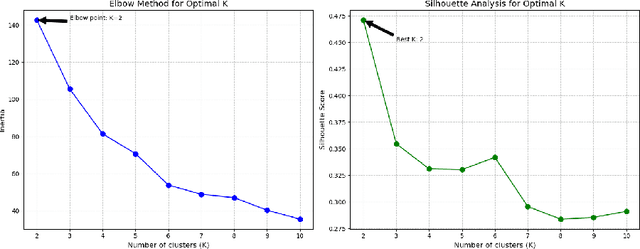
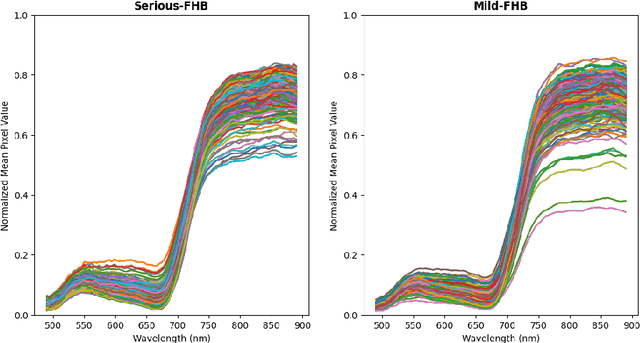
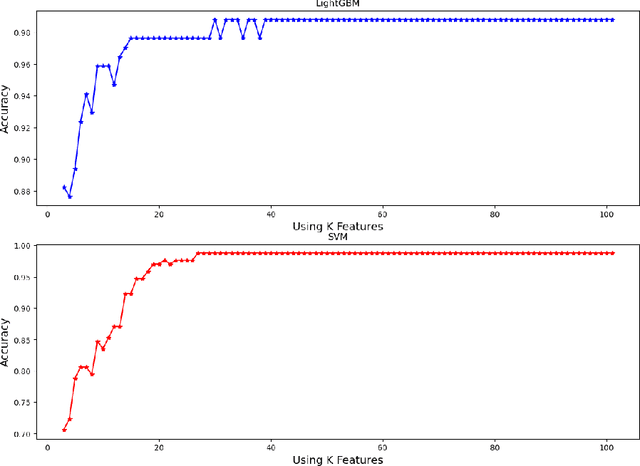
Fusarium Head Blight (FHB) is a serious fungal disease affecting wheat (including durum), barley, oats, other small cereal grains, and corn. Effective monitoring and accurate detection of FHB are crucial to ensuring stable and reliable food security. Traditionally, trained agronomists and surveyors perform manual identification, a method that is labor-intensive, impractical, and challenging to scale. With the advancement of deep learning and Hyper-spectral Imaging (HSI) and Remote Sensing (RS) technologies, employing deep learning, particularly Convolutional Neural Networks (CNNs), has emerged as a promising solution. Notably, wheat infected with serious FHB may exhibit significant differences on the spectral compared to mild FHB one, which is particularly advantageous for hyperspectral image-based methods. In this study, we propose a self-unsupervised classification method based on HSI endmember extraction strategy and top-K bands selection, designed to analyze material signatures in HSIs to derive discriminative feature representations. This approach does not require expensive device or complicate algorithm design, making it more suitable for practical uses. Our method has been effectively validated in the Beyond Visible Spectrum: AI for Agriculture Challenge 2024. The source code is easy to reproduce and available at {https://github.com/VanLinLin/Automated-Crop-Disease-Diagnosis-from-Hyperspectral-Imagery-3rd}.