 Add to Chrome
 Add to Firefox
 Add to Edge
AI chatbots versus human healthcare professionals: a systematic review and meta-analysis of empathy in patient care
Feb 05, 2026
Background: Empathy is widely recognized for improving patient outcomes, including reduced pain and anxiety and improved satisfaction, and its absence can cause harm. Meanwhile, use of artificial intelligence (AI)-based chatbots in healthcare is rapidly expanding, with one in five general practitioners using generative AI to assist with tasks such as writing letters. Some studies suggest AI chatbots can outperform human healthcare professionals (HCPs) in empathy, though findings are mixed and lack synthesis. Sources of data: We searched multiple databases for studies comparing AI chatbots using large language models with human HCPs on empathy measures. We assessed risk of bias with ROBINS-I and synthesized findings using random-effects meta-analysis where feasible, whilst avoiding double counting. Areas of agreement: We identified 15 studies (2023-2024). Thirteen studies reported statistically significantly higher empathy ratings for AI, with only two studies situated in dermatology favouring human responses. Of the 15 studies, 13 provided extractable data and were suitable for pooling. Meta-analysis of those 13 studies, all utilising ChatGPT-3.5/4, showed a standardized mean difference of 0.87 (95% CI, 0.54-1.20) favouring AI (P < .00001), roughly equivalent to a two-point increase on a 10-point scale. Areas of controversy: Studies relied on text-based assessments that overlook non-verbal cues and evaluated empathy through proxy raters. Growing points: Our findings indicate that, in text-only scenarios, AI chatbots are frequently perceived as more empathic than human HCPs. Areas timely for developing research: Future research should validate these findings with direct patient evaluations and assess whether emerging voice-enabled AI systems can deliver similar empathic advantages.
* Open Access Invited Review. Systematic review and meta analysis of 15 studies 2023-2024. Published 20 October 2025

A Distributed and Elastic Aggregation Service for Scalable Federated Learning Systems
Apr 16, 2022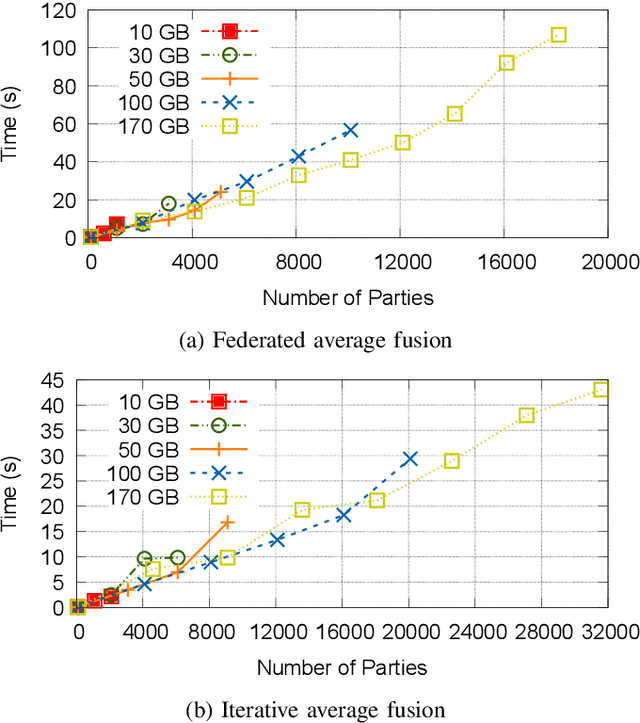
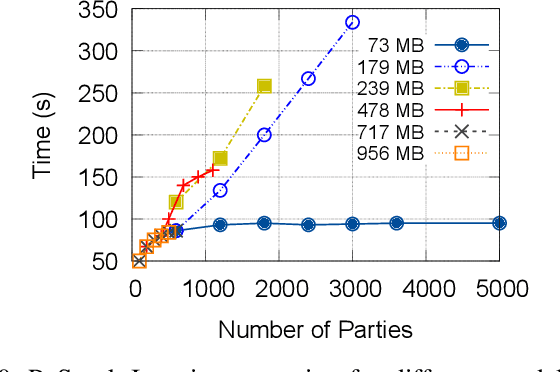

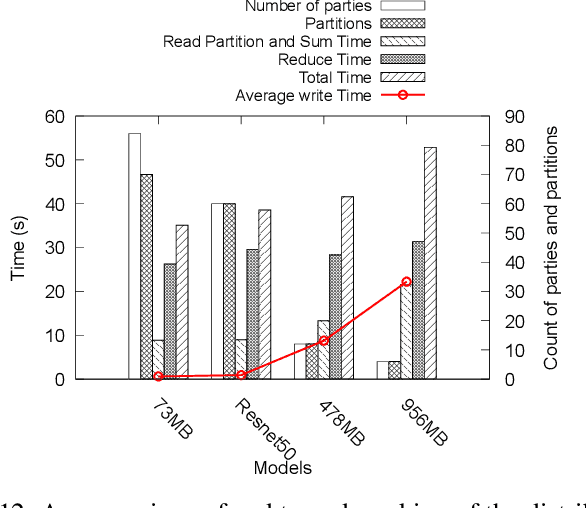
Federated Learning has promised a new approach to resolve the challenges in machine learning by bringing computation to the data. The popularity of the approach has led to rapid progress in the algorithmic aspects and the emergence of systems capable of simulating Federated Learning. State of art systems in Federated Learning support a single node aggregator that is insufficient to train a large corpus of devices or train larger-sized models. As the model size or the number of devices increase the single node aggregator incurs memory and computation burden while performing fusion tasks. It also faces communication bottlenecks when a large number of model updates are sent to a single node. We classify the workload for the aggregator into categories and propose a new aggregation service for handling each load. Our aggregation service is based on a holistic approach that chooses the best solution depending on the model update size and the number of clients. Our system provides a fault-tolerant, robust and efficient aggregation solution utilizing existing parallel and distributed frameworks. Through evaluation, we show the shortcomings of the state of art approaches and how a single solution is not suitable for all aggregation requirements. We also provide a comparison of current frameworks with our system through extensive experiments.