 Add to Chrome
 Add to Firefox
 Add to Edge
To What Extent Do Token-Level Representations from Pathology Foundation Models Improve Dense Prediction?
Feb 03, 2026
Pathology foundation models (PFMs) have rapidly advanced and are becoming a common backbone for downstream clinical tasks, offering strong transferability across tissues and institutions. However, for dense prediction (e.g., segmentation), practical deployment still lacks a clear, reproducible understanding of how different PFMs behave across datasets and how adaptation choices affect performance and stability. We present PFM-DenseBench, a large-scale benchmark for dense pathology prediction, evaluating 17 PFMs across 18 public segmentation datasets. Under a unified protocol, we systematically assess PFMs with multiple adaptation and fine-tuning strategies, and derive insightful, practice-oriented findings on when and why different PFMs and tuning choices succeed or fail across heterogeneous datasets. We release containers, configs, and dataset cards to enable reproducible evaluation and informed PFM selection for real-world dense pathology tasks. Project Website: https://m4a1tastegood.github.io/PFM-DenseBench

DentalGPT: Incentivizing Multimodal Complex Reasoning in Dentistry
Dec 12, 2025Reliable interpretation of multimodal data in dentistry is essential for automated oral healthcare, yet current multimodal large language models (MLLMs) struggle to capture fine-grained dental visual details and lack sufficient reasoning ability for precise diagnosis. To address these limitations, we present DentalGPT, a specialized dental MLLM developed through high-quality domain knowledge injection and reinforcement learning. Specifically, the largest annotated multimodal dataset for dentistry to date was constructed by aggregating over 120k dental images paired with detailed descriptions that highlight diagnostically relevant visual features, making it the multimodal dataset with the most extensive collection of dental images to date. Training on this dataset significantly enhances the MLLM's visual understanding of dental conditions, while the subsequent reinforcement learning stage further strengthens its capability for multimodal complex reasoning. Comprehensive evaluations on intraoral and panoramic benchmarks, along with dental subsets of medical VQA benchmarks, show that DentalGPT achieves superior performance in disease classification and dental VQA tasks, outperforming many state-of-the-art MLLMs despite having only 7B parameters. These results demonstrate that high-quality dental data combined with staged adaptation provides an effective pathway for building capable and domain-specialized dental MLLMs.
NeuroCLIP: A Multimodal Contrastive Learning Method for rTMS-treated Methamphetamine Addiction Analysis
Jul 27, 2025Methamphetamine dependence poses a significant global health challenge, yet its assessment and the evaluation of treatments like repetitive transcranial magnetic stimulation (rTMS) frequently depend on subjective self-reports, which may introduce uncertainties. While objective neuroimaging modalities such as electroencephalography (EEG) and functional near-infrared spectroscopy (fNIRS) offer alternatives, their individual limitations and the reliance on conventional, often hand-crafted, feature extraction can compromise the reliability of derived biomarkers. To overcome these limitations, we propose NeuroCLIP, a novel deep learning framework integrating simultaneously recorded EEG and fNIRS data through a progressive learning strategy. This approach offers a robust and trustworthy biomarker for methamphetamine addiction. Validation experiments show that NeuroCLIP significantly improves discriminative capabilities among the methamphetamine-dependent individuals and healthy controls compared to models using either EEG or only fNIRS alone. Furthermore, the proposed framework facilitates objective, brain-based evaluation of rTMS treatment efficacy, demonstrating measurable shifts in neural patterns towards healthy control profiles after treatment. Critically, we establish the trustworthiness of the multimodal data-driven biomarker by showing its strong correlation with psychometrically validated craving scores. These findings suggest that biomarker derived from EEG-fNIRS data via NeuroCLIP offers enhanced robustness and reliability over single-modality approaches, providing a valuable tool for addiction neuroscience research and potentially improving clinical assessments.
Research on the Proximity Relationships of Psychosomatic Disease Knowledge Graph Modules Extracted by Large Language Models
Dec 24, 2024As social changes accelerate, the incidence of psychosomatic disorders has significantly increased, becoming a major challenge in global health issues. This necessitates an innovative knowledge system and analytical methods to aid in diagnosis and treatment. Here, we establish the ontology model and entity types, using the BERT model and LoRA-tuned LLM for named entity recognition, constructing the knowledge graph with 9668 triples. Next, by analyzing the network distances between disease, symptom, and drug modules, it was found that closer network distances among diseases can predict greater similarities in their clinical manifestations, treatment approaches, and psychological mechanisms, and closer distances between symptoms indicate that they are more likely to co-occur. Lastly, by comparing the proximity d and proximity z score, it was shown that symptom-disease pairs in primary diagnostic relationships have a stronger association and are of higher referential value than those in diagnostic relationships. The research results revealed the potential connections between diseases, co-occurring symptoms, and similarities in treatment strategies, providing new perspectives for the diagnosis and treatment of psychosomatic disorders and valuable information for future mental health research and practice.
A Deep Learning-Based Method for Metal Artifact-Resistant Syn-MP-RAGE Contrast Synthesis
Oct 22, 2024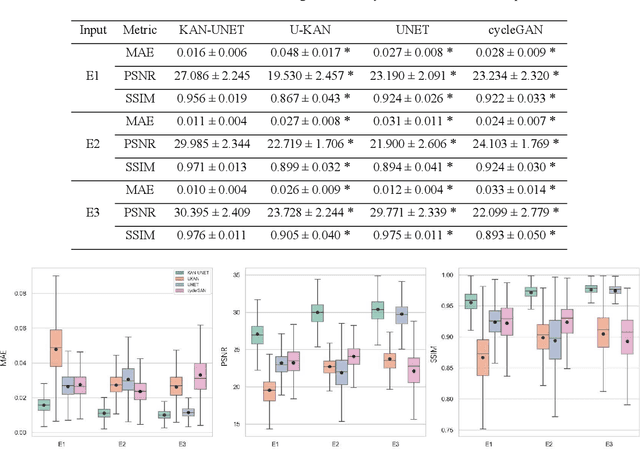
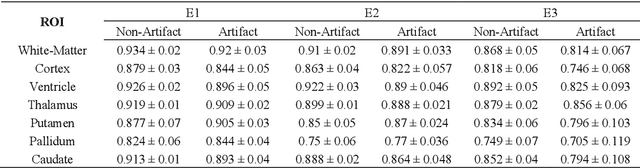
In certain brain volumetric studies, synthetic T1-weighted magnetization-prepared rapid gradient-echo (MP-RAGE) contrast, derived from quantitative T1 MRI (T1-qMRI), proves highly valuable due to its clear white/gray matter boundaries for brain segmentation. However, generating synthetic MP-RAGE (syn-MP-RAGE) typically requires pairs of high-quality, artifact-free, multi-modality inputs, which can be challenging in retrospective studies, where missing or corrupted data is common. To overcome this limitation, our research explores the feasibility of employing a deep learning-based approach to synthesize syn-MP-RAGE contrast directly from a single channel turbo spin-echo (TSE) input, renowned for its resistance to metal artifacts. We evaluated this deep learning-based synthetic MP-RAGE (DL-Syn-MPR) on 31 non-artifact and 11 metal-artifact subjects. The segmentation results, measured by the Dice Similarity Coefficient (DSC), consistently achieved high agreement (DSC values above 0.83), indicating a strong correlation with reference segmentations, with lower input requirements. Also, no significant difference in segmentation performance was observed between the artifact and non-artifact groups.