 Add to Chrome
 Add to Firefox
 Add to Edge
Equity vs. Equality: Optimizing Ranking Fairness for Tailored Provider Needs
Jan 31, 2026
Ranking plays a central role in connecting users and providers in Information Retrieval (IR) systems, making provider-side fairness an important challenge. While recent research has begun to address fairness in ranking, most existing approaches adopt an equality-based perspective, aiming to ensure that providers with similar content receive similar exposure. However, it overlooks the diverse needs of real-world providers, whose utility from ranking may depend not only on exposure but also on outcomes like sales or engagement. Consequently, exposure-based fairness may not accurately capture the true utility perceived by different providers with varying priorities. To this end, we introduce an equity-oriented fairness framework that explicitly models each provider's preferences over key outcomes such as exposure and sales, thus evaluating whether a ranking algorithm can fulfill these individualized goals while maintaining overall fairness across providers. Based on this framework, we develop EquityRank, a gradient-based algorithm that jointly optimizes user-side effectiveness and provider-side equity. Extensive offline and online simulations demonstrate that EquityRank offers improved trade-offs between effectiveness and fairness and adapts to heterogeneous provider needs.

RbFT: Robust Fine-tuning for Retrieval-Augmented Generation against Retrieval Defects
Jan 30, 2025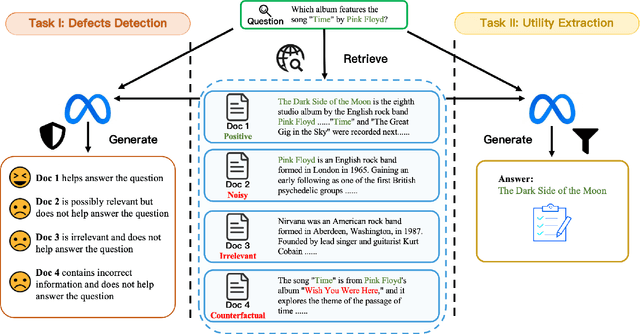
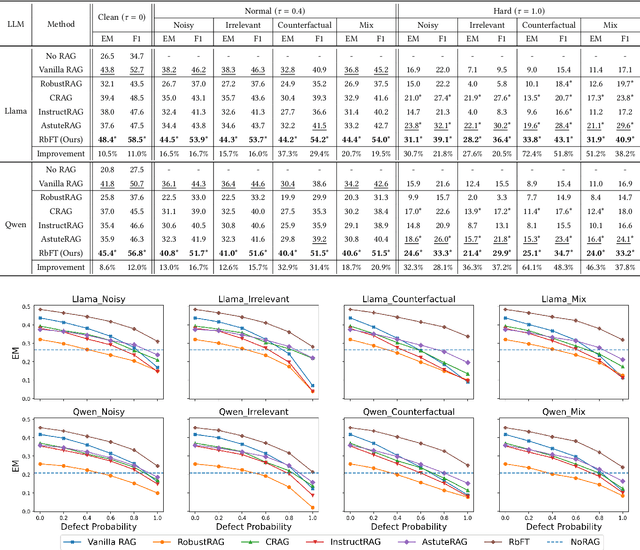
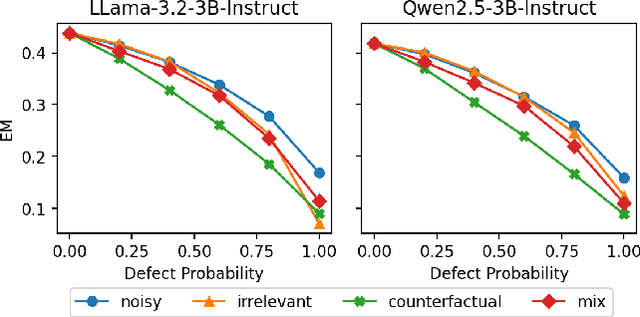
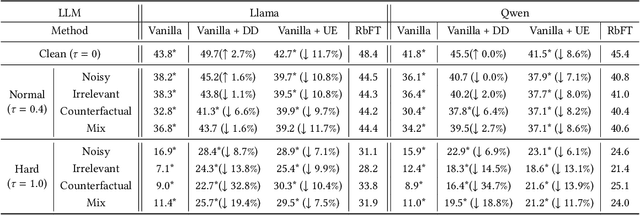
Retrieval-augmented generation (RAG) enhances large language models (LLMs) by integrating external knowledge retrieved from a knowledge base. However, its effectiveness is fundamentally constrained by the reliability of both the retriever and the knowledge base. In real-world scenarios, imperfections in these components often lead to the retrieval of noisy, irrelevant, or misleading counterfactual information, ultimately undermining the trustworthiness of RAG systems. To address this challenge, we propose Robust Fine-Tuning (RbFT), a method designed to enhance the resilience of LLMs against retrieval defects through two targeted fine-tuning tasks. Experimental results demonstrate that RbFT significantly improves the robustness of RAG systems across diverse retrieval conditions, surpassing existing methods while maintaining high inference efficiency and compatibility with other robustness techniques.
PRE: A Peer Review Based Large Language Model Evaluator
Jan 28, 2024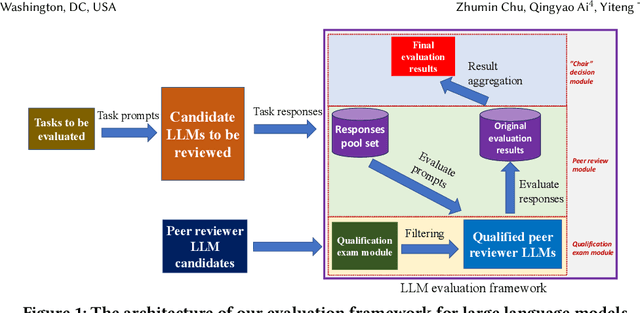
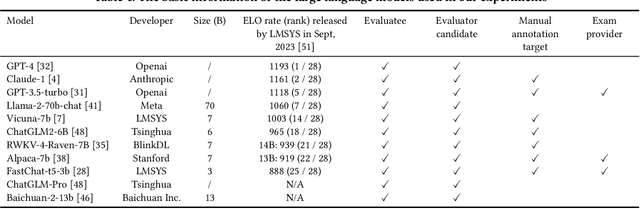
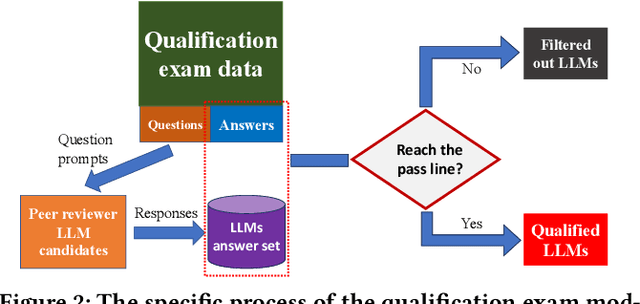
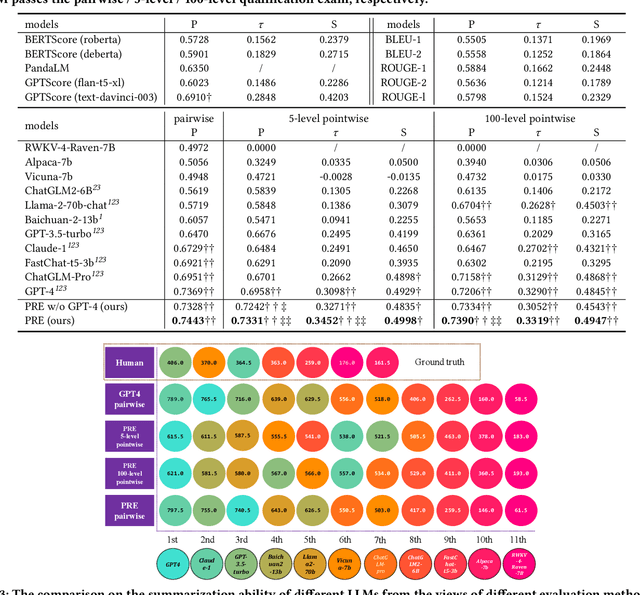
The impressive performance of large language models (LLMs) has attracted considerable attention from the academic and industrial communities. Besides how to construct and train LLMs, how to effectively evaluate and compare the capacity of LLMs has also been well recognized as an important yet difficult problem. Existing paradigms rely on either human annotators or model-based evaluators to evaluate the performance of LLMs on different tasks. However, these paradigms often suffer from high cost, low generalizability, and inherited biases in practice, which make them incapable of supporting the sustainable development of LLMs in long term. In order to address these issues, inspired by the peer review systems widely used in academic publication process, we propose a novel framework that can automatically evaluate LLMs through a peer-review process. Specifically, for the evaluation of a specific task, we first construct a small qualification exam to select "reviewers" from a couple of powerful LLMs. Then, to actually evaluate the "submissions" written by different candidate LLMs, i.e., the evaluatees, we use the reviewer LLMs to rate or compare the submissions. The final ranking of evaluatee LLMs is generated based on the results provided by all reviewers. We conducted extensive experiments on text summarization tasks with eleven LLMs including GPT-4. The results demonstrate the existence of biasness when evaluating using a single LLM. Also, our PRE model outperforms all the baselines, illustrating the effectiveness of the peer review mechanism.